
Tonehole crescents are (in my opinion, a last-ditch) method for altering the intonation of the note coming out of a tonehole by non-permanently altering the tonehole’s size and location. You can only make the hole smaller, so you can only make the note flatter.
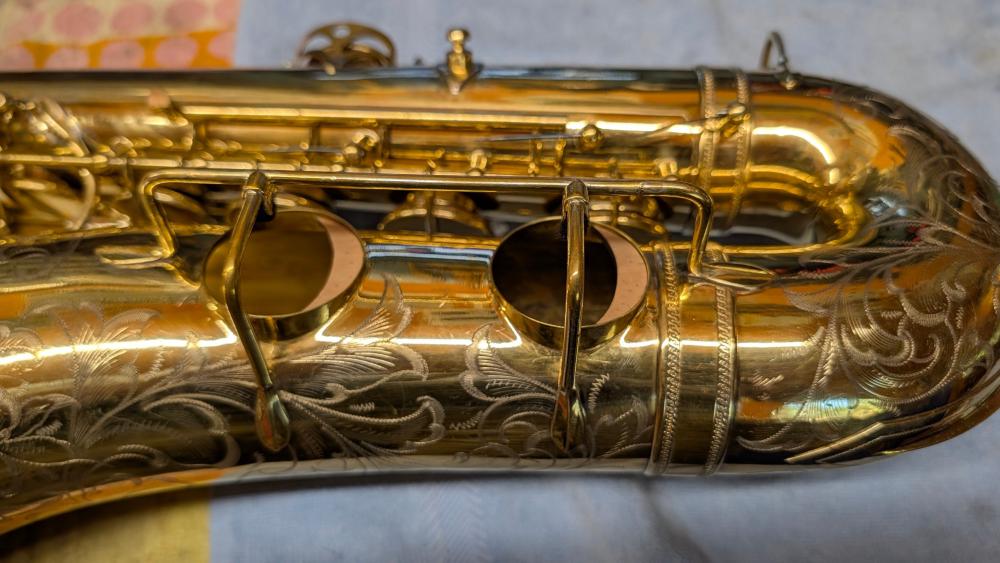
I rarely make tonehole crescents. I personally think the technique is overused, and typically setup or mouthpiece selection might fix whatever issues there are, or perhaps the real problem is a somewhat unrealistic expectation that the horn plays itself.
The only other thing I have said about them on this site is a caption in the gallery:
Sigh. Tonehole crescents all over this horn. I am not a big fan of tonehole crescents, and when you see a bunch all on one stack of the horn you gotta wonder why they didn’t just lower the action a bit if the right hand stack was sharp.
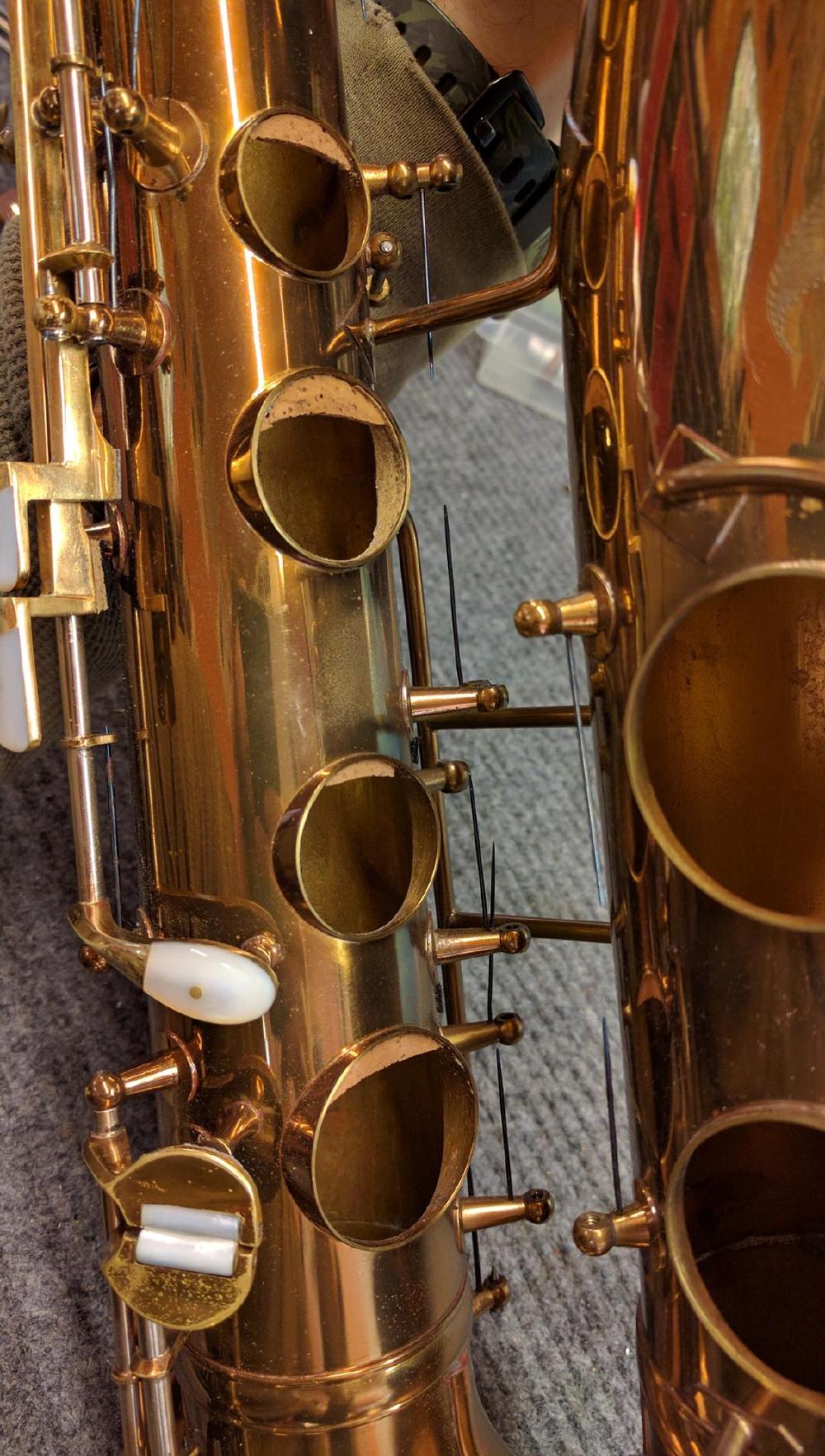
An exception is the too-short bell on some early Selmer tenors. These horns are known for having a weirdly stumpy bell: the low B tonehole is noticeably close to the low C# tonehole compared to later horns, or basically any other horn. This went on for years and years, mainly on tenors, and the problem is repeated to a lesser degree in the earliest Super Balanced Action tenors (sometimes called the “short bell” SBA). The low B and low Bb toneholes on Selmer Super tenors are the only places I have ever installed crescents, I think. Maybe once on a short-bell SBA too, but that was a long time ago, so I could be misremembering.
Crescents about the size of the ones in these photos can help tame the intonation on low C and B, and there is typically no noticeable change in response. It’s an odd situation, but in this case it’s a fairly widely agreed-upon solution.
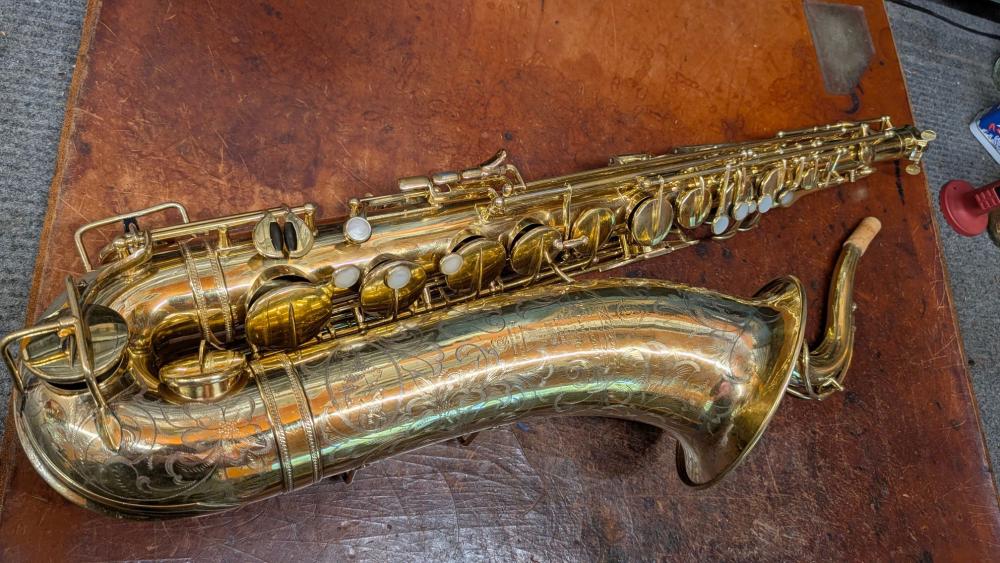
This horn played great before (I playtested and adjusted thoroughly before turning to crescents), but had very sharp low C and B. Now it still plays great, and low C and B are manageable.
Making them#
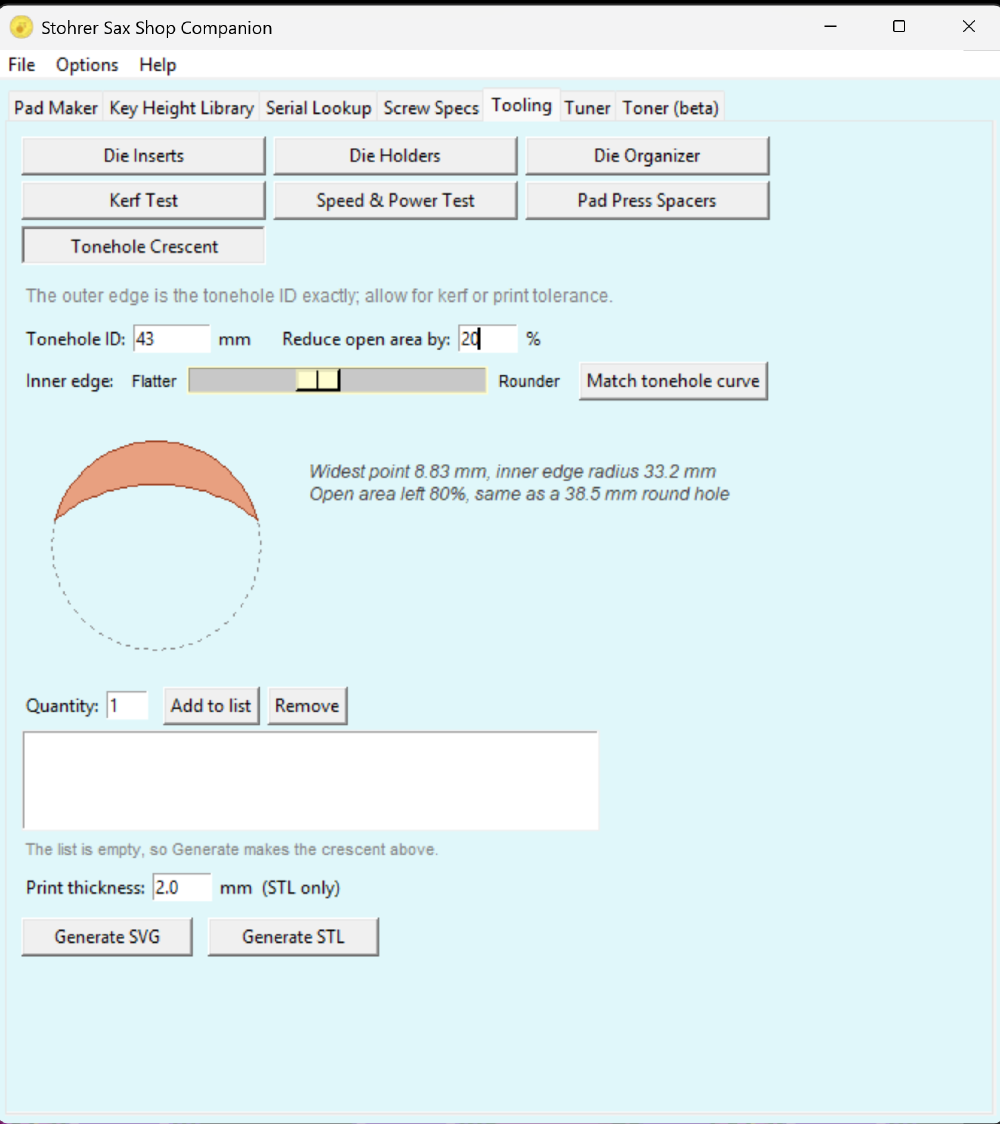
I now make them with a laser cutter, using the Tonehole Crescent function in the Tooling tab of the Stohrer Sax Shop Companion. You give it the tonehole’s inside diameter and how much you want to reduce the open area, and it draws the crescent and exports it as an SVG for a laser cutter or an STL for a 3D printer. The outer edge is the tonehole ID exactly, so allow for kerf or print tolerance.
I cut these from 2 mm (about 5/64") sheet cork, just slightly thicker than a standard neck cork. On a 40w laser, 1000mm/30% got me a nice clean cut as seen in the photos above. The adhesive I use is just contact cement, but I have heard of folks using other stuff. I do this so infrequently that I have not experimented a ton. Contact cement is easy to use and cleans up easily as well.
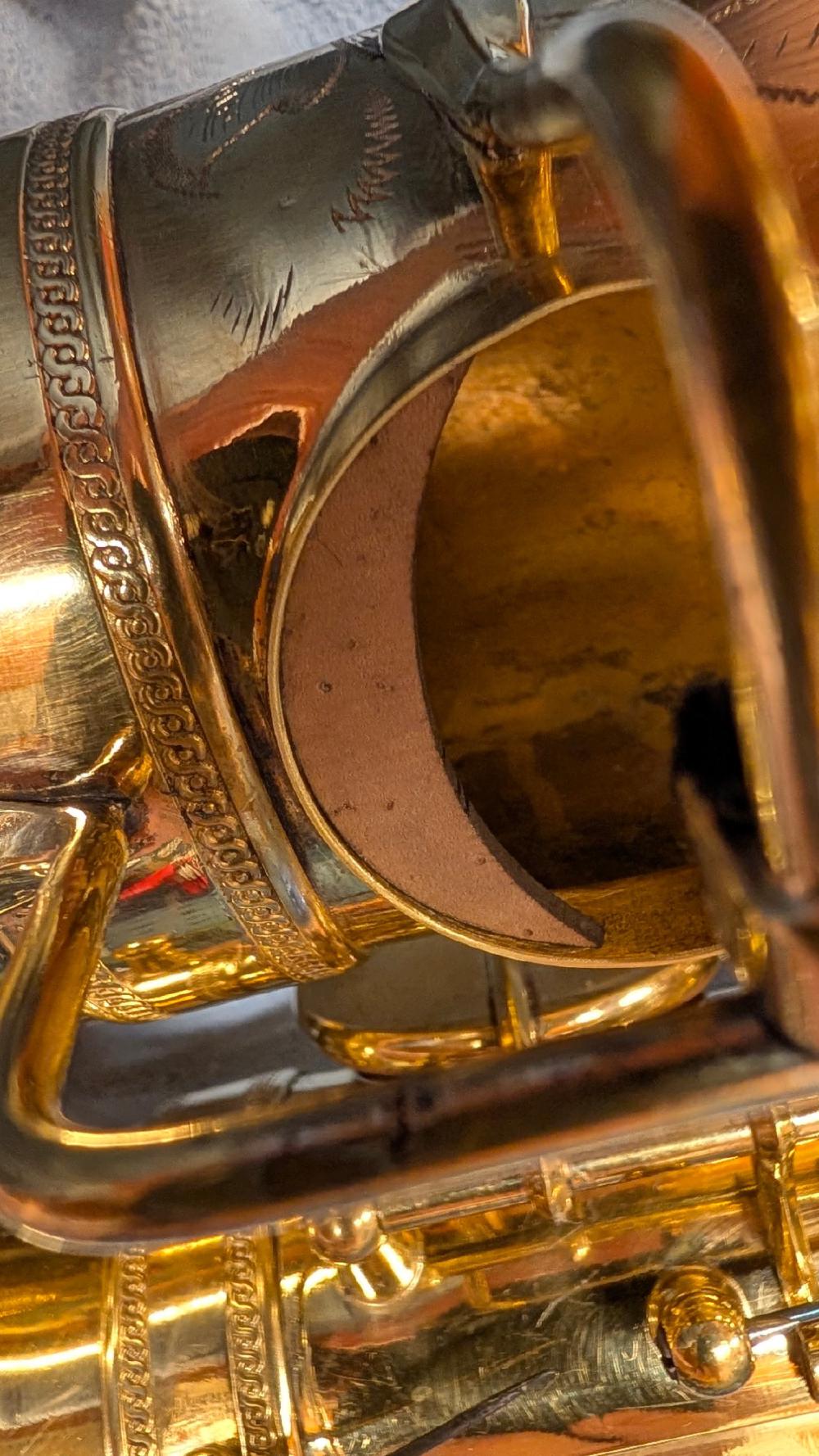
Installing or removing one is the work of a minute or two once you have access to the tonehole, and they clean off in minutes, so nothing about it is permanent. And making them is super easy and you can reduce the tonehole area with precision using the Sax Shop Companion.
People who put them in more water-prone places than the bell tell me you can seal them with various things, like nail polish, or 3D-print the crescent, which will be water-tolerant.
I put mine on the mouthpiece side of the tonehole. From Randy Emerick (who got it from Benade): “For toneholes that produce notes in 2 different octaves, a crescent on the opposite side [the bell side] of a tonehole will flatten the upper octave more than the lower octave.”