
A guest article by Uwe Steinmetz. This history was researched and written by saxophonist and composer Uwe Steinmetz, and originally published on his website. It is reproduced here — compiled from that article and his companion research thread on Sax on the Web — with his kind permission. © Uwe Steinmetz; please credit the author. Visit Uwe at spiritualjazz.net, and see the original post and ongoing discussion in his Sax on the Web thread.
These fascinating instruments are connected to fascinating biographies — and the one of Léon Leblanc is a good start to understand in which spirit these instruments were built.
Léon Leblanc, born November 24, 1900, in La Couture-Boussey to Georges Leblanc, wind instrument maker — successor to Denis Toussaint Noblet (1850–1919) — and Laure Clémence Jeuffroy (1875–1965), a worker “in musical instruments,” was surrounded by music from a very early age. Leblanc’s childhood was spent in the workshops, in contact with workers, machines, wood, and the musicians of the village band that his father, Georges, a bassoonist, led. When he was six years old, he began to learn the soprano saxophone, and then moved on to the clarinet. He was sent to the Collège Saint-Nicolas de Paris to further his studies, and, at 16, he earned his Brevet Élémentaire (a school certificate requiring two years of elective study). 1921 was the pivotal year: after earning his clarinet diploma at the Paris Conservatoire, Leblanc travelled in the United States for three months to display the Noblet-Leblanc clarinets, and soon realized the potential of the North American market. […]
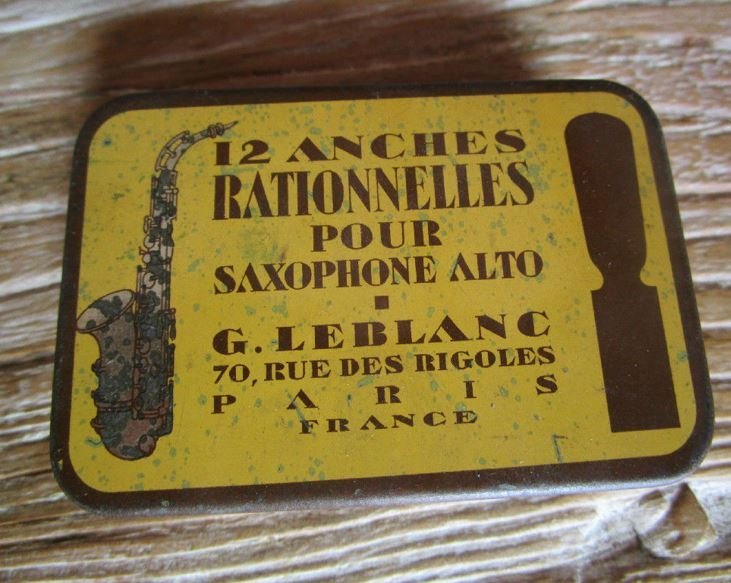
An enterprising and visionary son and a father oriented toward the future: these are the ingredients of success. In the mid-1920s, new three-story workshops were built in the Belleville district at 70 rue des Rigoles [70 rue des Rigoles throughout — on the firm’s advertisements, its reed tins, and the engraved bells themselves; the Musée de la Musique catalog’s “10” for #46 appears to be a misreading of the ornate engraved numeral] in the 20th arrondissement of Paris. It was thanks to Charles Houvenaghel (1878–1966), top-class acoustician, clarinetist, and friend of the Leblancs, that experiments and acoustic tests became widespread. They also opened up the way to modernity and to developing higher-performance instruments. Leblanc and Houvenaghel invented, patented, and manufactured models of clarinets to be able to form an entire orchestra, from the sopranino to the contrabass.
Source: “Léon Leblanc (1900–2000), music as a vocation,” Google Arts & Culture.
The First Leblanc Saxophone: “Le Rationnel”#
In 1926, Léon Leblanc filed the patent for a new saxophone, called “Le Rationnel” — “the Logical”; Patent US1840456: Saxophone, granted in 1932. Dutch researcher and saxophone builder Marten Postma has shown strong similarities with the final patent by Adolphe Sax from 1881 for an alto saxophone keyed to high G, with already similar keywork inventions, and is convinced that this heritage of Adolphe Sax was present to Leblanc and Houvenaghel. Sax himself was never able to realize this patent fully and built only one prototype, Ad. Sax alto saxophone #40842 (shown below alongside Leblanc’s #1; photo from M. Postma, Collection Leo van Oostrom).
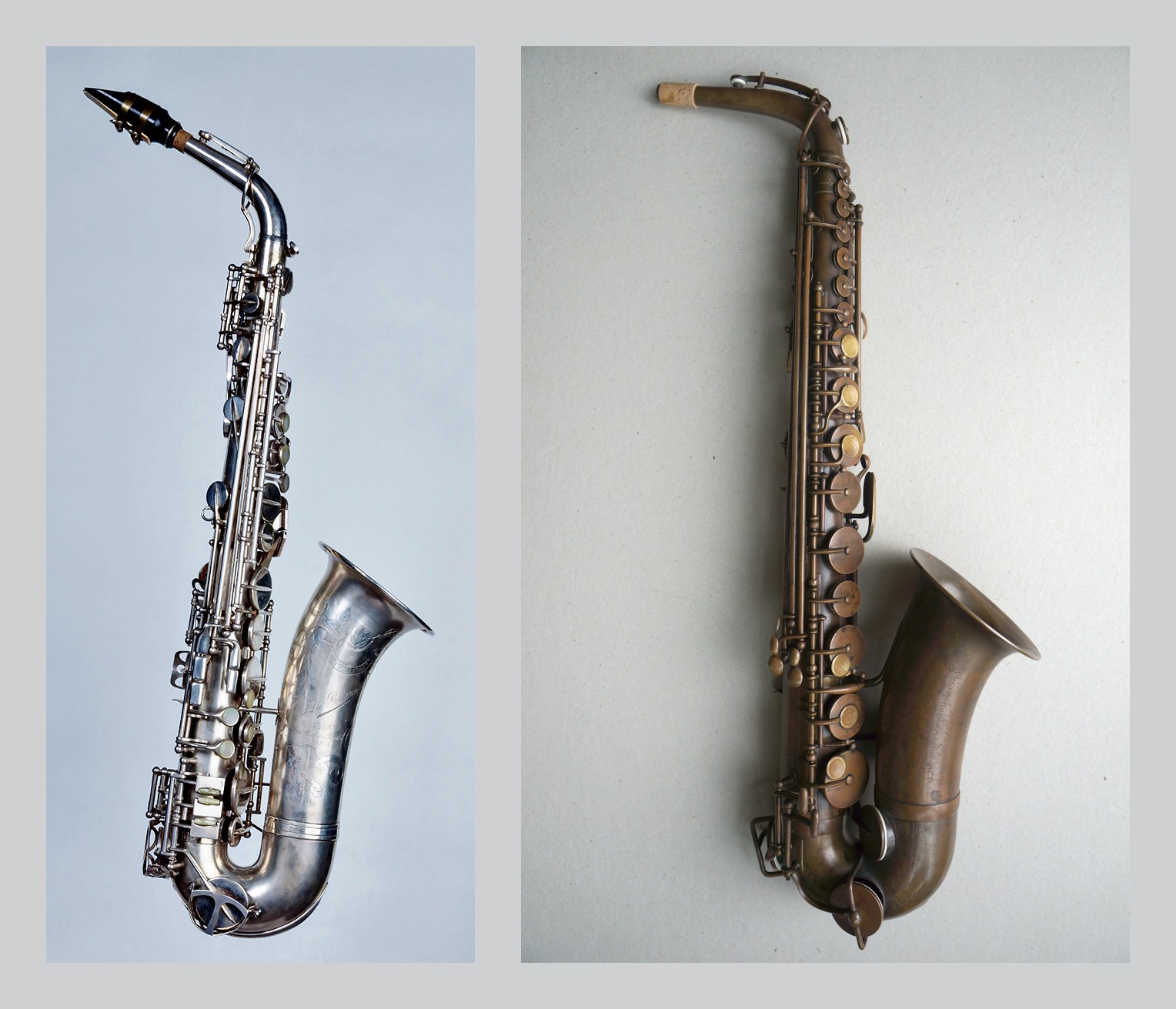
Both Adolphe Sax and Charles Houvenaghel searched for ways to build saxophones truthfully to the fundamental principle of Theobald Boehm: no key cup below an open tone hole should be closed, to allow the most free and undisturbed sound on each note, resulting in an equal chromatic scale of the saxophone. In conventional saxophones following the Adolphe Sax design, Low C#, Eb, and G# remain closed, and cross-fingerings for middle C, Bb, and F# were common — which sounded muffled and created instabilities in intonation.
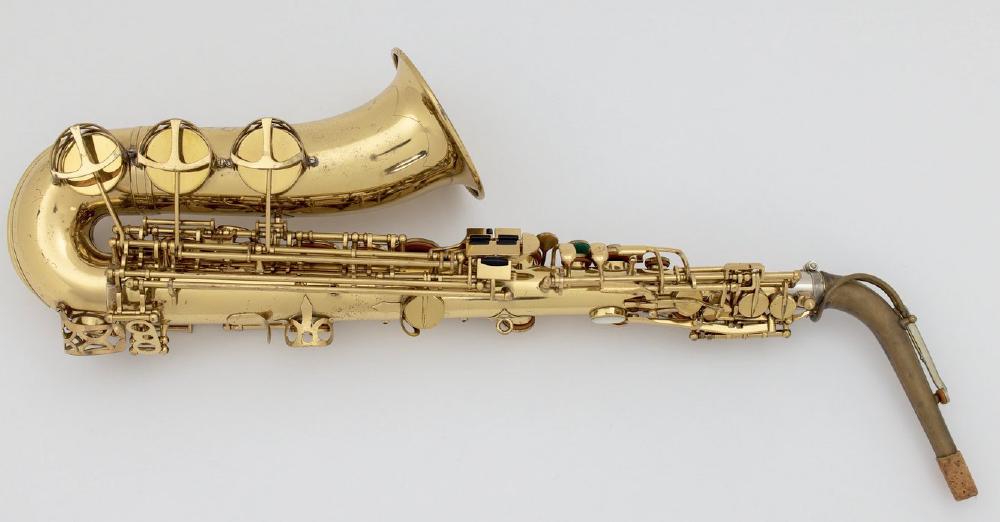
Leblanc’s first saxophone solved this challenge. It had fully interconnected palm keys up to high-G, which allowed trills and virtuosic playing in the third octave; a small hole in the left-hand thumb rest like an alternative octave key for the second octave, with better intonation on D and Eb; and it also allowed trills with an additional key for low B on the little finger of the right hand. In addition, any key depressed on the right hand lowered the fingered note on the left hand a semi-tone, which created a new logic for chromatic playing on the saxophone.
Furthermore, it was built completely out of solid nickel silver (Maillechort), which Houvenaghel attributed special acoustical properties to:
It is without doubt the most perfect material, which meets all the requirements of the modern artist; its molecular state is of great inertia and its power of reflection at the nodes of vibration superior to many metals, which favors and facilitates the emission of sound; its dilatation is much less than that of copper brass, as well as its conductivity, while its resistance is much higher.
— James A. MacGillivray, “Recent Advances in Woodwind Fingering Systems,” The Galpin Society Journal, Vol. 12 (May 1959), pp. 68–72.
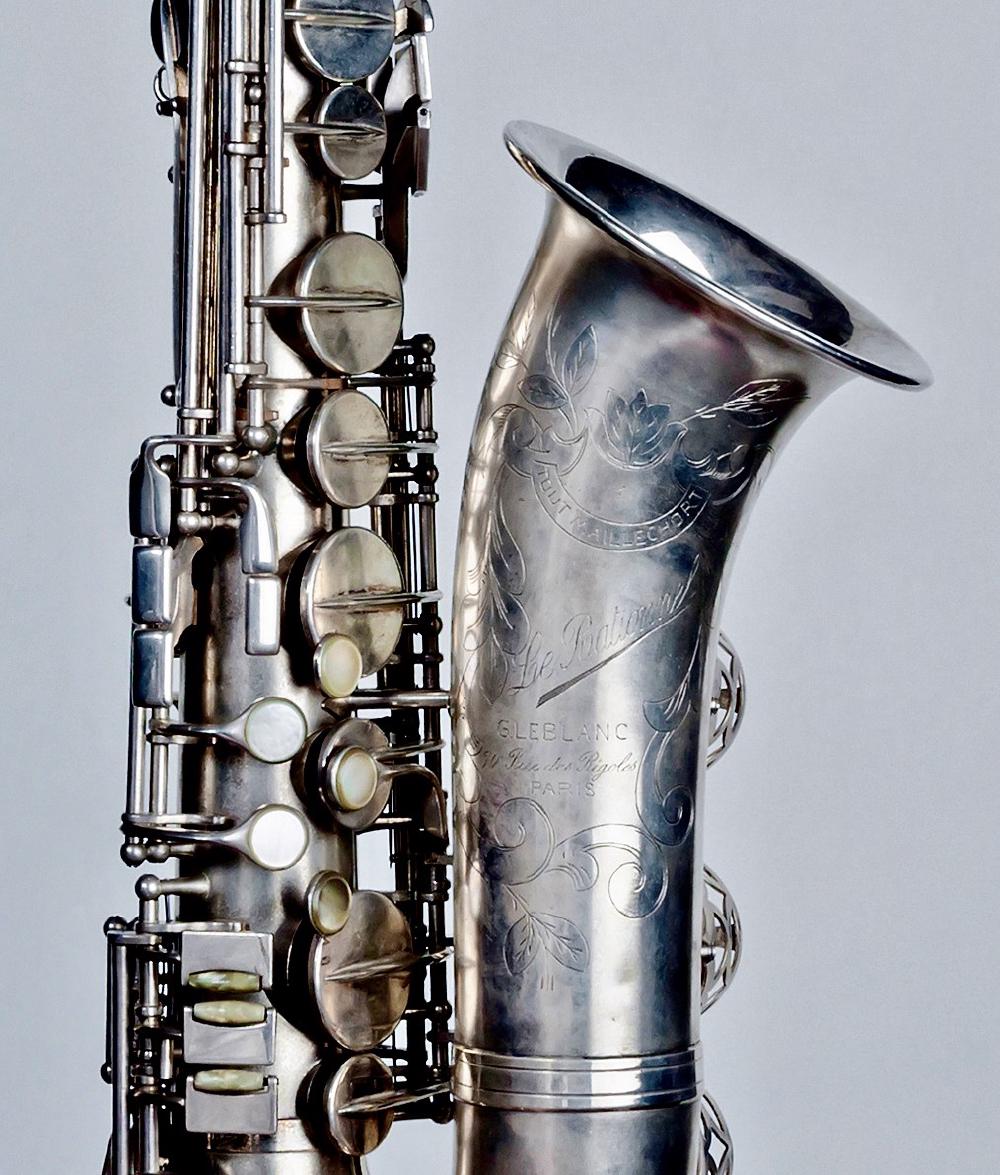
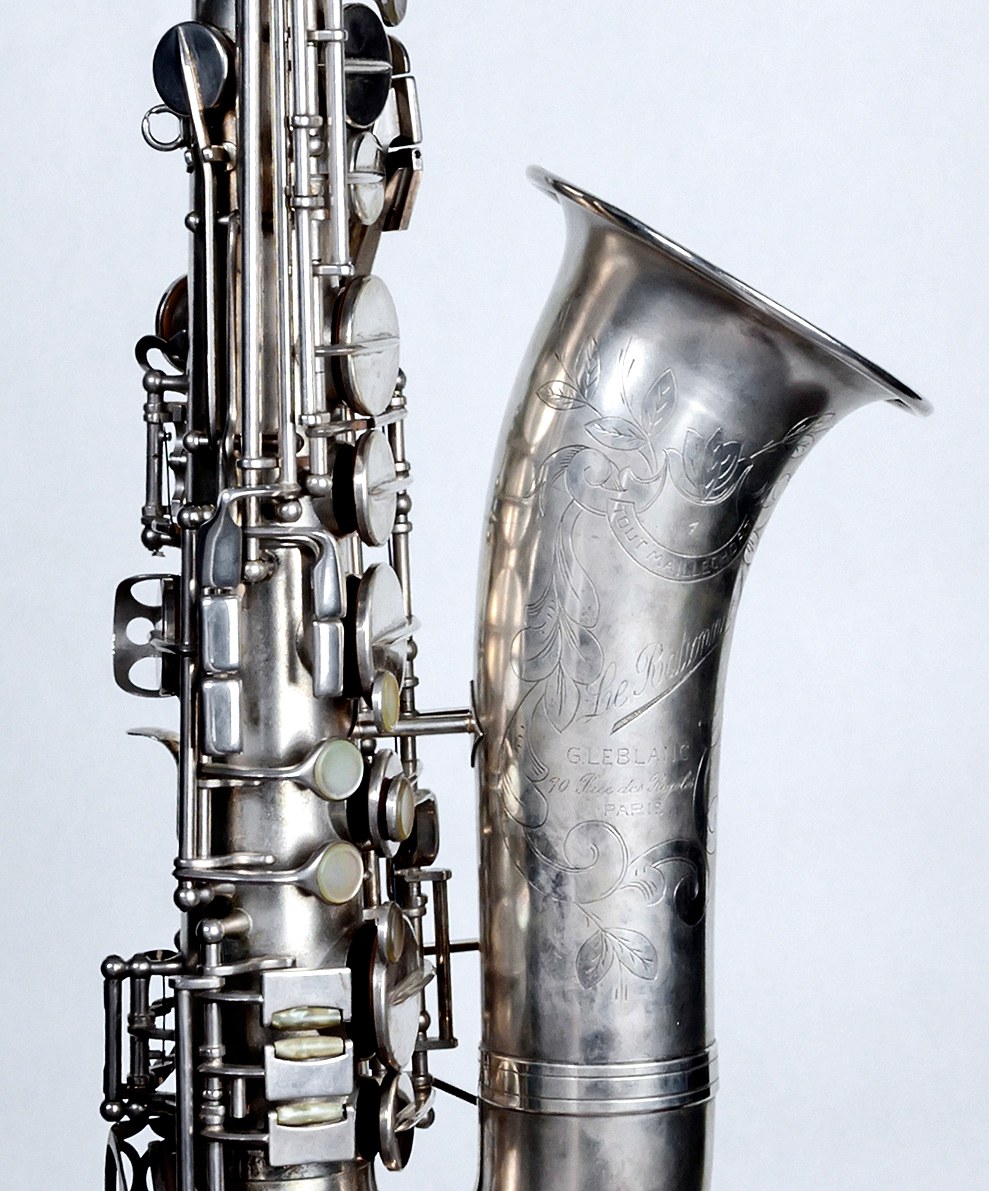
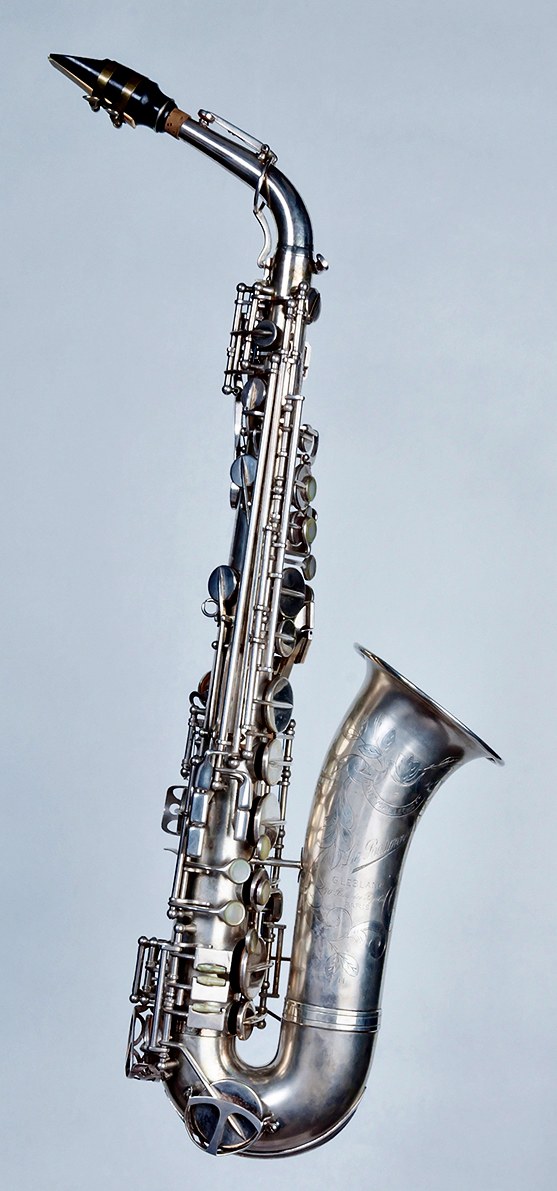
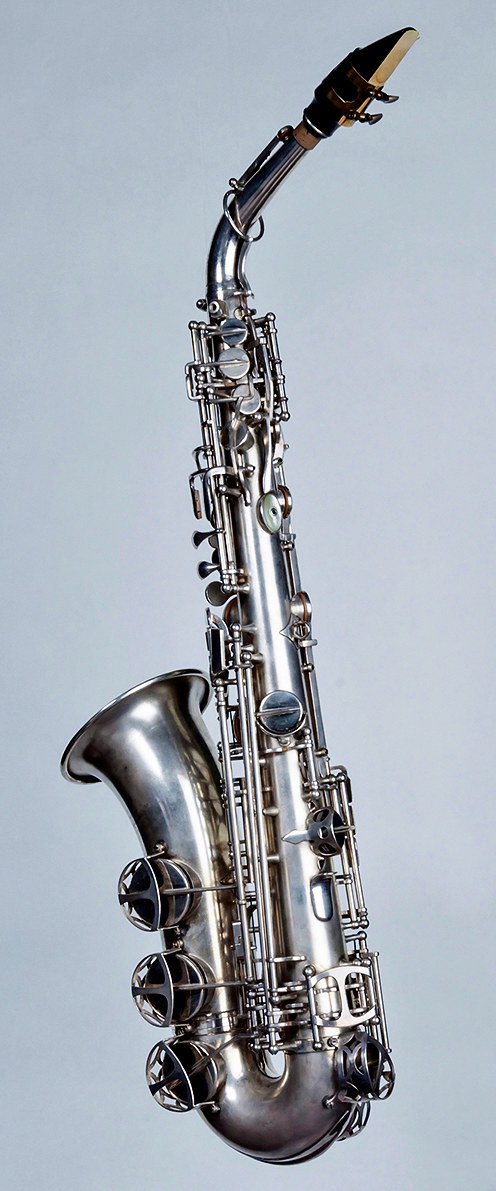
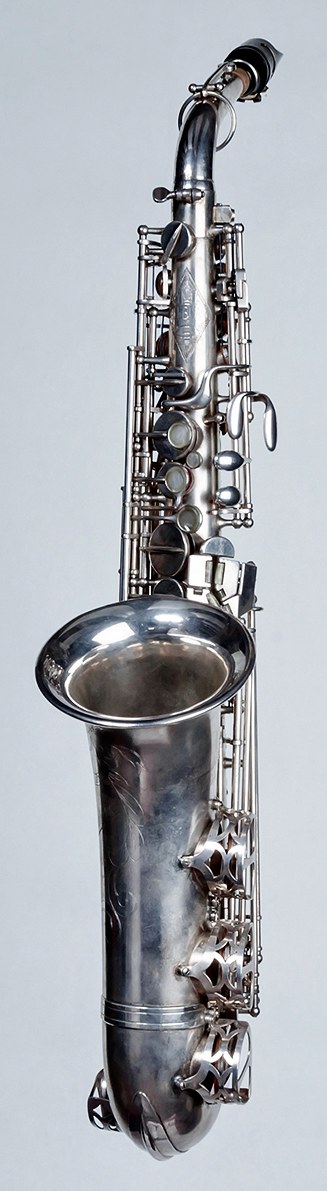
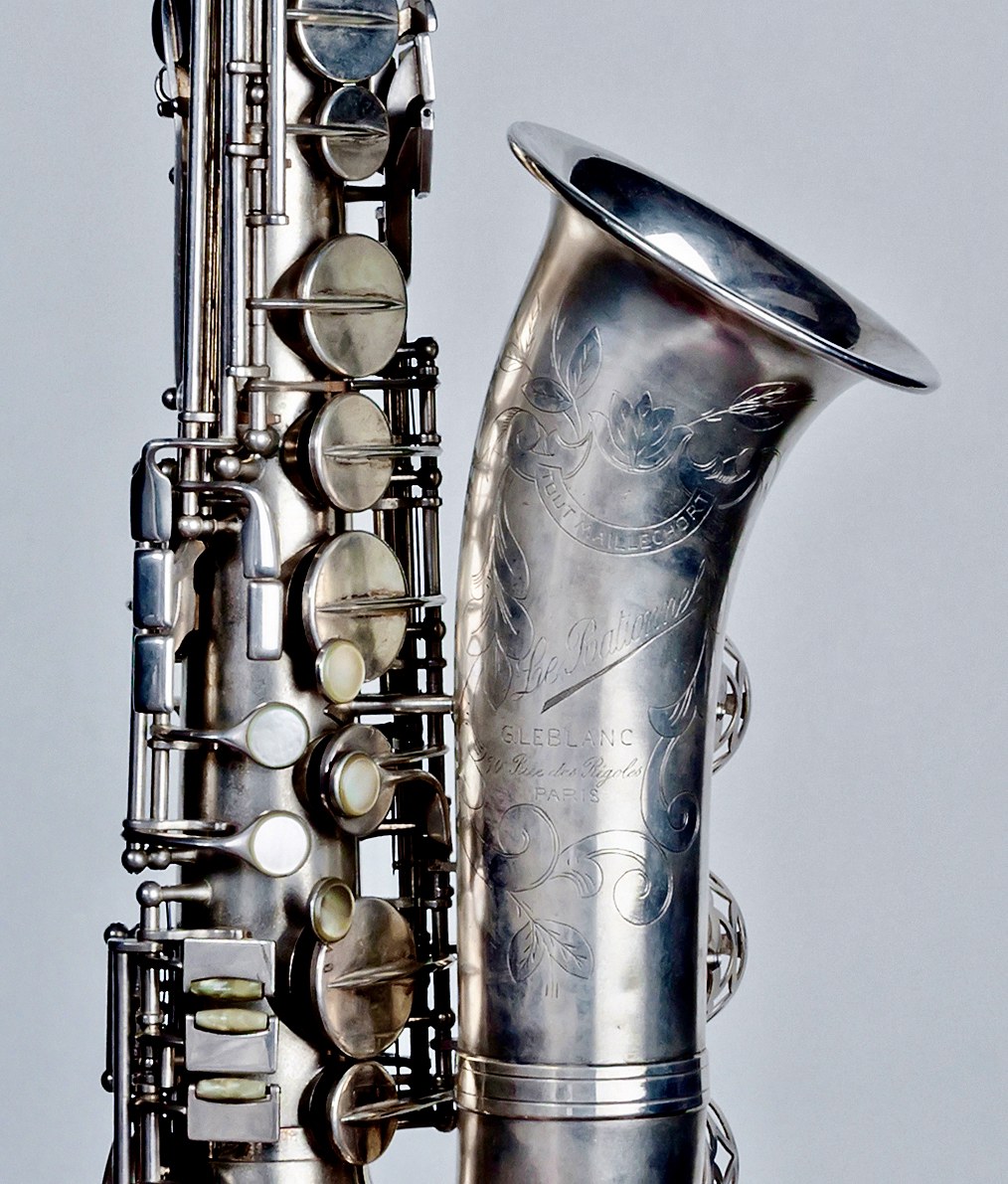
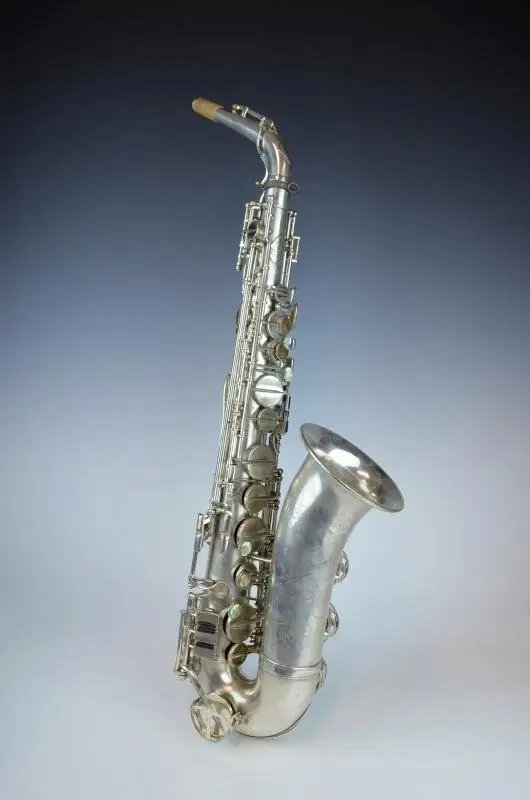
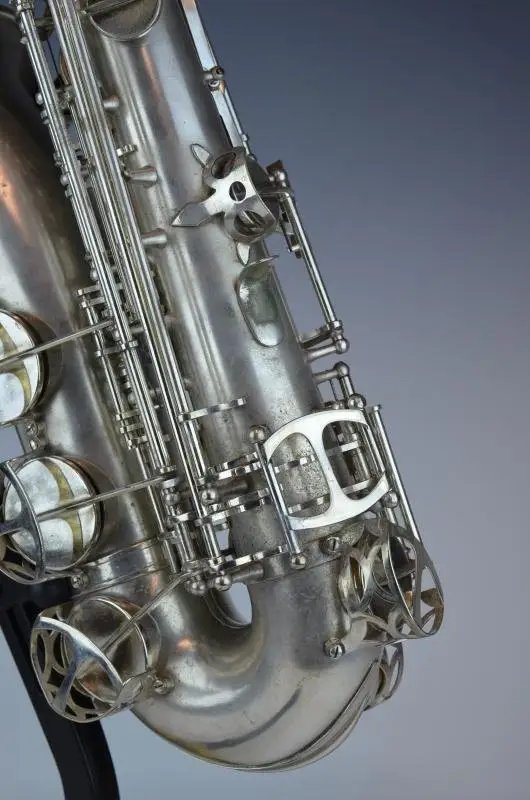
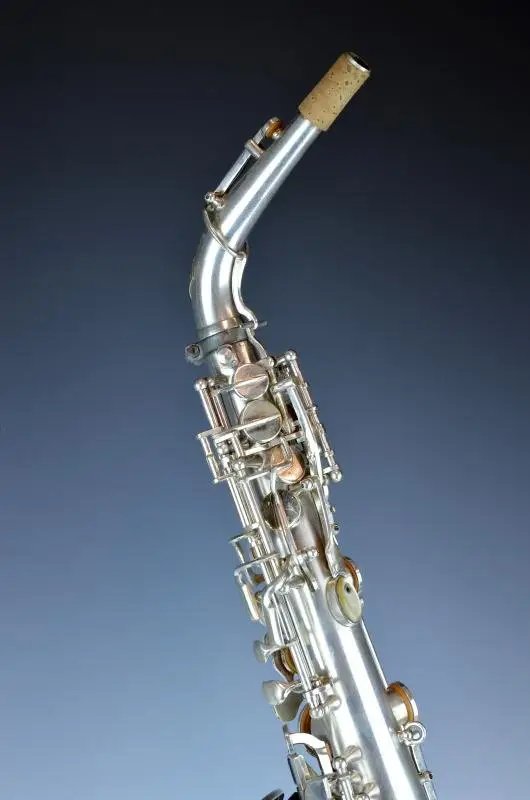
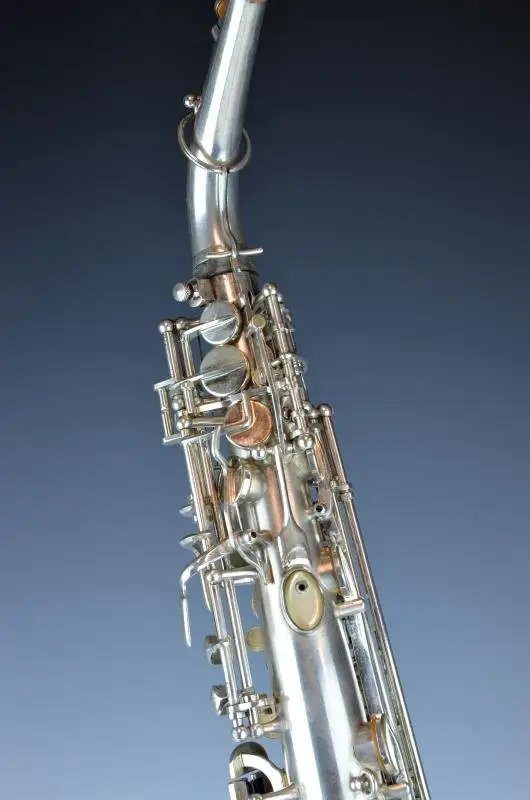
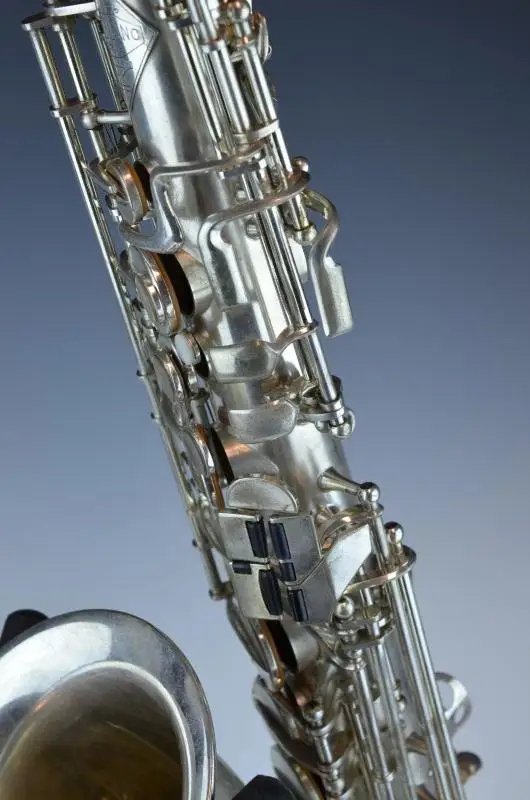
In the first years this model was altered and simplified; later examples show fewer palm keys and improved mechanical linkages. One celebrated survivor — Rationnel #46, its bell engraved “Le Rationnel — Tout Maillechort” — is held in the Musée de la Musique in Paris. Paul Cohen, owner of #95, writes on Sax on the Web:
The sound of my Rationnel is clear, responsive, resonant and very even from top to bottom. But the most amazing part of the playing experience is the mechanism, and all the new possibilities it offers. Truly amazing. I claim no expertise in either understanding or mastering the keywork innovations (apart from the acoustical re-design), but it is a fascinating undertaking.
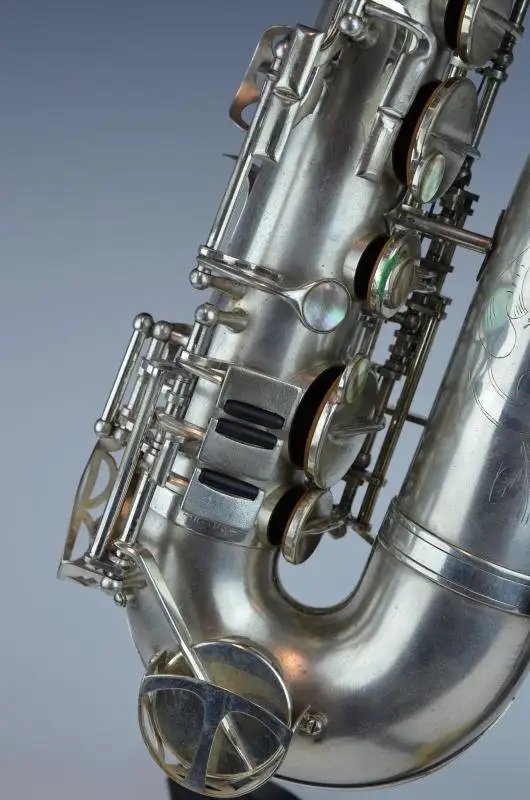
A later Rationnel: Paul Cohen’s #95, in silver.
The Semi-Rationnel (1935–1945)#
Houvenaghel and Leblanc developed and simplified the original saxophone design continuously in the following decade. While Leblanc was new on the market for saxophones, it had a long history of building other woodwind instruments, and applied the highest standards to building saxophones now as well. From a former musician who knew Léon Leblanc, I heard that Leblanc did not worry about the success of his saxophones because he trusted, as with his clarinets, that they would eventually just win the artists over by their quality. This might sound naïve — but when we compare these instruments with their competitors in the late 1920s, the perfection and artistry applied to the mechanics of these instruments could have appeared superior in comparison to other models such as the Selmer Model 28, Selmer Super, etc. But the overly complex mechanism was certainly highly costly and difficult to maintain. So a lot of effort was put into refinements and simplifications, while maintaining the core sound and equal scale of the instrument.
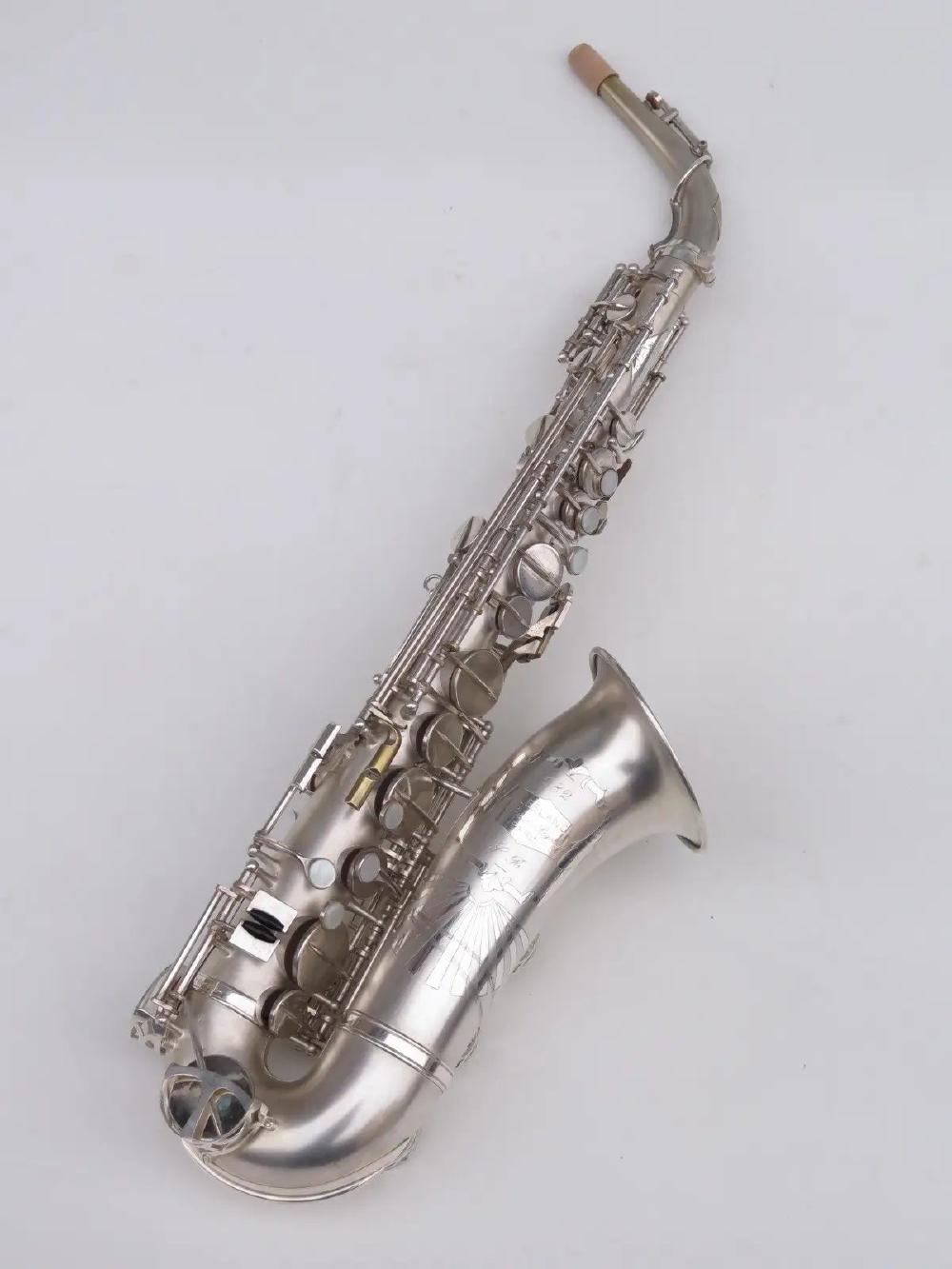
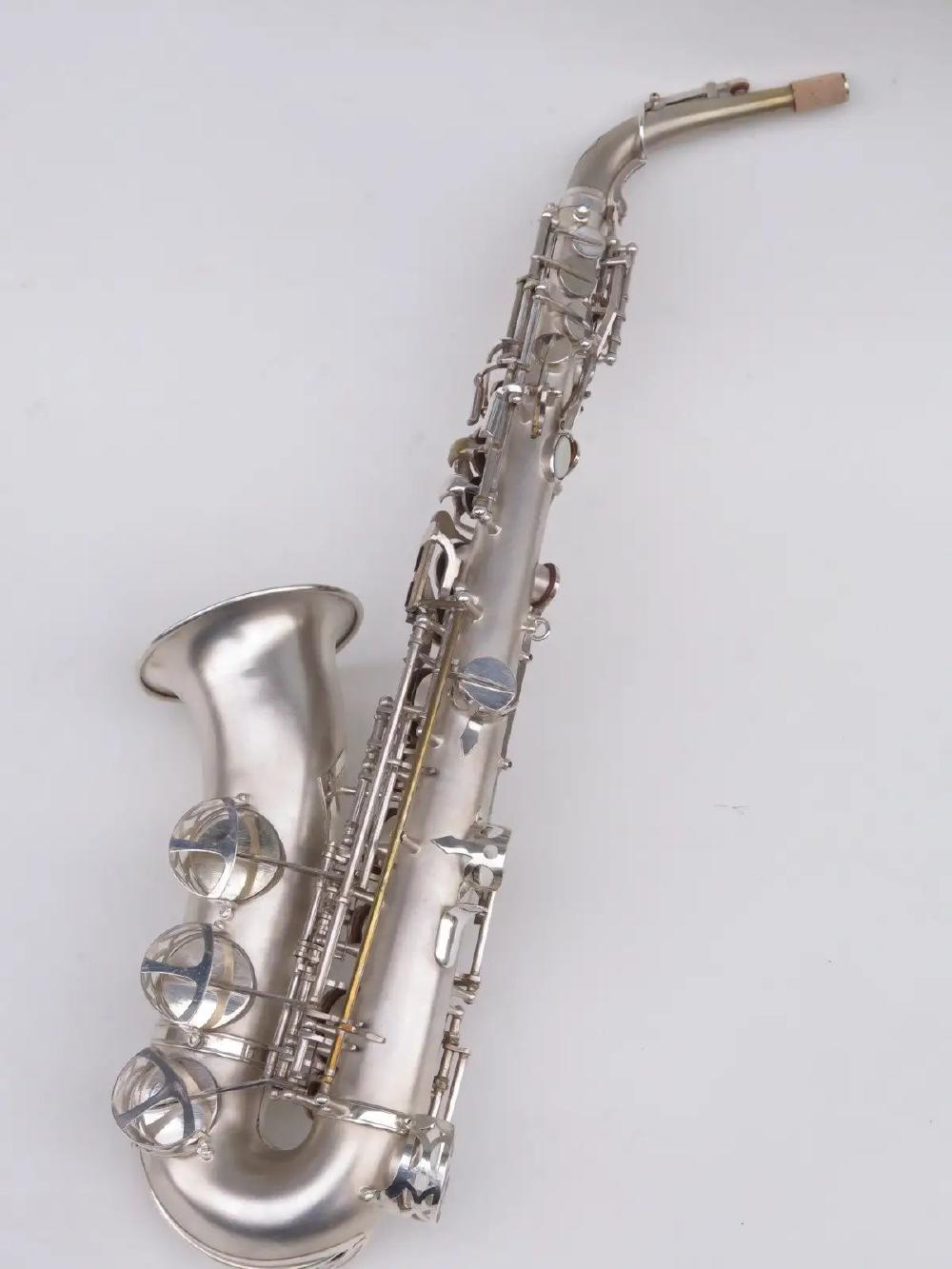
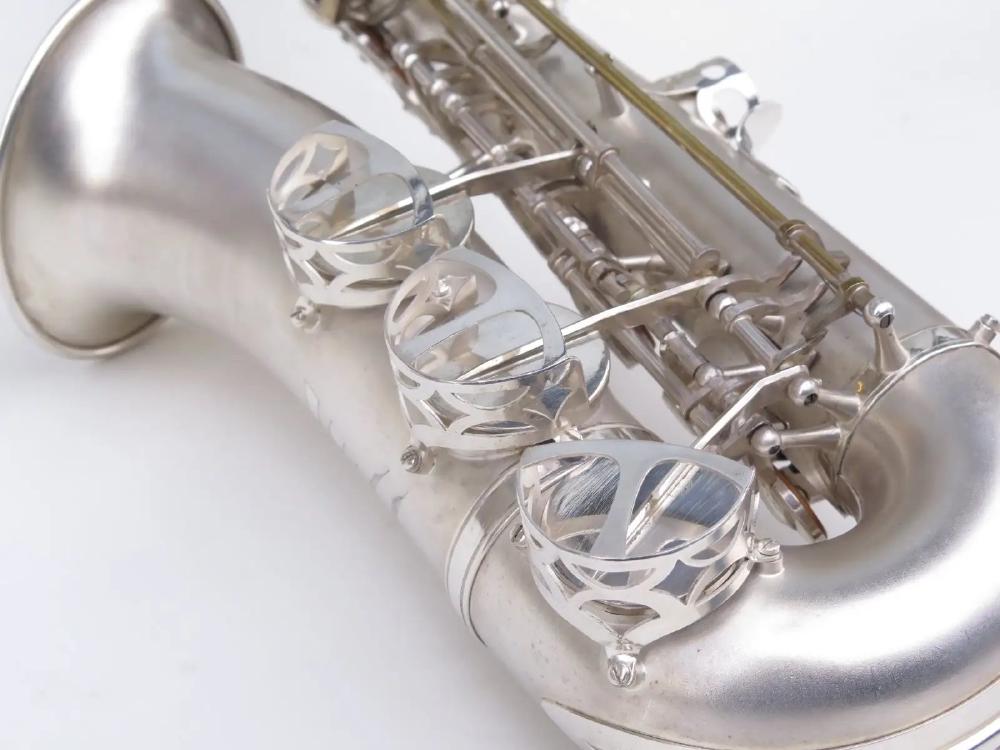
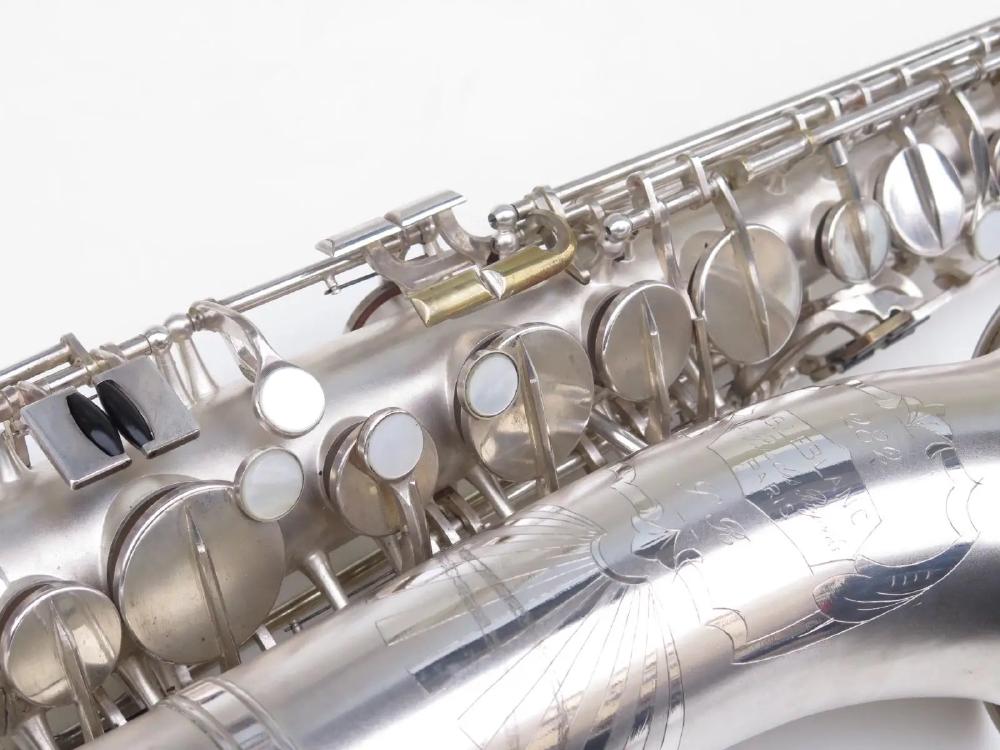
By 1938, alongside the already modified and improved Rationnel model, Leblanc sold a version with a less complex key mechanism — the semi-Rationnel — that lacked part of the left-hand palm trill keys and also the open low C#.
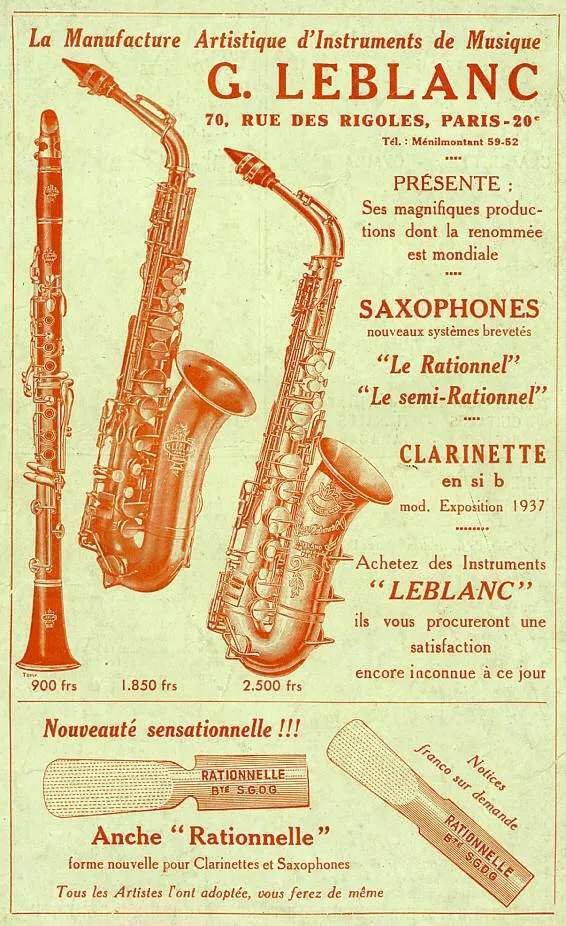
At this point (with strong inflation in France as well), Leblanc’s prices were high for the Rationnel, and the semi-Rationnel was, in comparison, also considerably cheaper to produce, as it had less complicated mechanics and was made out of silver-plated brass rather than German silver. From this series, a few hundred alto saxophones were built; the serial numbers had a prefix of SR, SR-A, or SR-B, and the highest known serial number is #282.
The semi-Rationnels were constantly changing, and became more and more elegant and comfortable design-wise while maintaining their sound quality. A well-preserved example can be seen in the collection of the Musée de la Musique in Paris (Saxophone alto en mi♭). I recorded and toured with #92, and I also played #282 for a while — now in a private collection in Switzerland. #282 represents a good contrast to #92 in terms of elegance and keywork simplifications, though the two instruments might also be around 5–10 years apart.
Semi-Rationnel #92 — the silver alto I recorded and toured with.
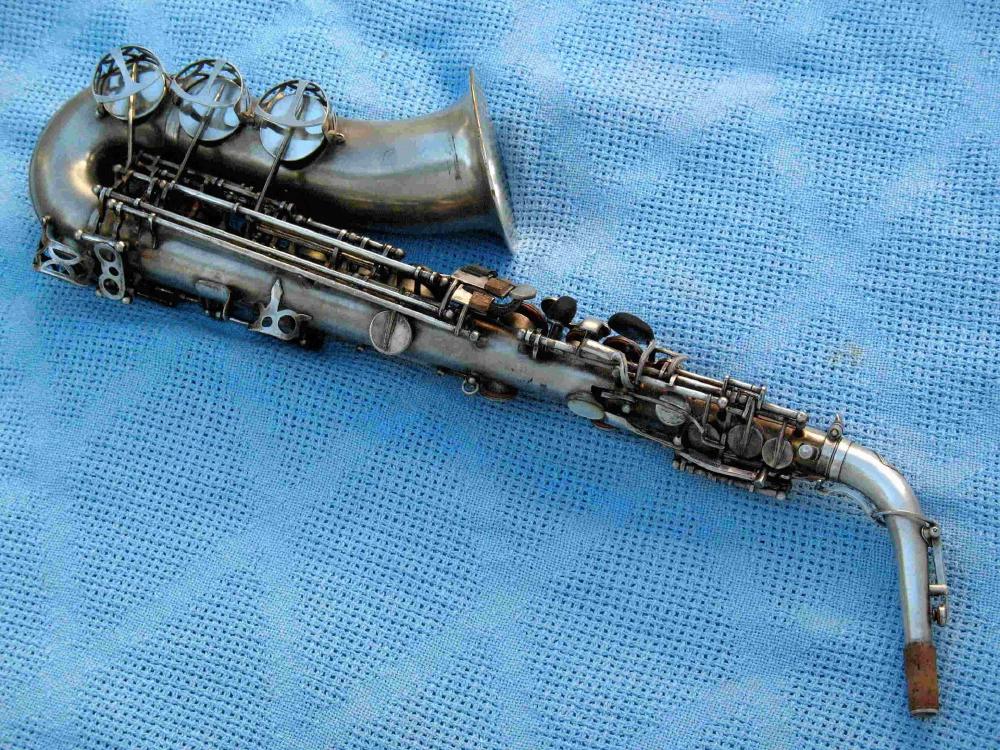
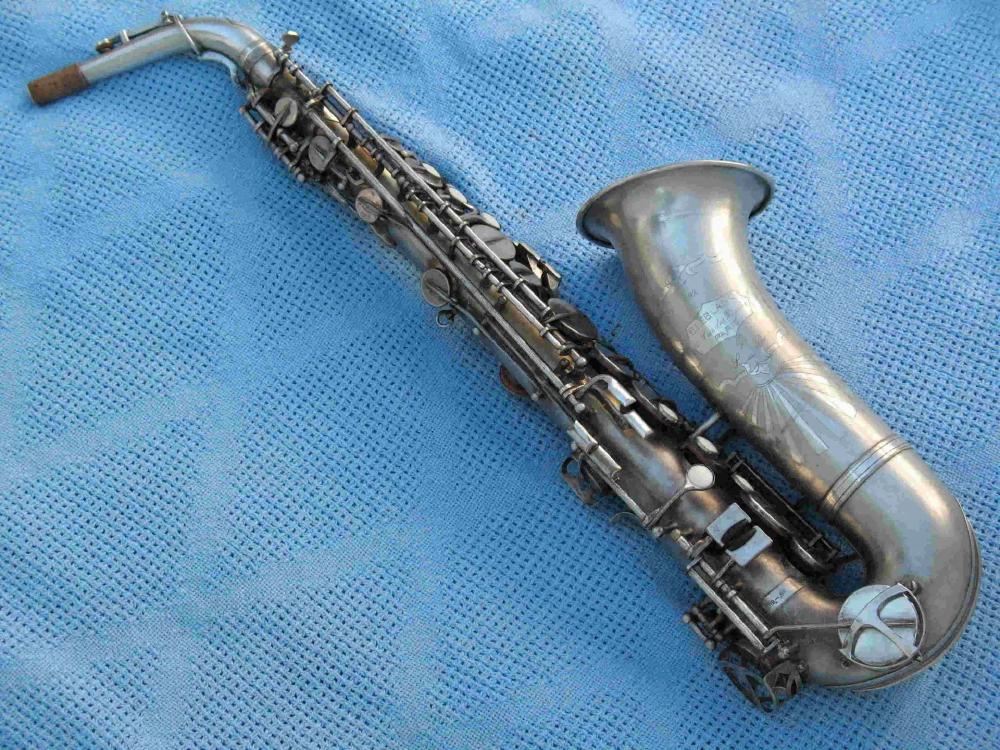
Another well-preserved example — a silver, sandblasted-and-engraved semi-Rationnel — is documented in detail here:
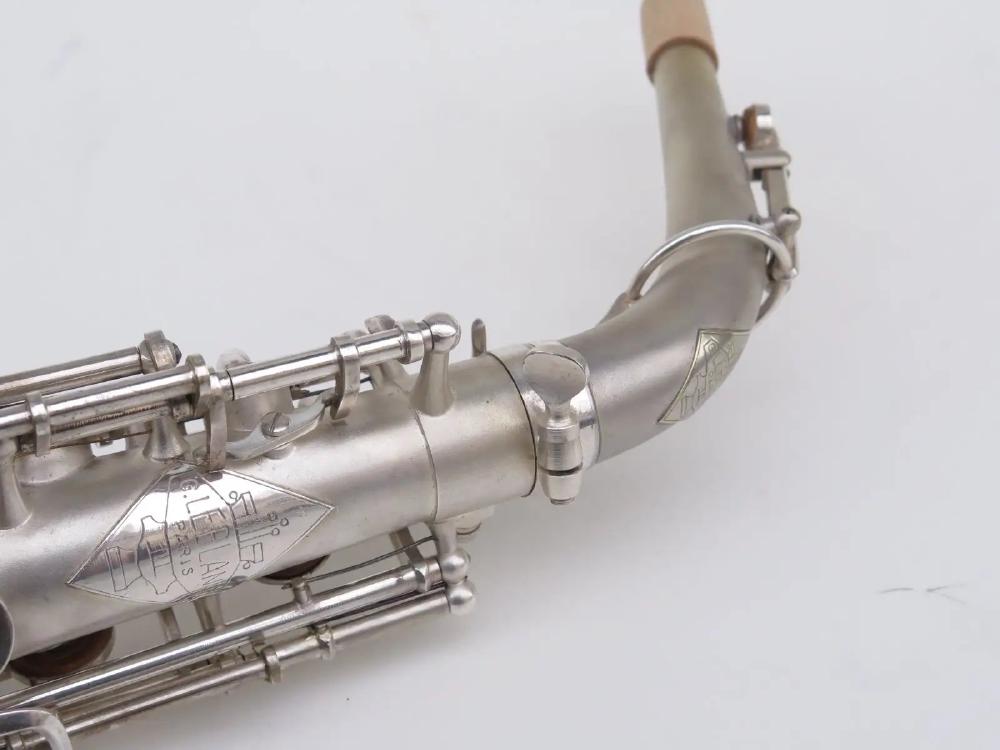
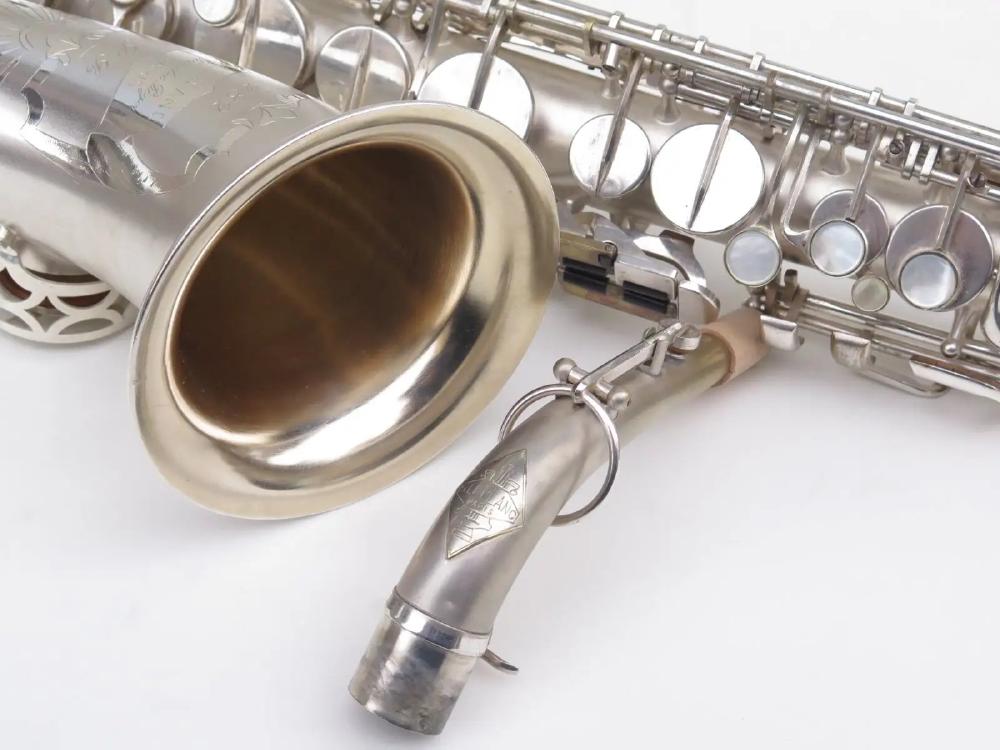
The Paris System 100 (ca. 1950): From Paris to New York#
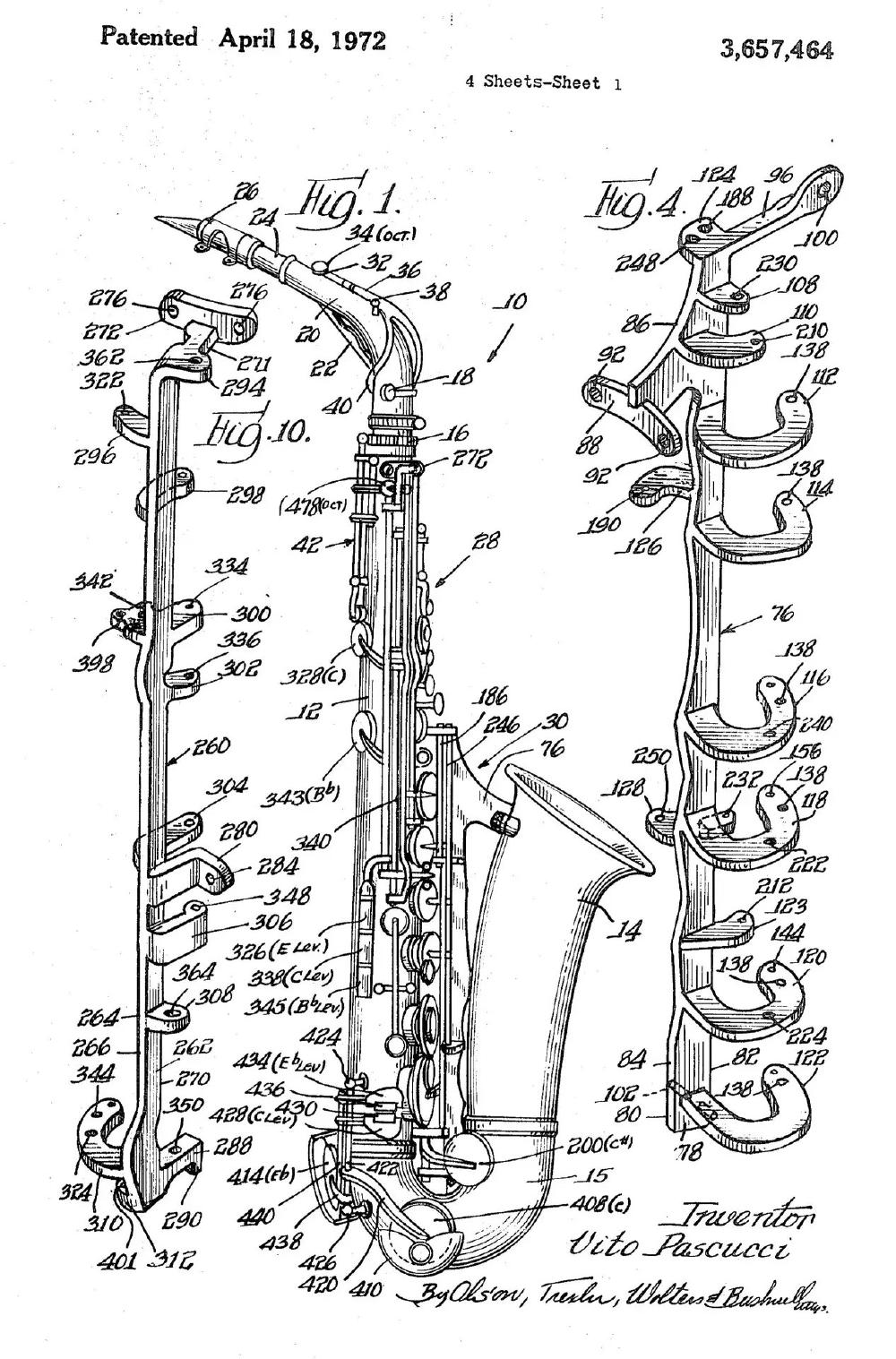
On his return from traveling in America in 1921, Leblanc was convinced that he should take on the American market, and, in June 1935, following yearly trips to display his instruments, he formed a company under the name G. Leblanc Inc. in New York for the manufacture, purchase, sale, import, and export of all types of musical instruments. Likely due to the sociopolitical and economic tensions of the late 1930s, the company was probably never active. In 1944, Leblanc met Vito Pascucci, repairman for the Glenn Miller Army Air Force Band, in France. After Miller’s tragic death in December 1944, Leblanc suggested that Pascucci create a distribution company in the US, and Pascucci “rose enthusiastically to the occasion.” In 1946, G. Leblanc Corporation was born. (Source: “Léon Leblanc (1900–2000), music as a vocation,” Google Arts & Culture.)
While the new company was making a significant impact on the US market for clarinets, Léon Leblanc also promoted the further development of his saxophone, which underwent constant improvements for the US market as well. For the New York World’s Fair of 1939, a lacquered version of the semi-Rationnel and a new prototype — which had an even more elegant mechanism but lacked the open low C# and was keyed only to high F — were presented to the public.
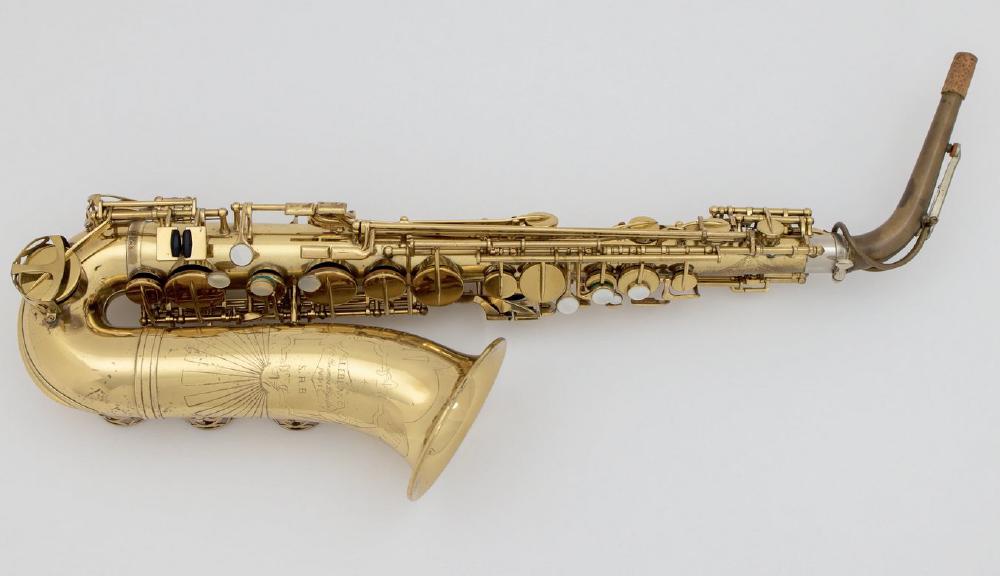
The lacquered semi-Rationnel, S.R.B. 4 (photos © Paul Tucker, DC Sax), is the only lacquered version of the semi-Rationnel I have seen; it still looks more old-fashioned than SR-B #282, but it was perhaps used to demonstrate the complexity of the original system. An extensive gallery can be found at SaxPics / bassic-sax.info (Pete Hales). The other prototype supposedly presented alongside it is far more exciting: it served as the prototype for the Paris System saxophone that Leblanc marketed in the USA after WWII. An extensive gallery of this 1939 Eb-alto prototype is on SaxPics / bassic-sax.info.
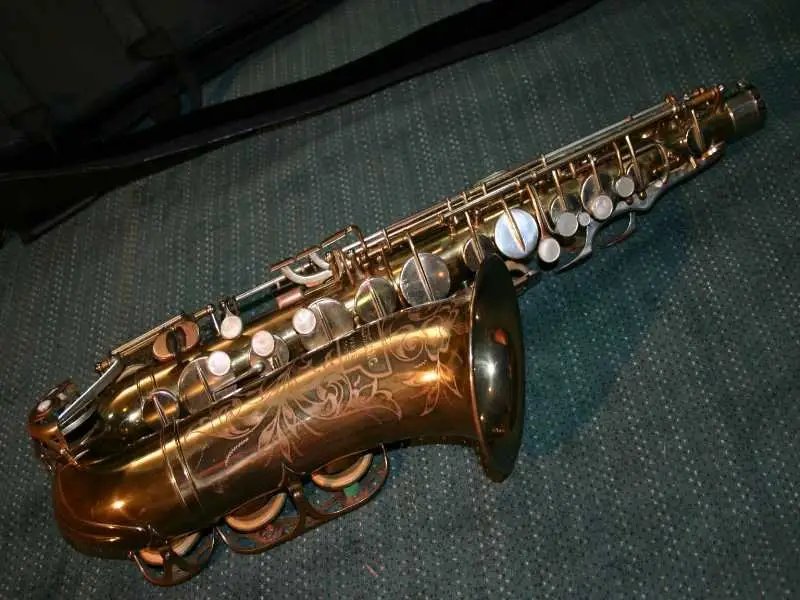
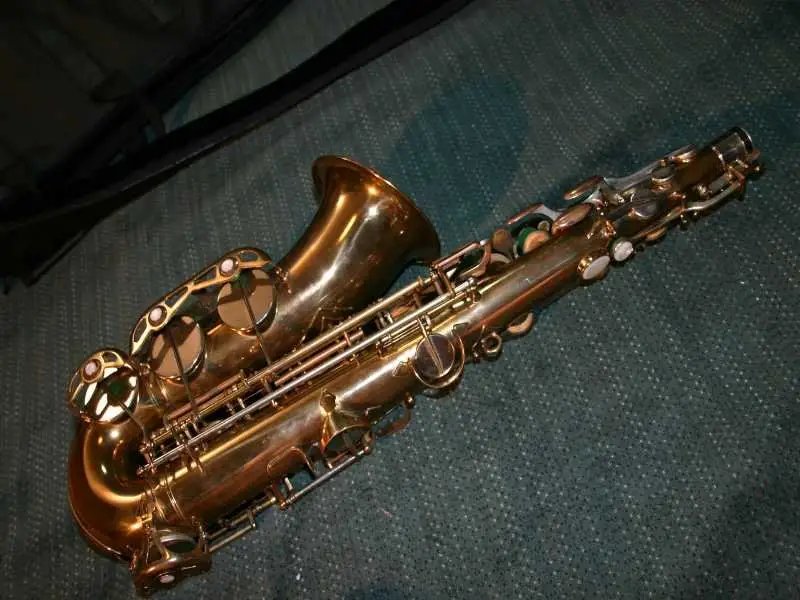
The earliest advertisements I have found for the Paris System date from 1953 (Music Educators Journal, Vol. 40, No. 2, Nov.–Dec. 1953) and September 1954. Note the price in 1953: US $448 — the Selmer Mark VI (1954 catalogue) cost just $14 more (source: saxophone.org). These prices were considerably higher than the competing American-made instruments from Conn, Buescher, King, and Martin. While Selmer already had a market share in the USA, Léon Leblanc and Vito Pascucci had to start out fresh — and with an already outdated instrument when it came to the mechanical features, except for the reliable evenness of scale and the fingering options that Leblanc offered.
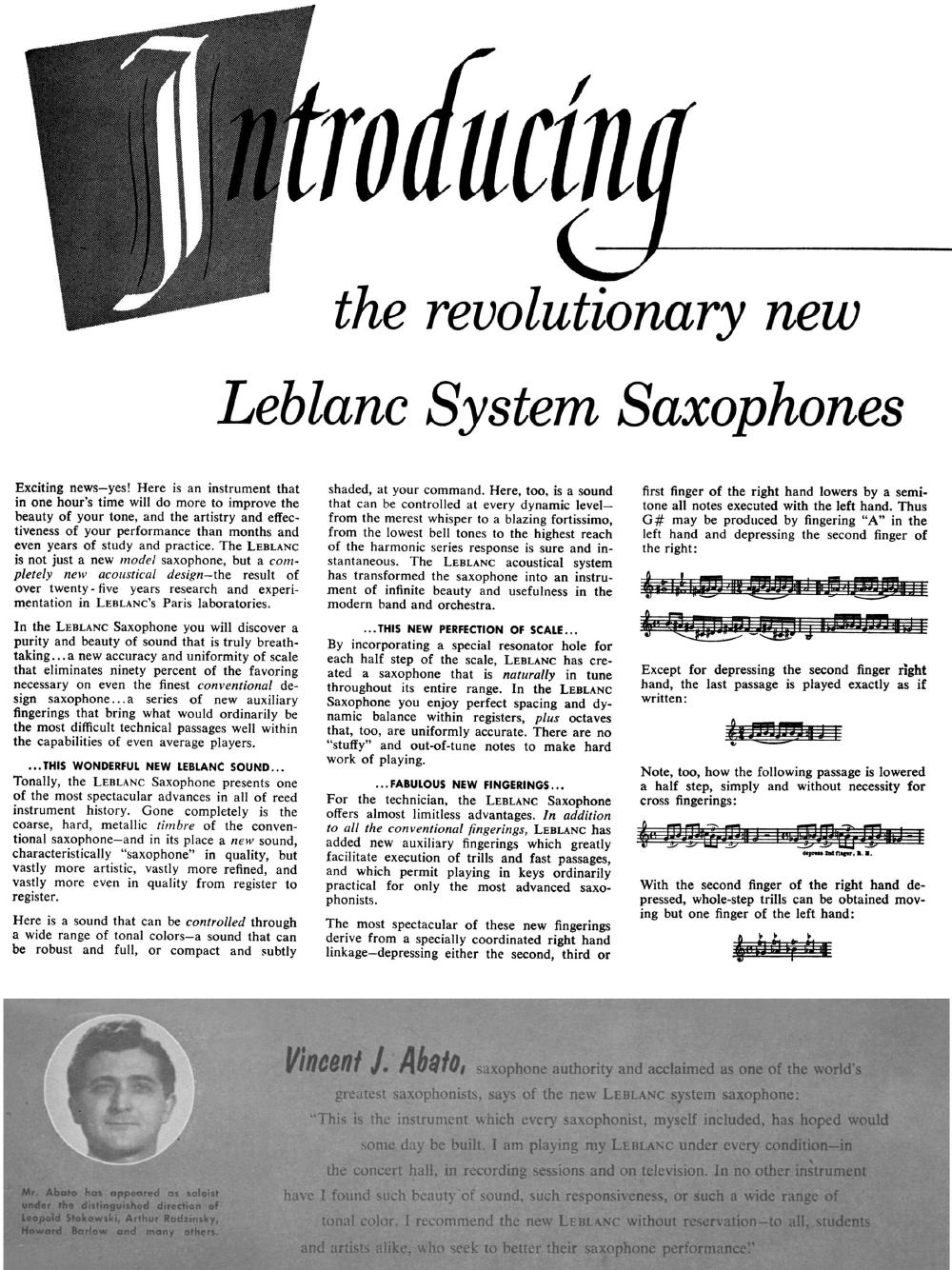
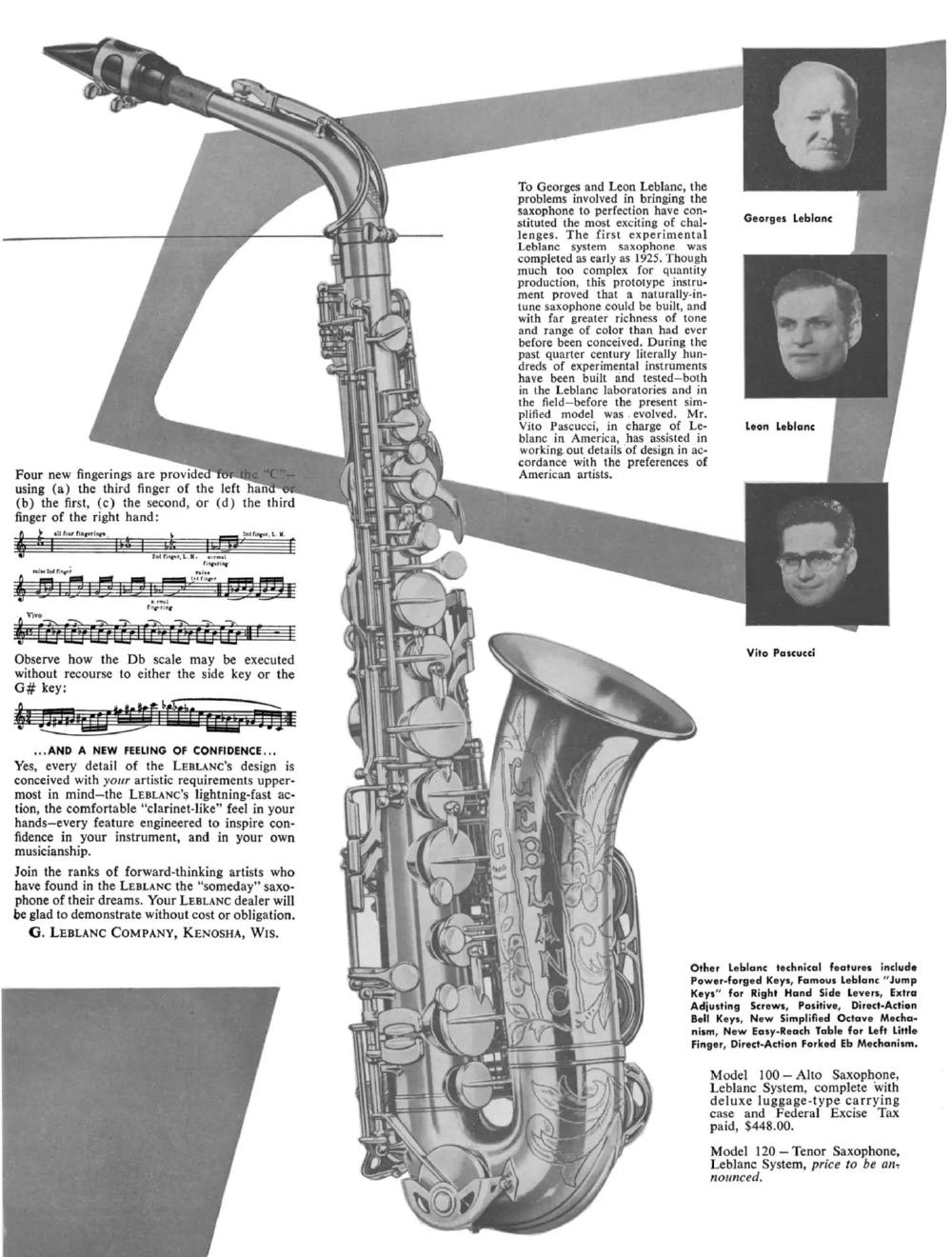
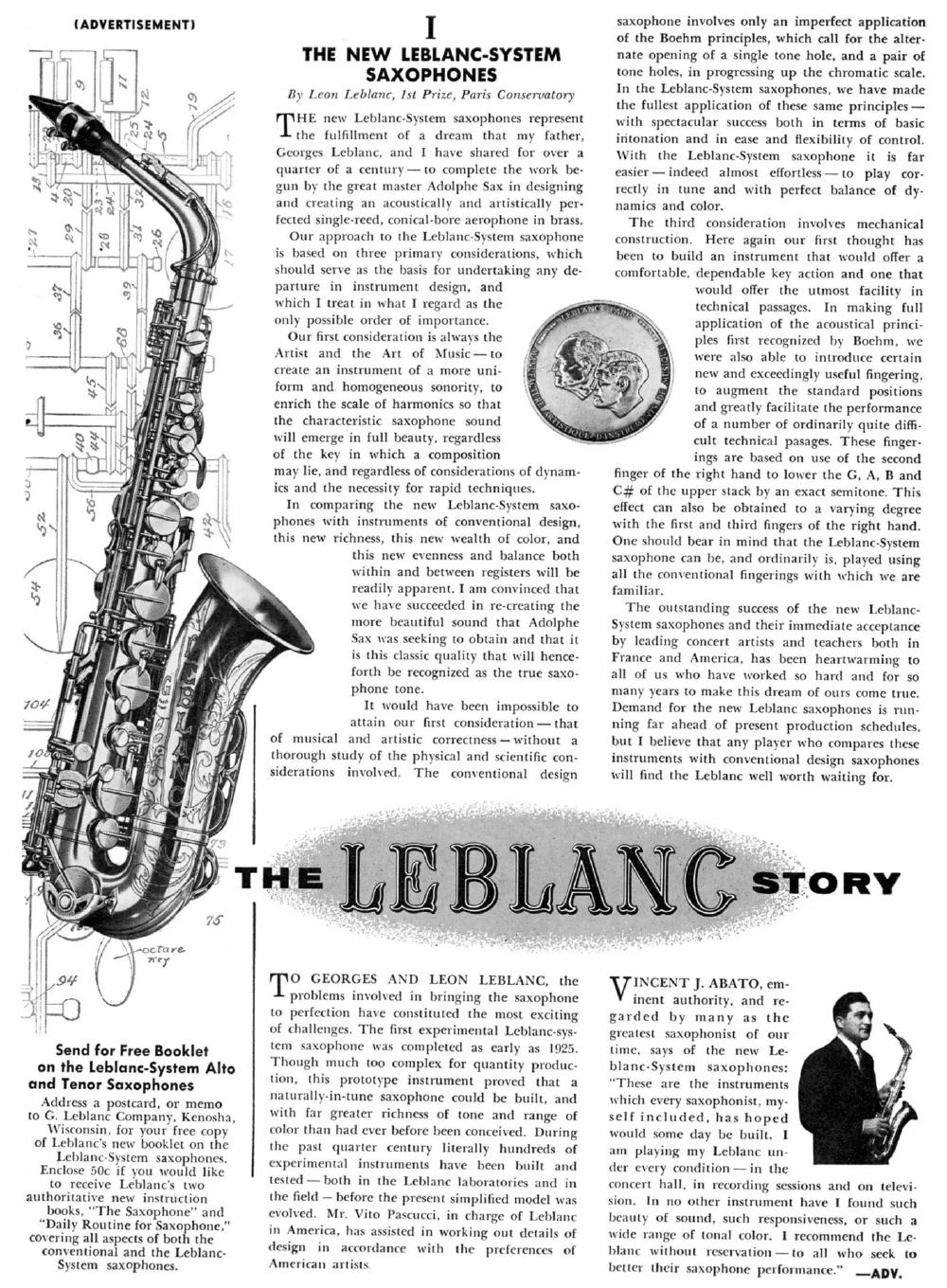
These early Leblanc System alto saxophones (tenors were apparently not yet available, according to the ads) had:
- no additional front high F#, but a regular front forked pearl F key;
- no double arms on the low bell keys;
- no cloth guard to protect the mechanism for the low bell keys; and
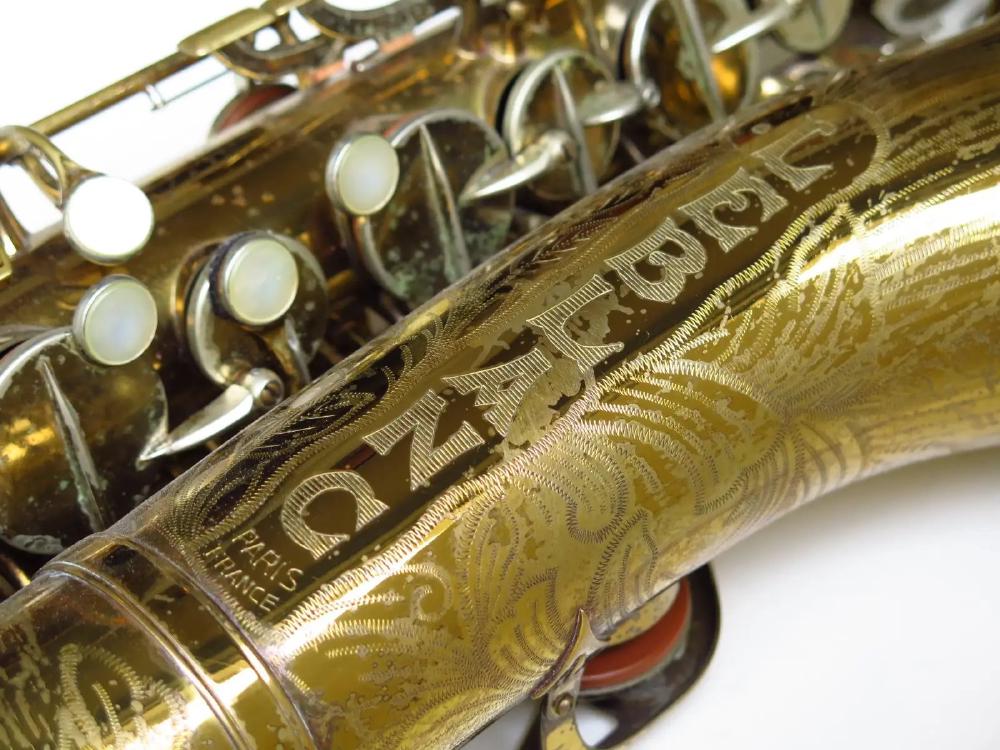
- a flowery engraving more similar to French saxophones, including “Paris/France” below the G on the bell engraving.
The serial-number system started new and without a prefix.
The Leblanc System, Series I (1955–1960)#
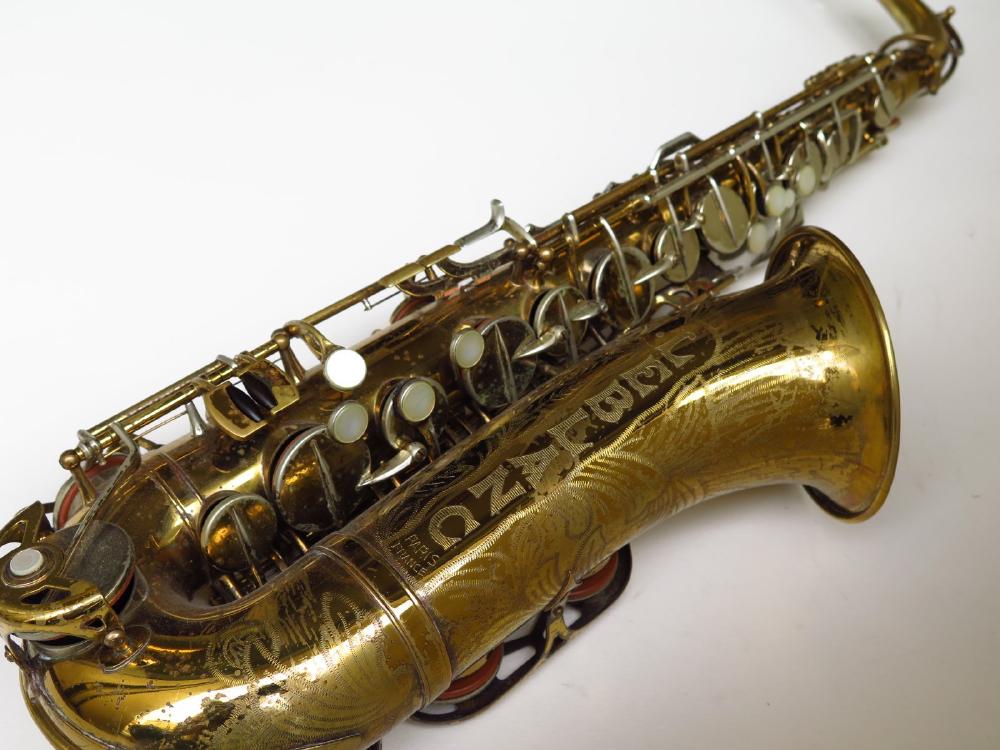
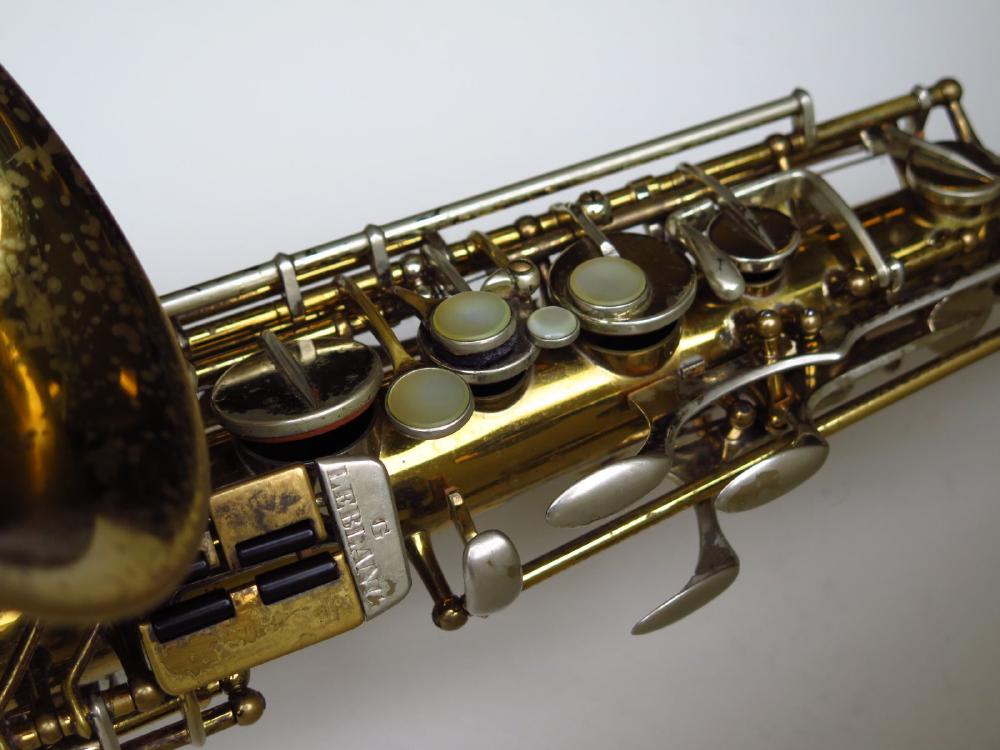
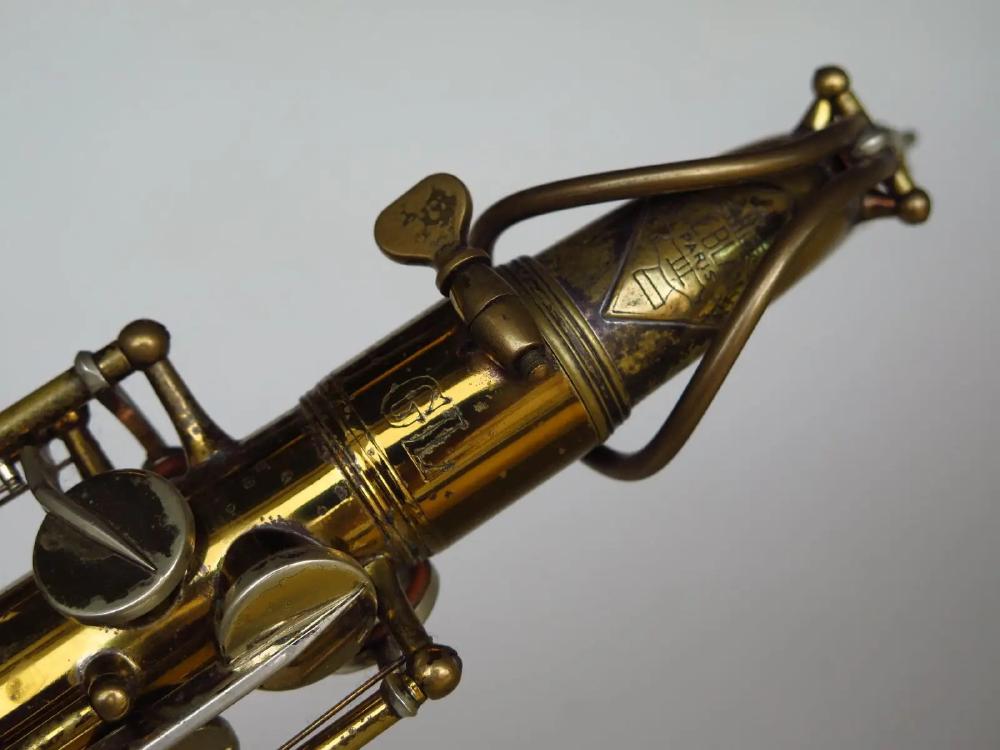
The first typical Leblanc System saxophone — which is not as rare as the earlier models — featured:
- a supporting brace under the neck (a design also used by SML and other companies);
- an additional high F# key below the other three palm keys (earlier models were without this extra key);
- the semi-Rationnel forked front F, which is a plain metal bar and not as elegant as the previously established pearl key;
- usually a two-tone finish (lacquered brass with nickel-plated mechanism) — silver-plated saxophones were a special order; and
- a very efficient octave mechanism, similar to Leblanc’s bass clarinets.
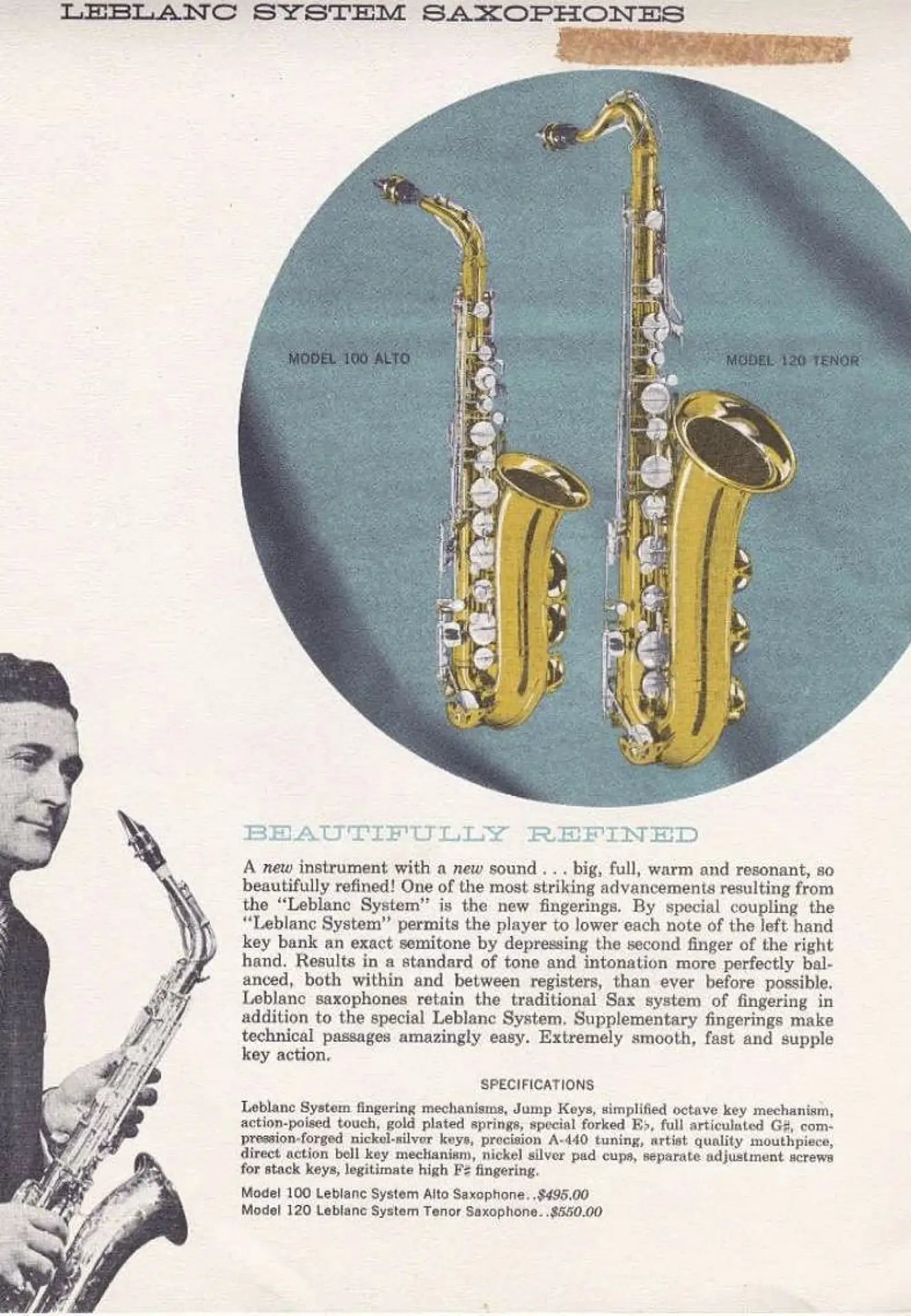
The prices were still a bit lower than Selmer’s, but also higher than other manufacturers’. The 1959 Selmer price list (saxophone.org) lists the Mark VI alto from US $502 and the tenor from US $560.
In the video below, I demonstrate how serial #235 (without high F#) can nonetheless be considered “keyed to high G,” showing how easy and logical this saxophone can be to play.
Serial #357 is a good example fitted with the high F#.
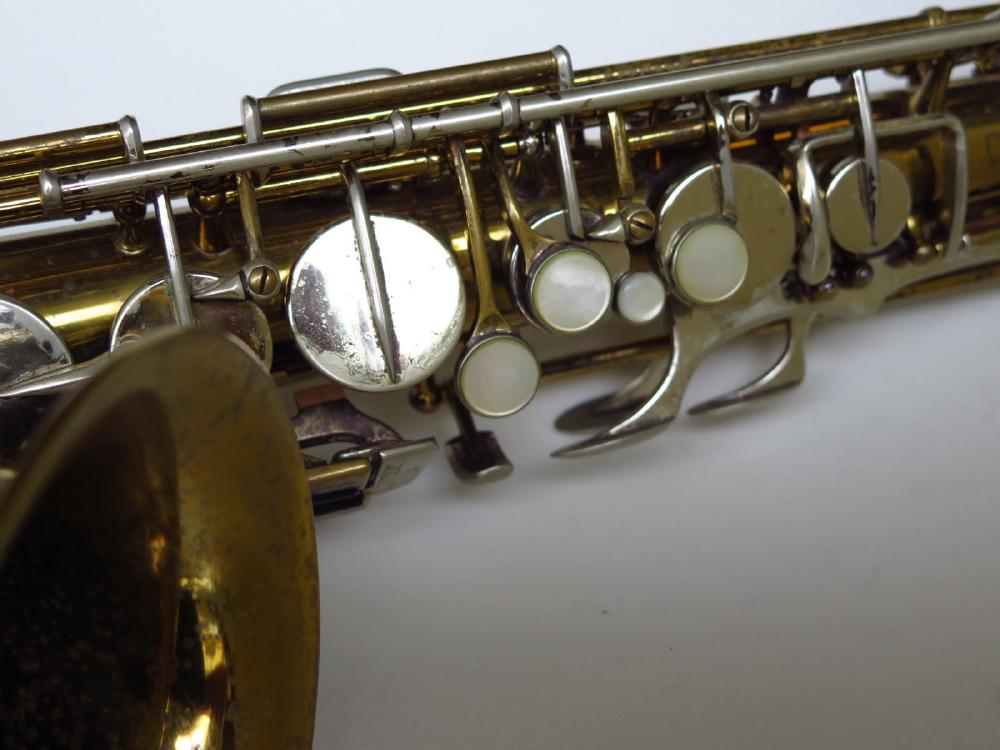
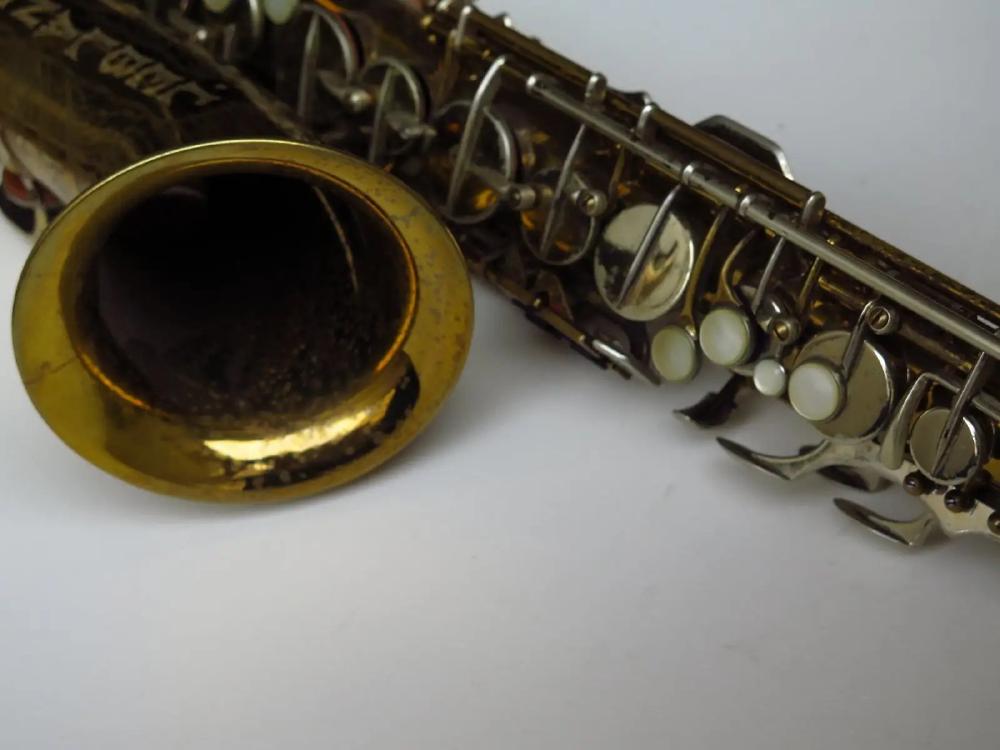
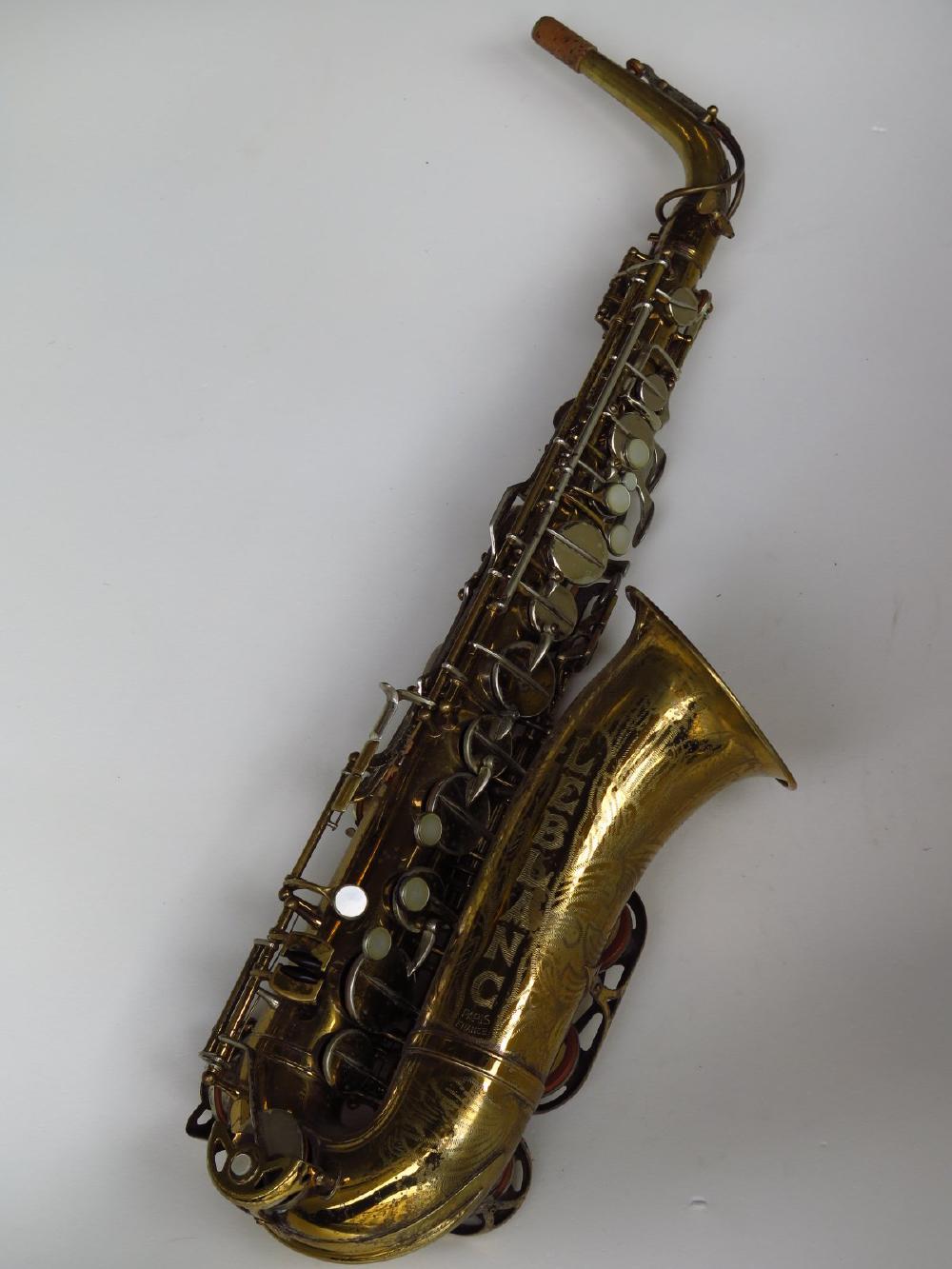
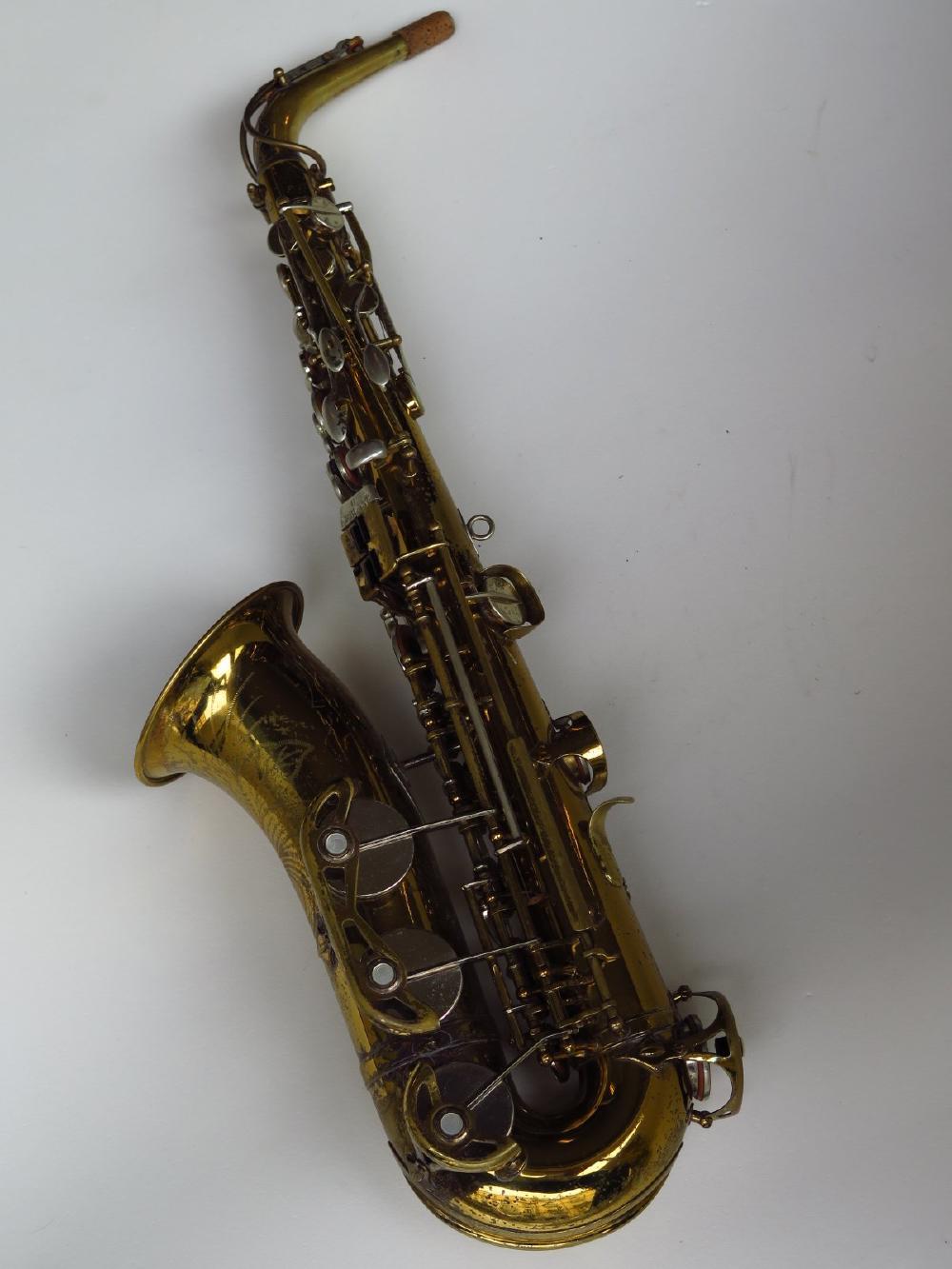
The Leblanc System, Series II & III (1961–1975)#
The next popular series of Leblanc altos and tenors showed some design changes — and an increasingly wider bore for the neck as well. I have often found these instruments more mouthpiece-friendly (tolerating modern high-baffle / smallish-chamber mouthpieces better), but never got around to measuring the actual bore of the body. The neck also got longer compared to the earlier models.
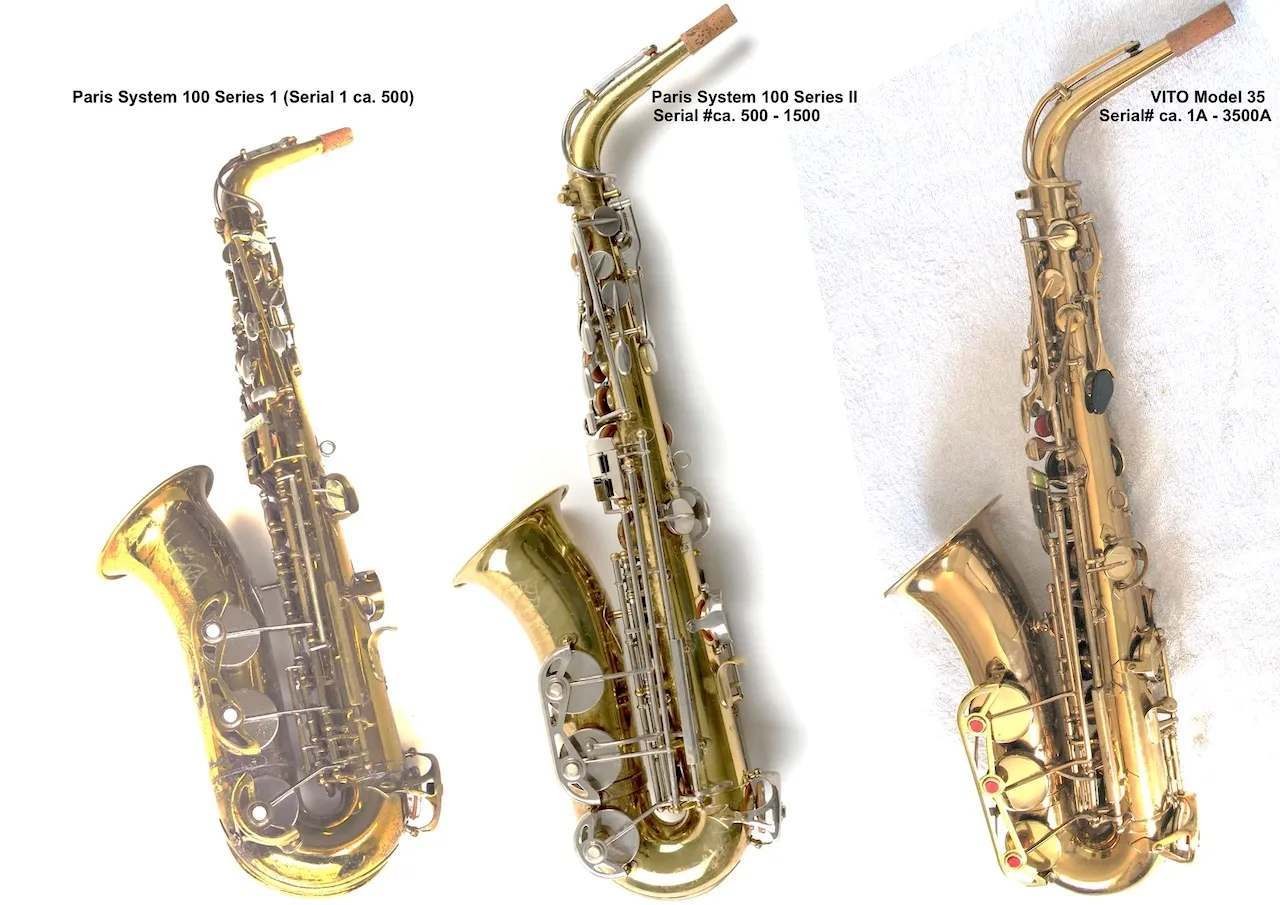
Serial numbers for these changes are in the 500s or higher. An advertisement from before 1968 shows a new marketing strategy — saxophones for the student market, competing with the market leaders. One unfortunate “improvement” is the position of the G# key, buried under the mechanism, which makes it difficult to adjust or exchange the pad; this was corrected in the last few versions of the series. Leblanc also improved the linkage between the keys with different adjustment screws, and added an adjustable double arm on the low B, which helped to improve fast response and execution.
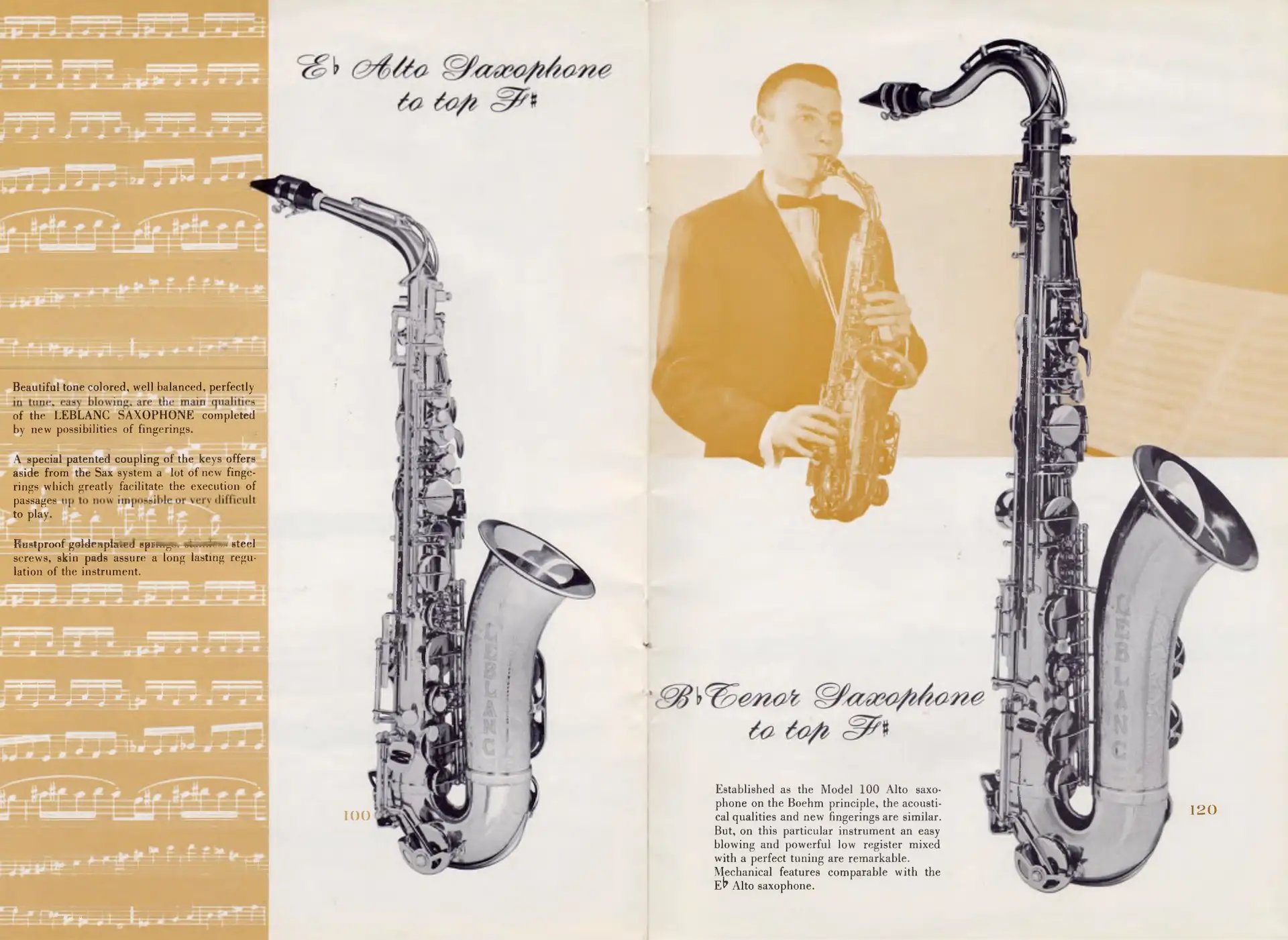
The other major design change, next to a larger and more comfortable left-hand pinky table, was Leblanc’s attempt at a “Balanced Action” mechanism: the right-hand lower keys are reached in a more direct (faster, easier) way. In consequence, the key rods are no longer aligned but follow different angles, so the instrument’s body looks as if it is bent — which is, luckily, an optical illusion.
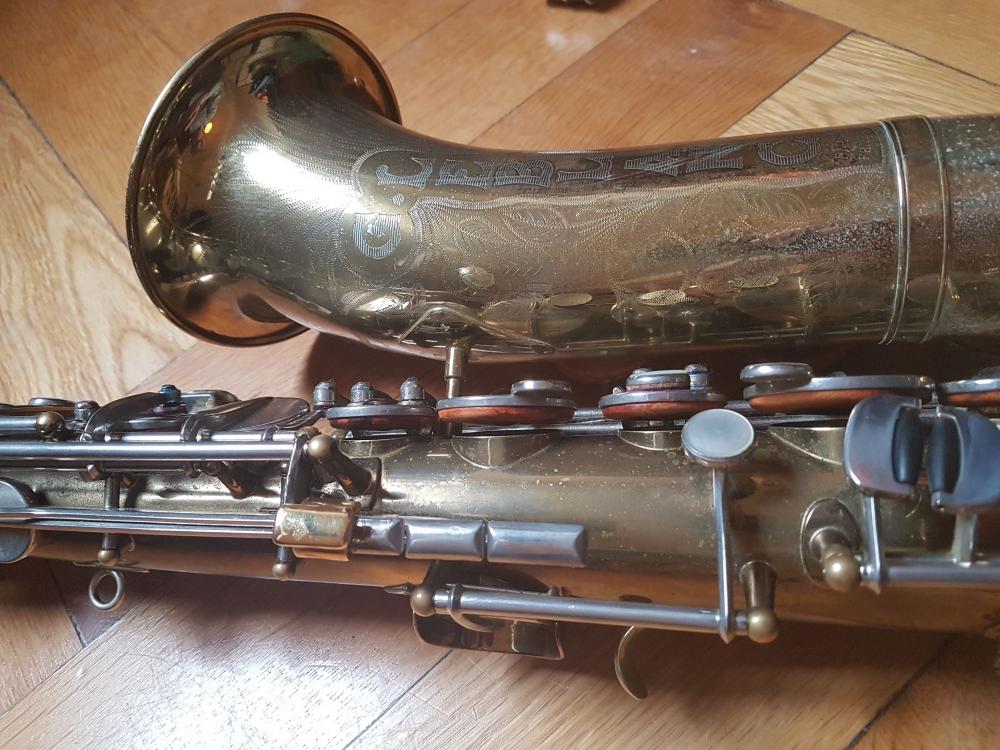
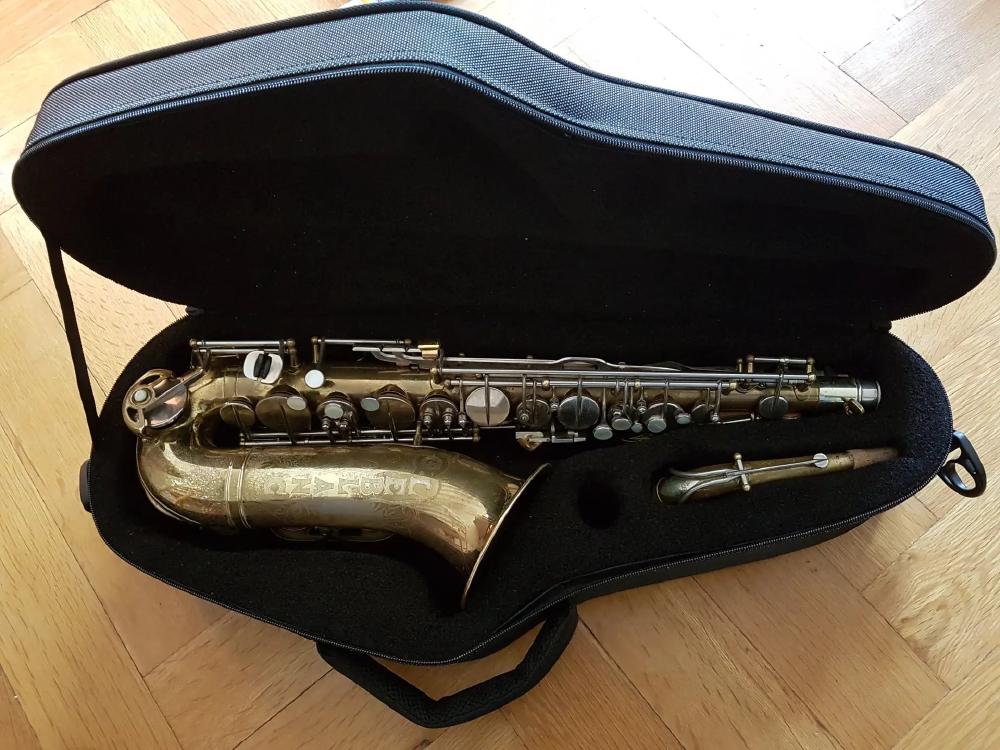
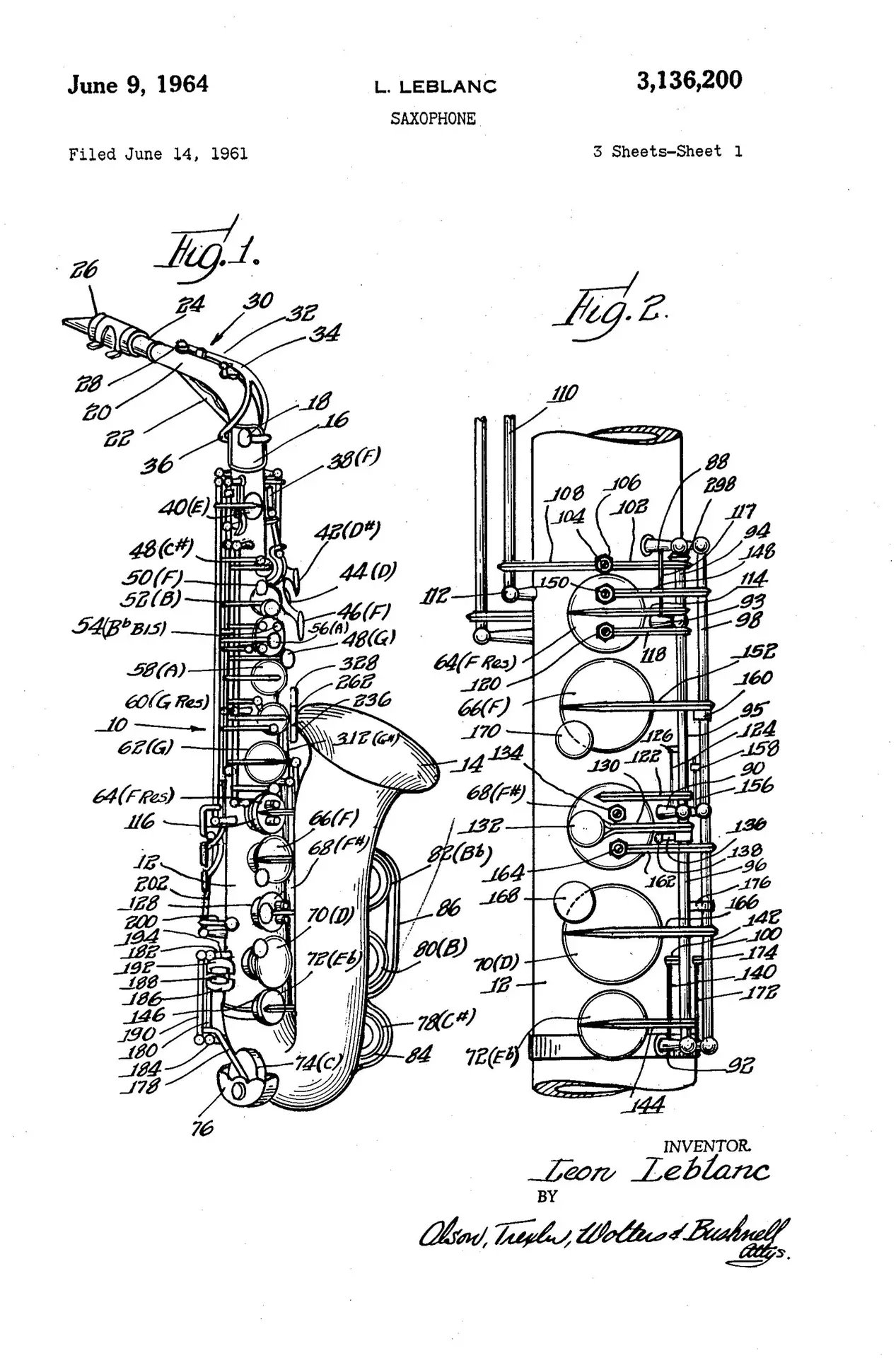
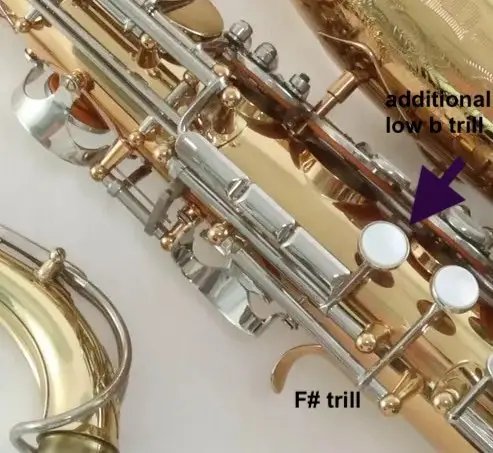
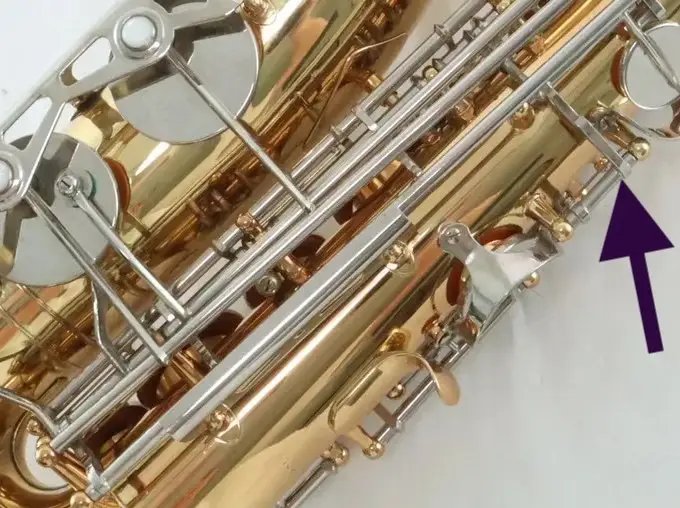
Serial #1403 has the G# again on the side. The new adjustment-screw system was filed as a patent in 1961 and granted in 1964 — hence my reasoning that a “Series III” started sometime after 1961. (Uwe refers to these post-1961 instruments as “Series III”; the naming has evolved as the research has developed.) Serial #1365, made for Cecil Leeson’s collection, features a design addition unique to this particular saxophone: an additional low-B trill, coupled from an additional right-hand pearl side key (photos © TheMightyQuinnBrassandWinds). This idea was also present on the first Le Rationnel saxophones, but here it is executed with much more logic — a great addition, and not as clunky and uncomfortable as the Evette & Schaeffer Apogee patent.
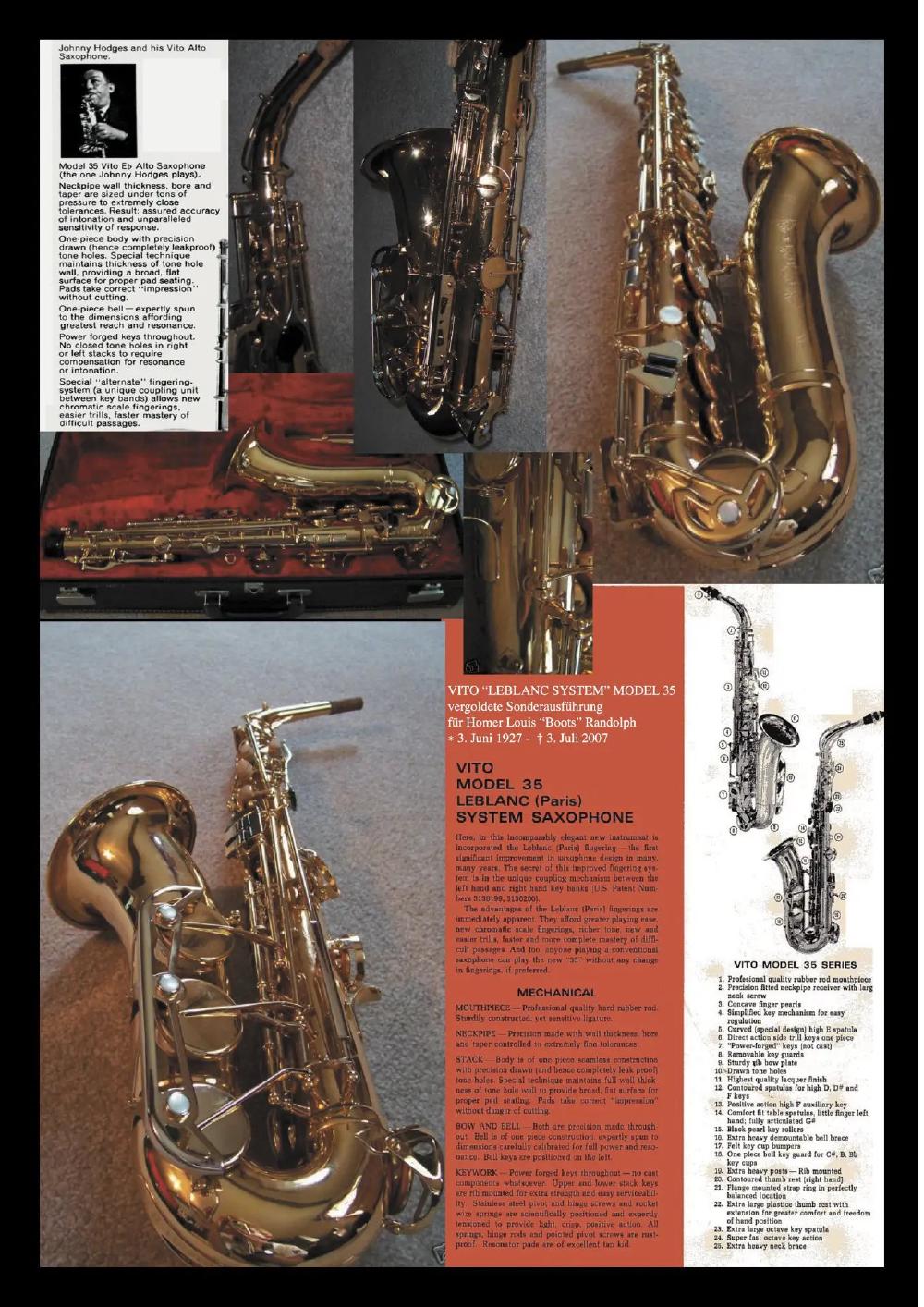
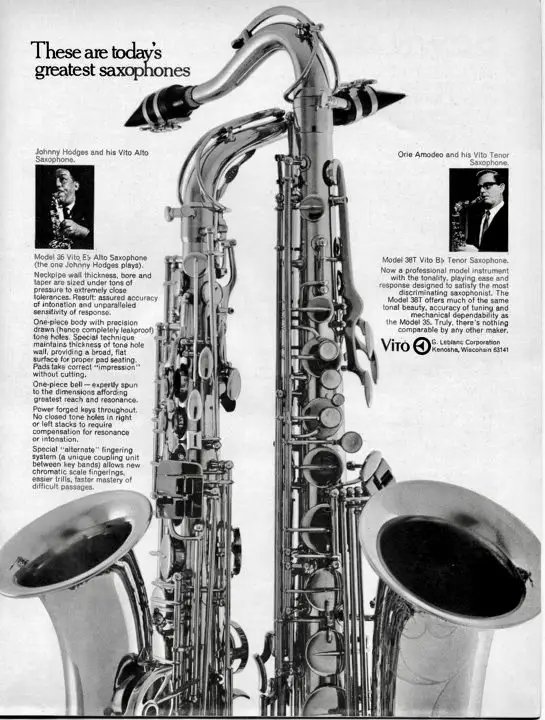
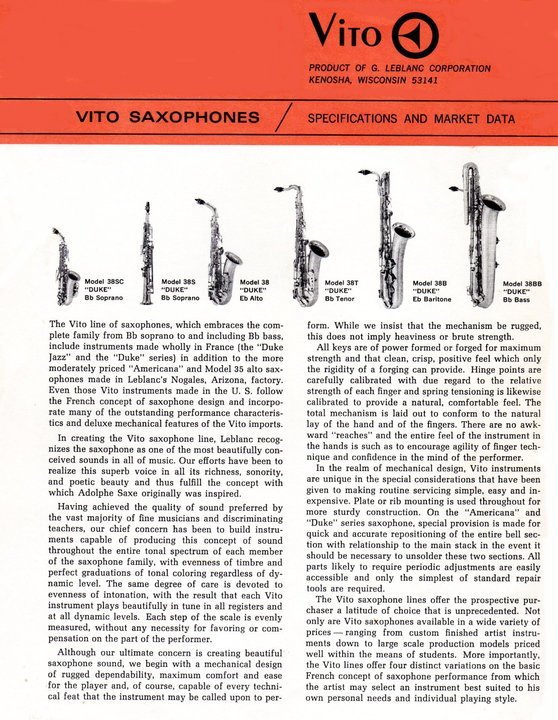
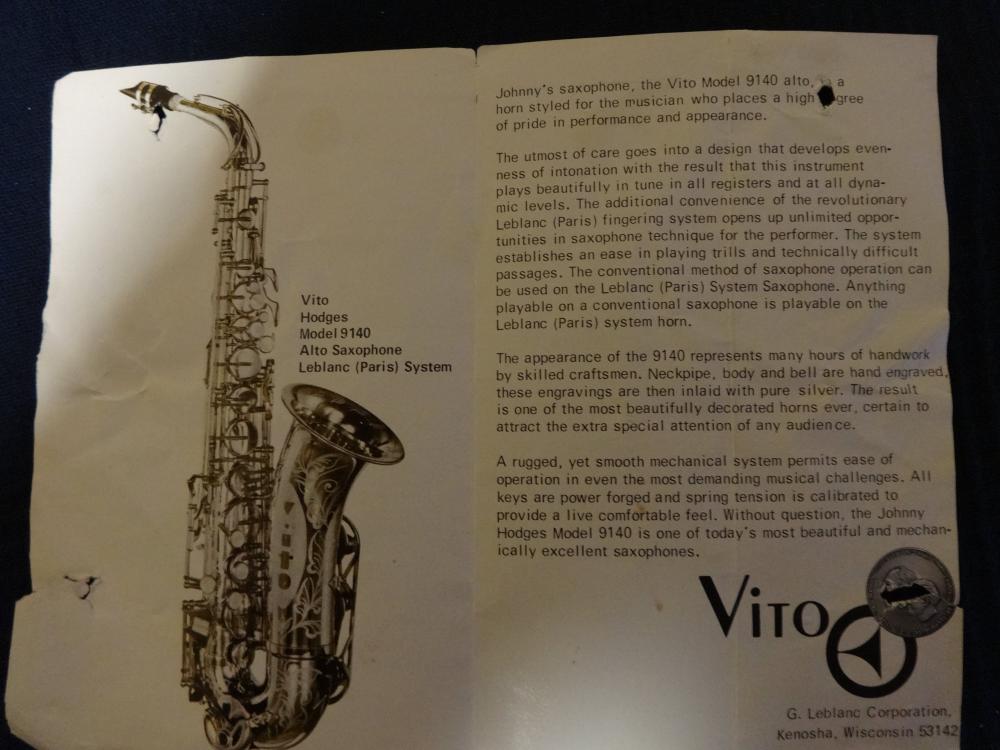
In the mid-1960s, Vito Pascucci created the final evolution of the Leblanc System series. The VITO Model 35 was basically the simplification of the adjustment screws to corks, while keeping the octave mechanism and ergonomics of the System series. This model is perhaps the best way (when restored to good condition) to enjoy the special fingerings, and is certainly lower-priced on the market today. These instruments have an even larger bore at the neck than the late Paris System 100 (Series II) saxophones — I once had a neck engraved “VITO LEBLANC SYSTEM 1964,” from the Leblanc museum, that needed a good amount of tape to fit into a Model 35 neck receiver. I therefore suppose that they have a different body design, as they feel different to play; they were supposedly assembled in Kenosha, with the body tubes imported from Paris, made by Beaugnier. In some catalogues VITO still offered Leblanc Paris saxophones (Series II) as well — the few that were left to sell — but it can be assumed that the import from France stopped in the mid-to-late 1960s, and the VITO Model 35 remained as the “American version” of the Paris System saxophones. Compared to the Series II, the changed keywork of the low bell keys (more similar to Series I) is particularly striking; other design changes are more negligible, such as simplified cloth guards, and a plastic thumb rest instead of pearls. For a detailed playing review of the Model 35, see Stephen Howard’s write-up on shwoodwind.co.uk.
Artists#
Léon Leblanc provided a few professional jazz musicians with these instruments, in the hope of giving the saxophone the standing and reputation it had in this popular market.
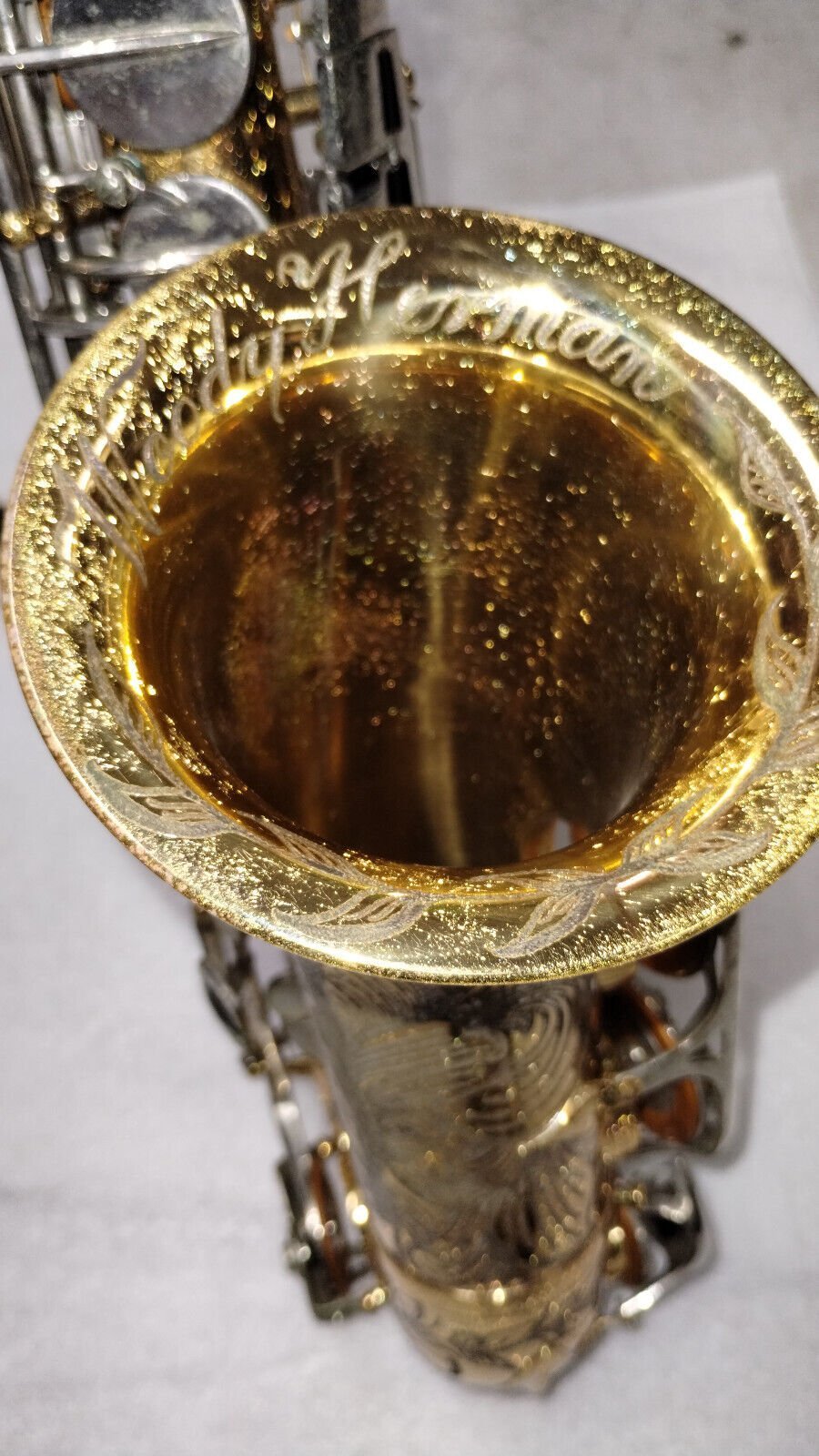
Paul Desmond was given a model in the 700 serial-number range, which — according to a good friend — he liked to play and to study for its mechanical advancements, though he supposedly never played it in concert. Serial #1232 was made for Woody Herman and experimented with the same flower pattern with silver inlay that was used for the later VITO Hodges model, and some sort of “sparkle lacquer” finish; I found no photographic proof that Herman ever played this alto (he had a wonderfully engraved early Selmer alto during the late ’60s). Instruments were also gifted to artists such as Corky Corcoran.
Another example — and perhaps the finest — is the work of art given to Johnny Hodges. Hodges performed (mostly in Europe) on the final evolution of the Leblanc System, the VITO Model 135, but the crowning instrument made for him, serial #5000, he never played in concert. It was a Leblanc Series III, fully engraved, with pearl inlays, silver-plated and gold-plated, and already carrying the name “VITO” on the bell. The video below shows this instrument after it later came up for auction.
Leblanc’s presentation instruments for these artists are among the most spectacular examples of the company’s craftsmanship — fully engraved, with pearl inlays and silver- and gold-plating:
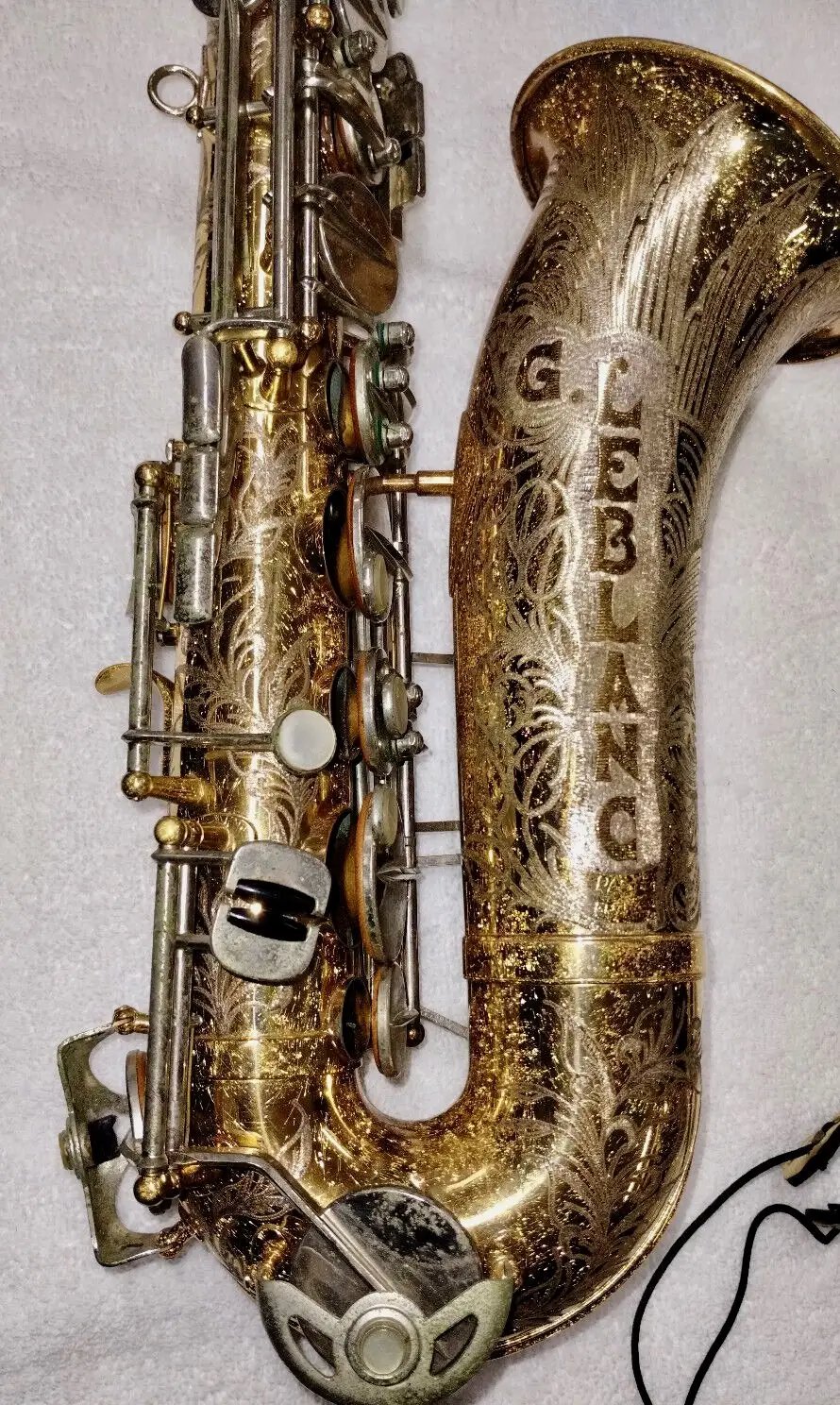
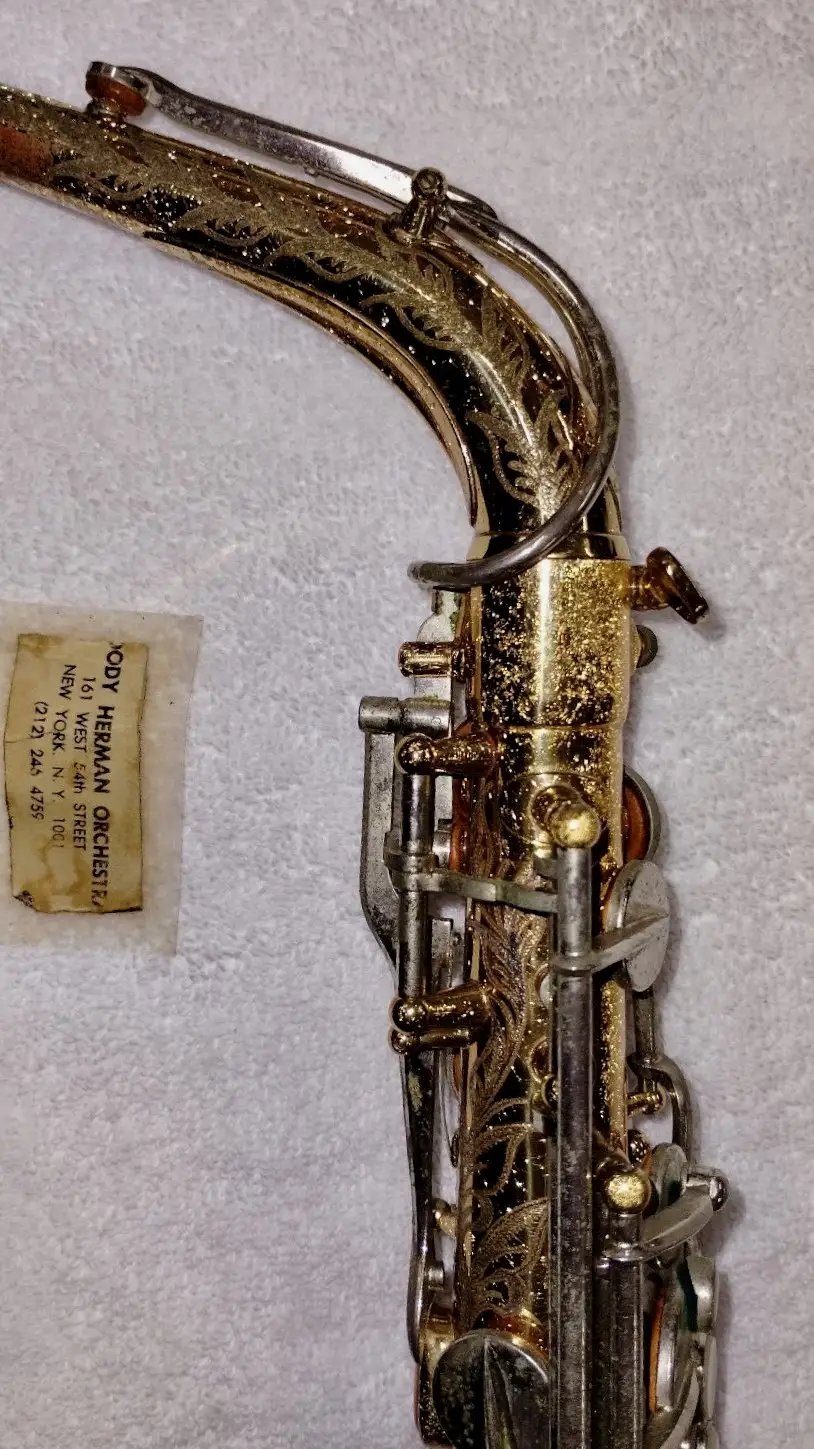
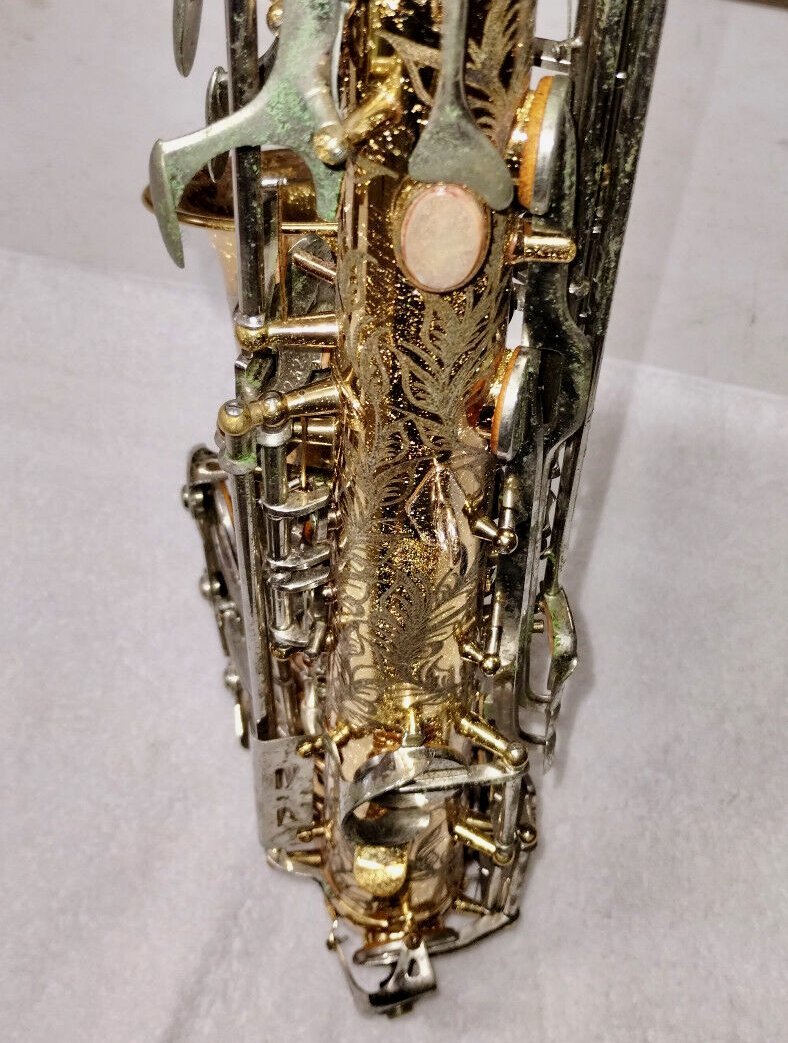
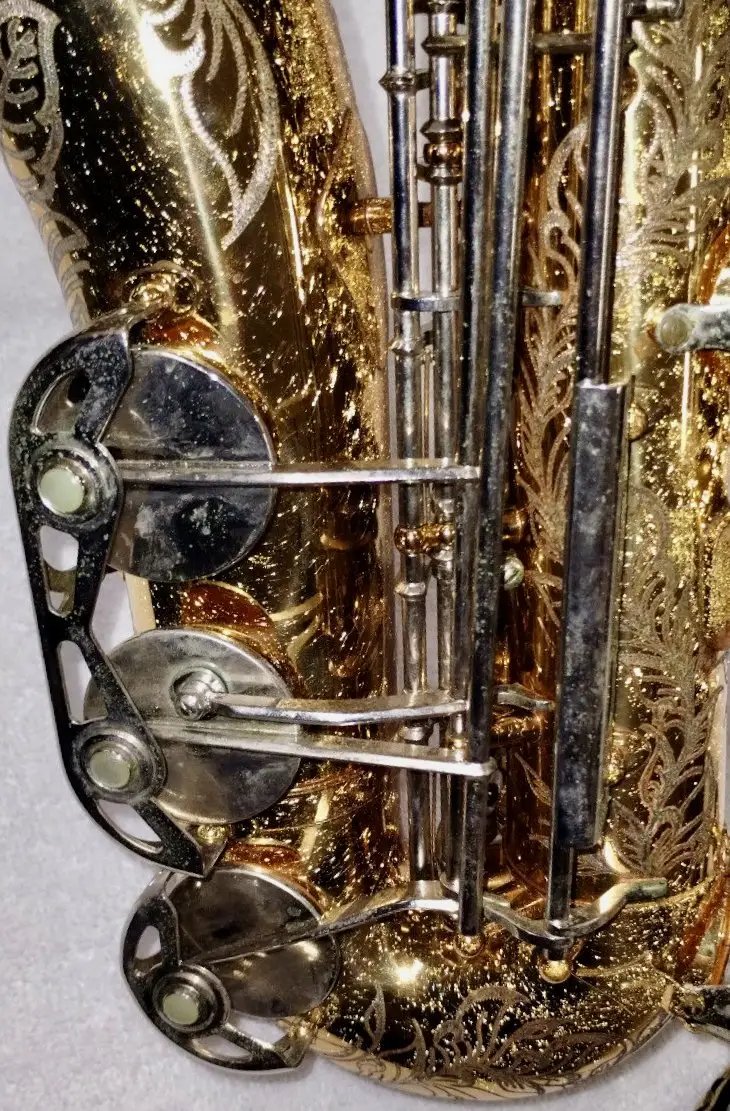
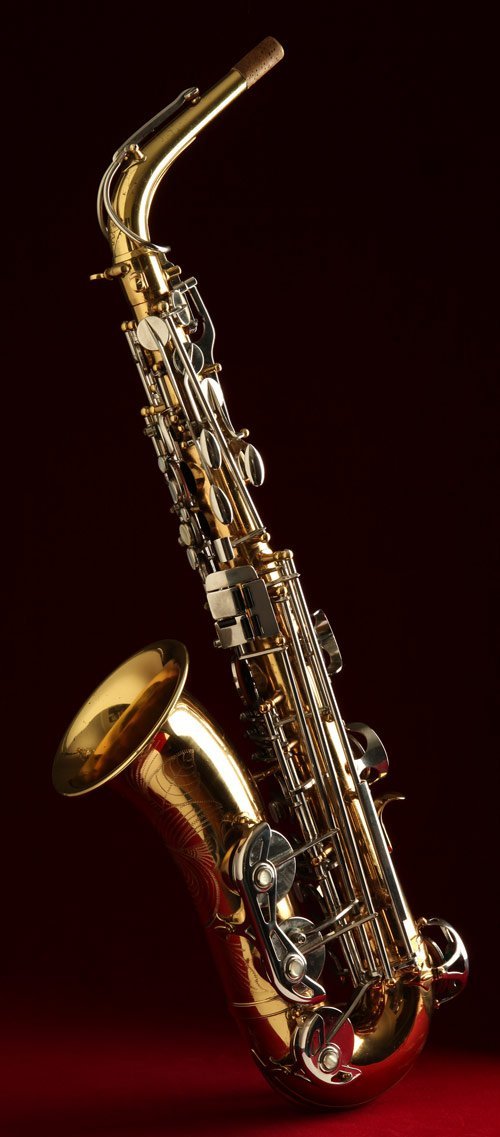
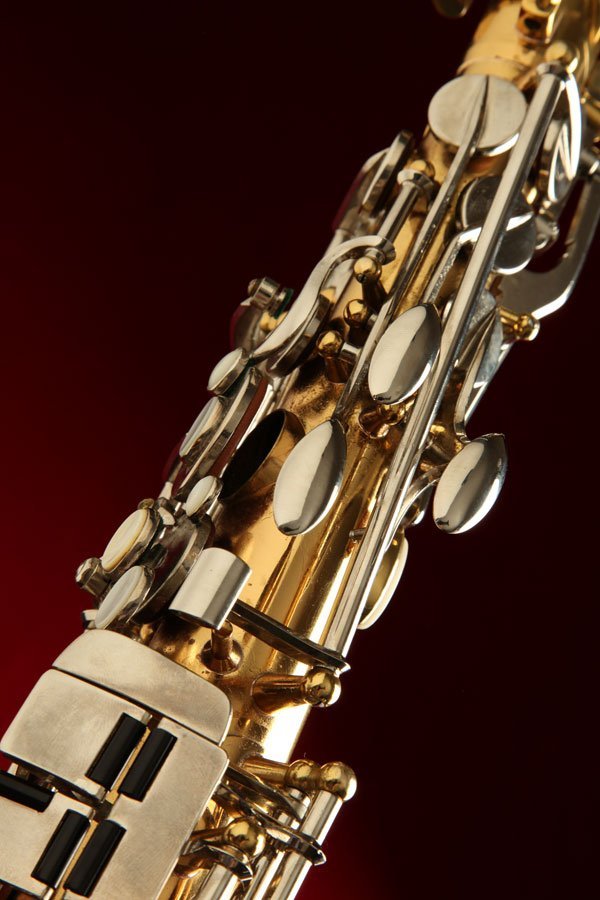
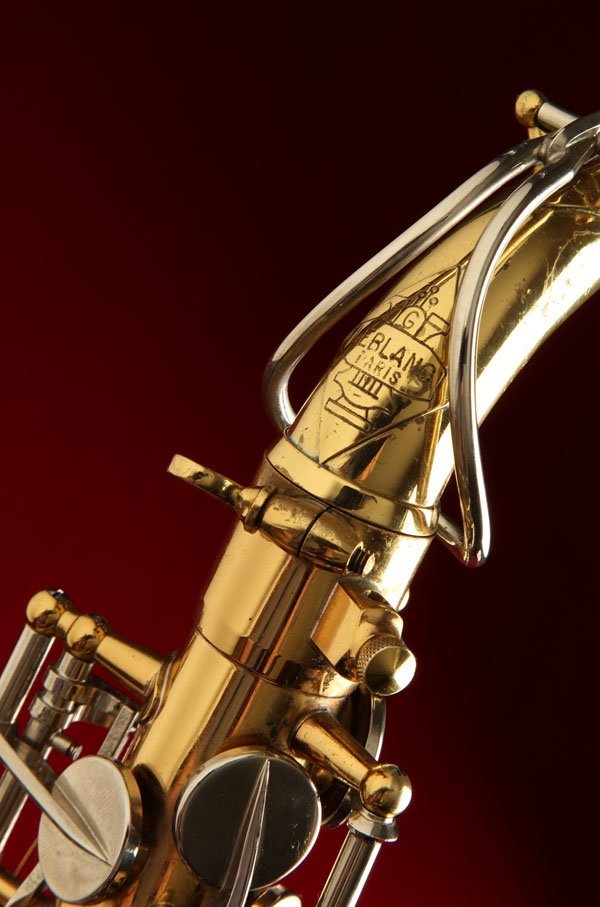
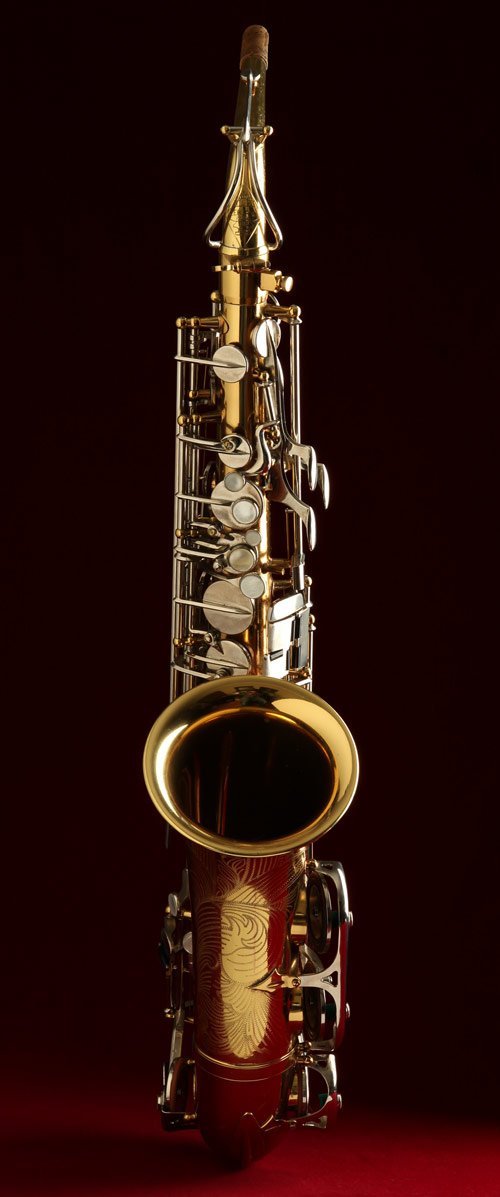
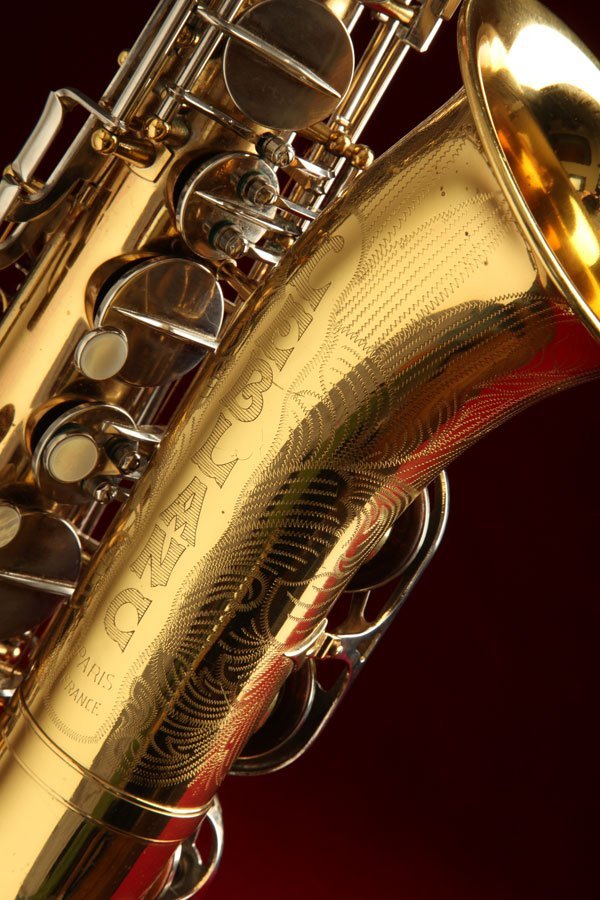
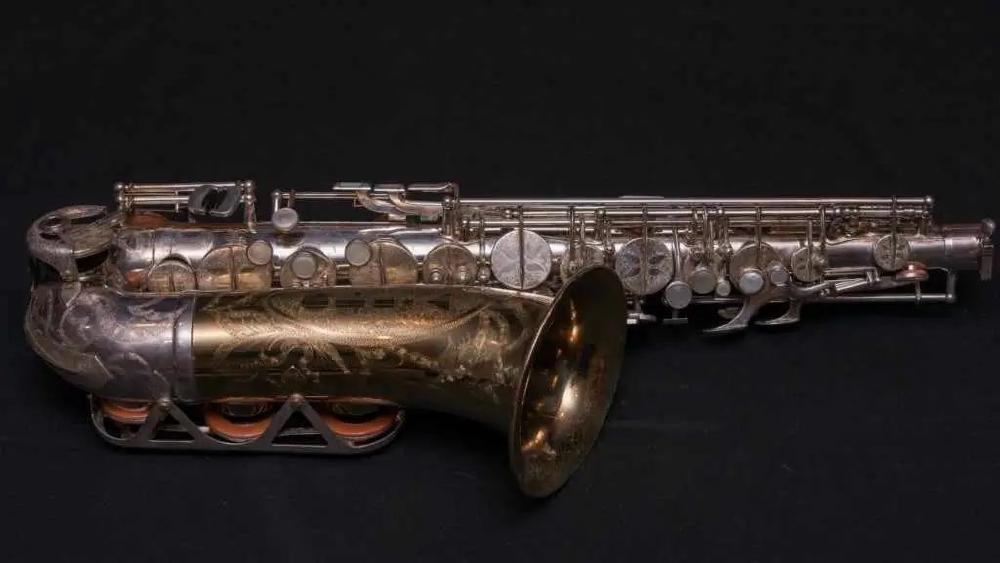
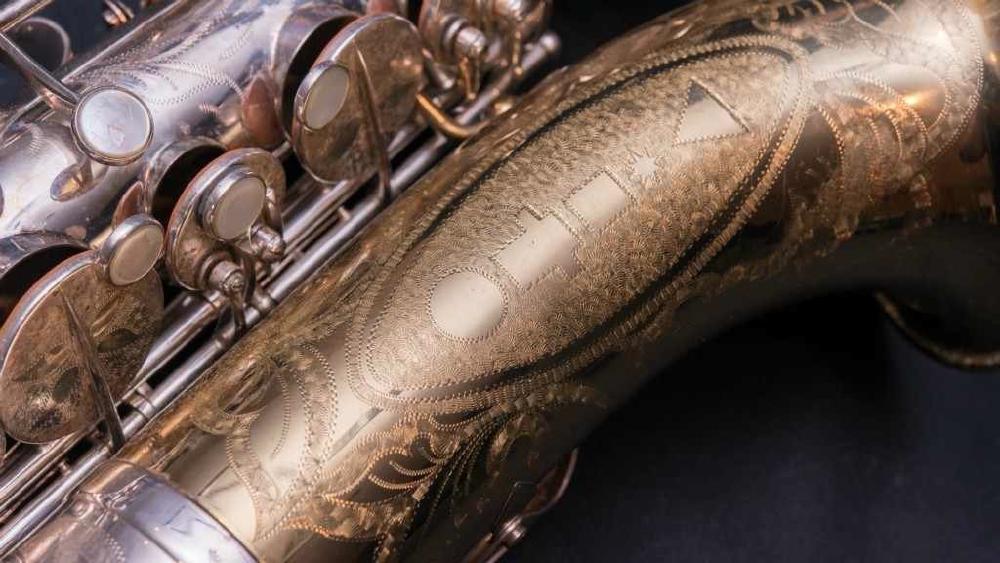
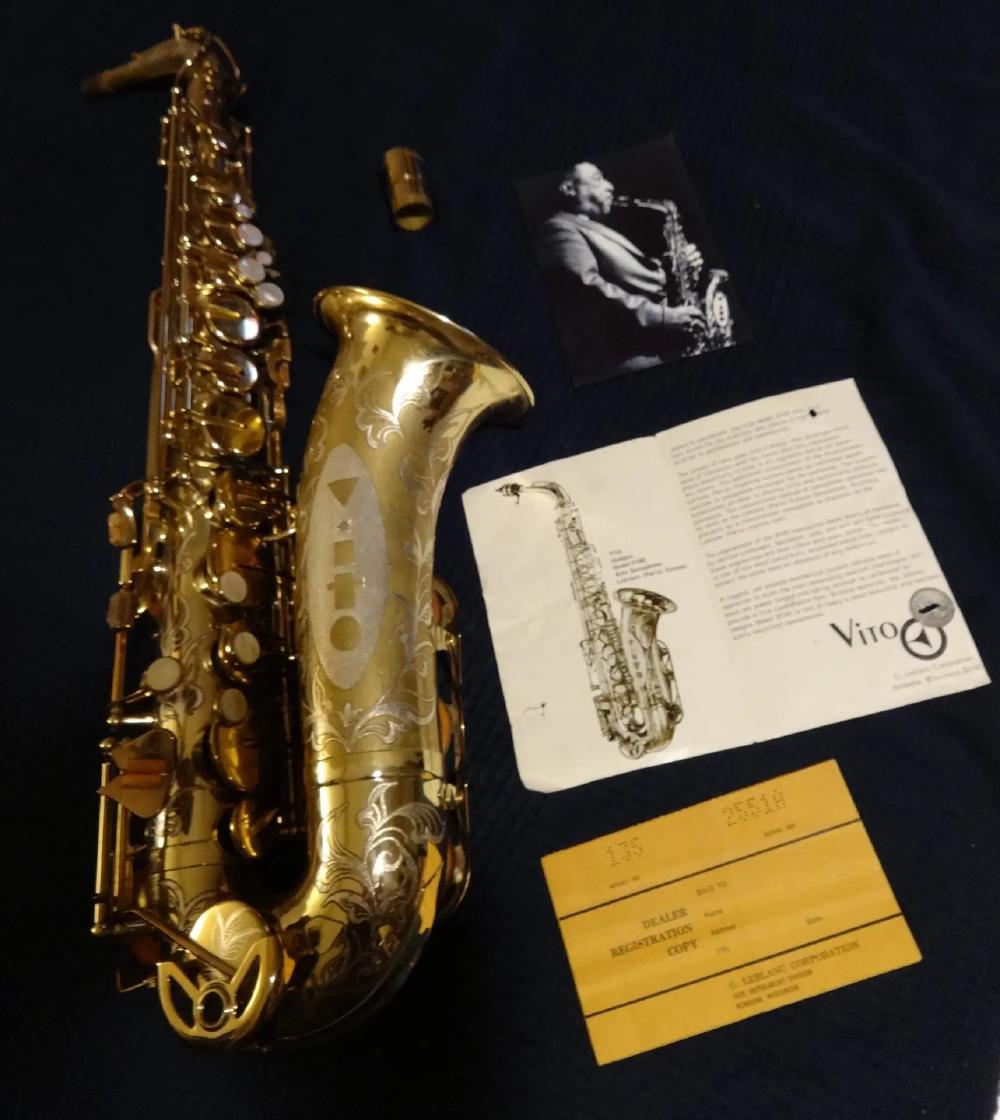
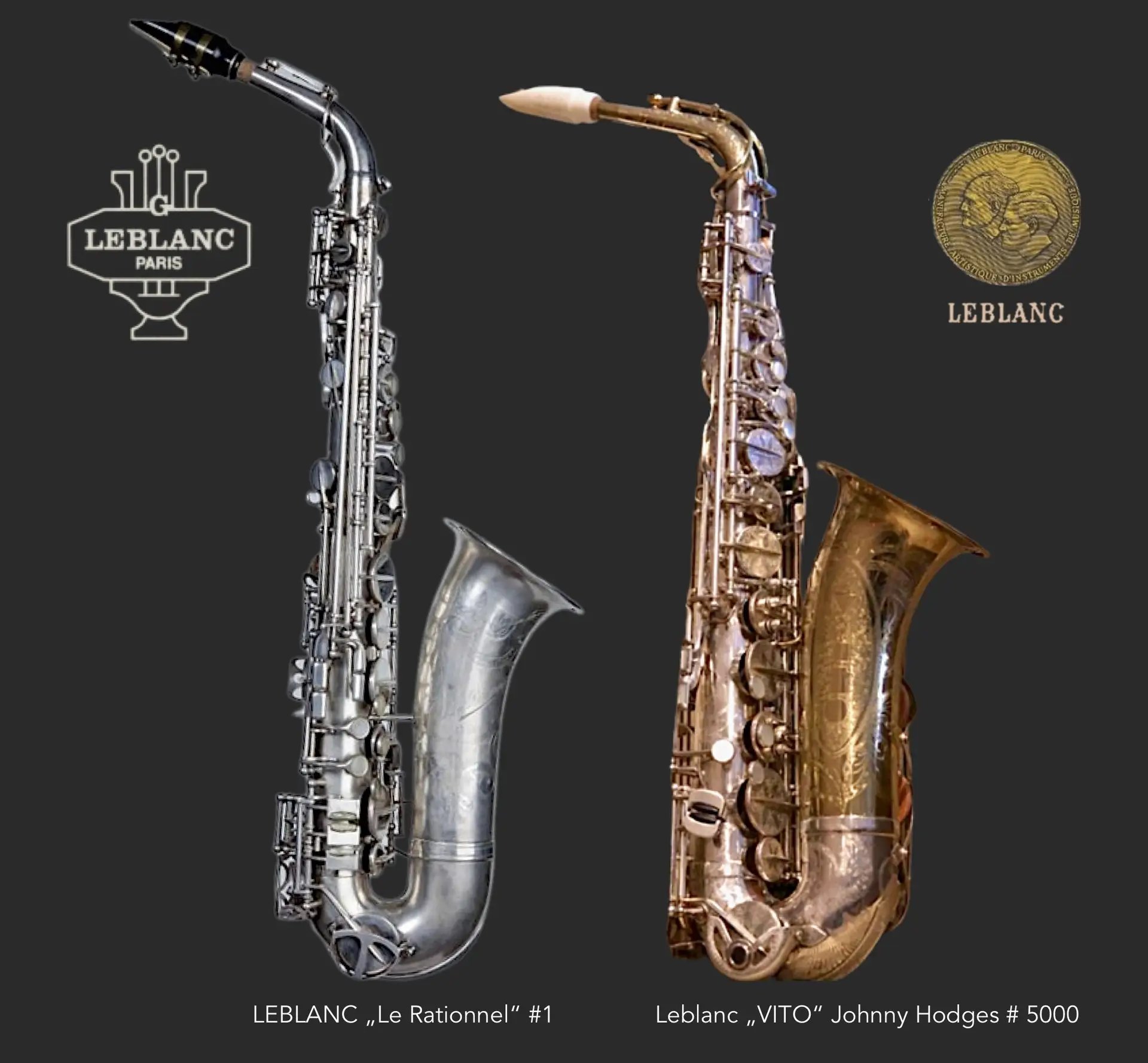
These two saxophones — both pieces of art in terms of innovation and craftsmanship, one made in the late 1920s, the other in the late 1960s — symbolize the spirit of the Leblanc company: to strive for excellence and provide the best tools for the leading artists of their time.
What Became of Leblanc#
Leblanc succeeded with their clarinets in pursuit of this goal; the saxophone market did not embrace these instruments with the same enthusiasm, but that did not end the company’s successful story.
By the 1960s and ’70s, Leblanc’s American arm grew into a major manufacturer — on the strength of its clarinets and the student-instrument market rather than its saxophones. Vito Pascucci built the Kenosha, Wisconsin operation into a powerhouse: launching the durable student “Vito” line, hiring music educator Ernest Moore in 1950 (the first in-house music educator in the industry), and acquiring the Frank Holton Company (brass, 1964, which went on to become the world’s largest maker of French horns), The Woodwind Company (mouthpieces, 1968), the Bublitz case company, and the Martin Band Instrument Company (1971). By 1980, Leblanc was the third-largest wind-instrument maker in the United States. Vito Pascucci spent years negotiating to buy the French parent — a sale so sensitive (Leblanc was considered a French national treasure) that it reportedly required the approval of President François Mitterrand — and the U.S. firm completed full ownership of Leblanc S.A. in 1993.
Company history summarized from “G. Leblanc Corporation” on fundinguniverse.com, which Uwe quoted at length in his forum thread.
More Photos#
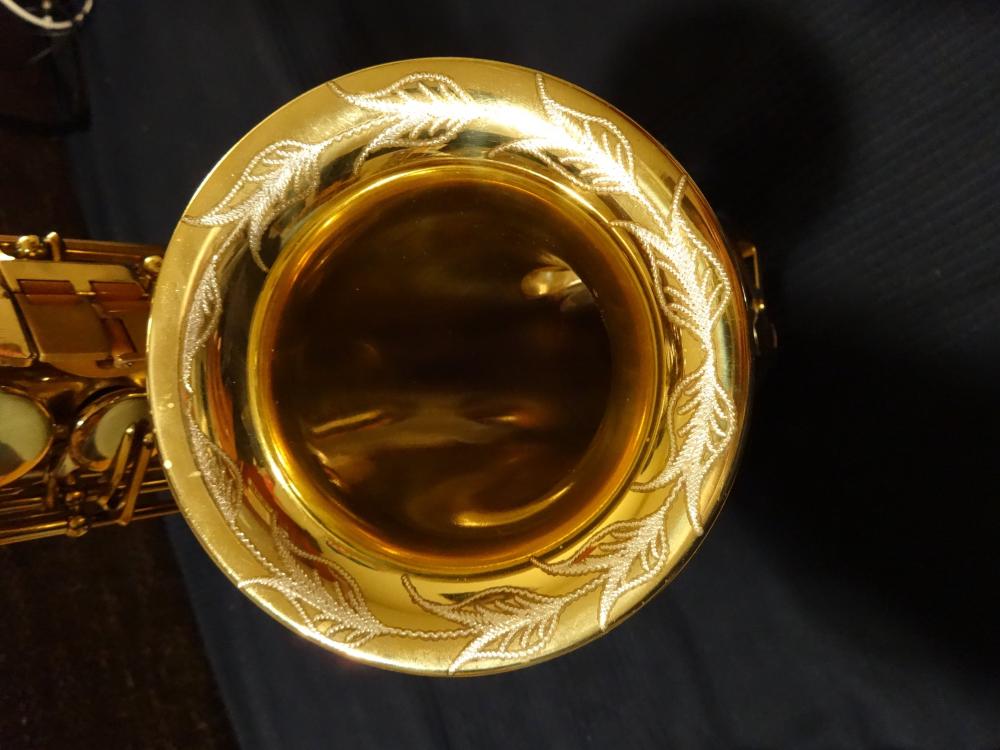
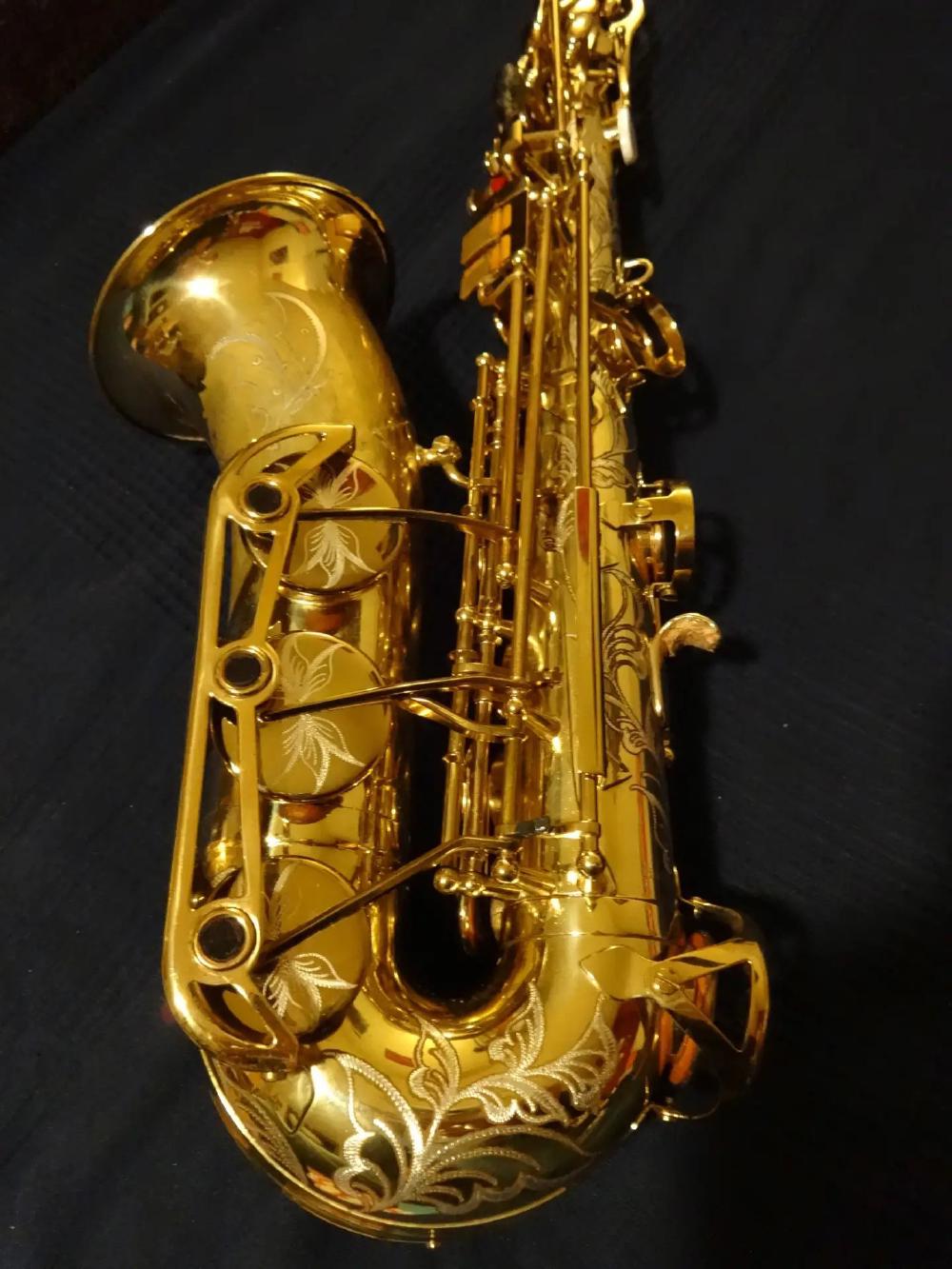
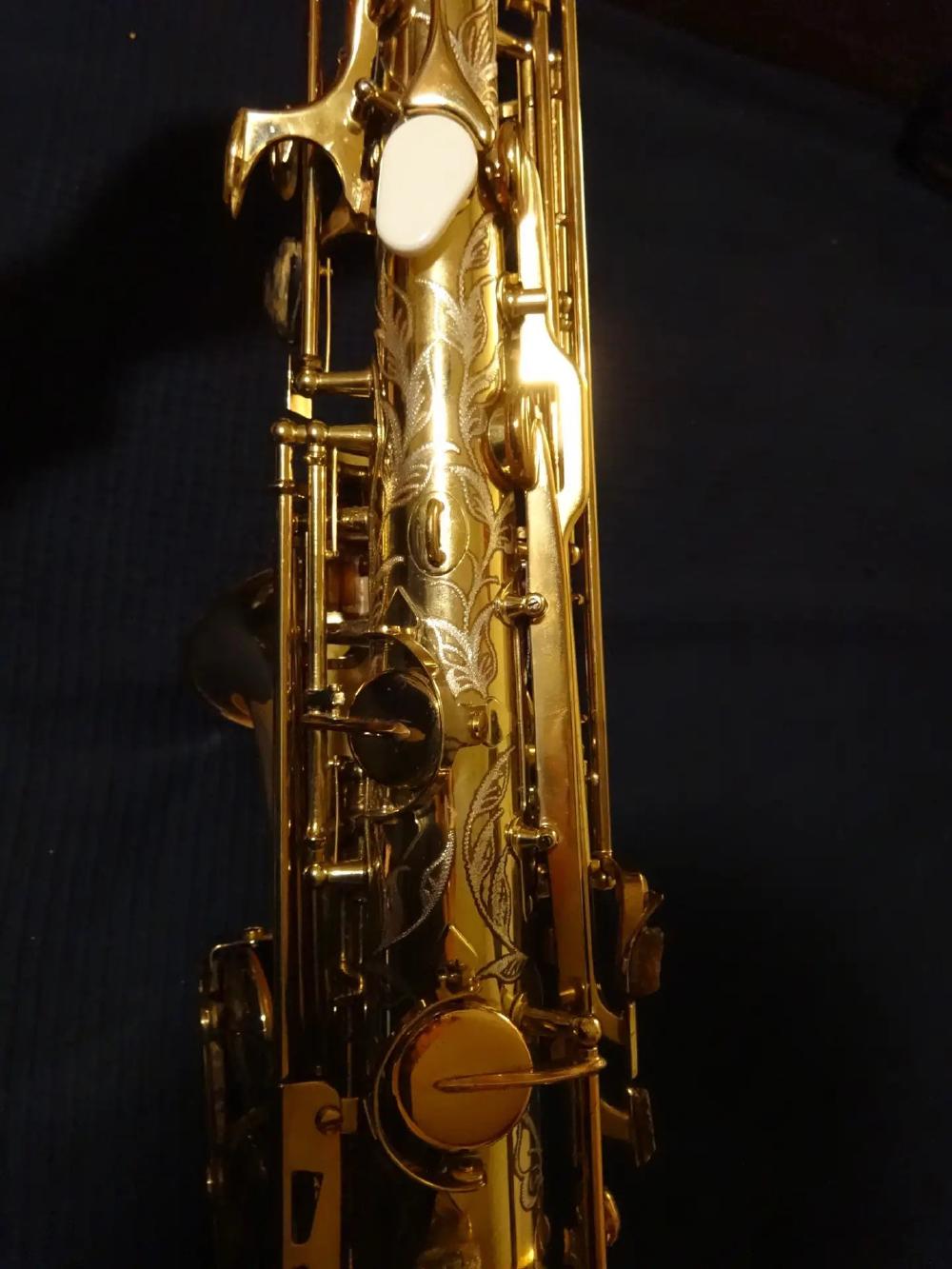
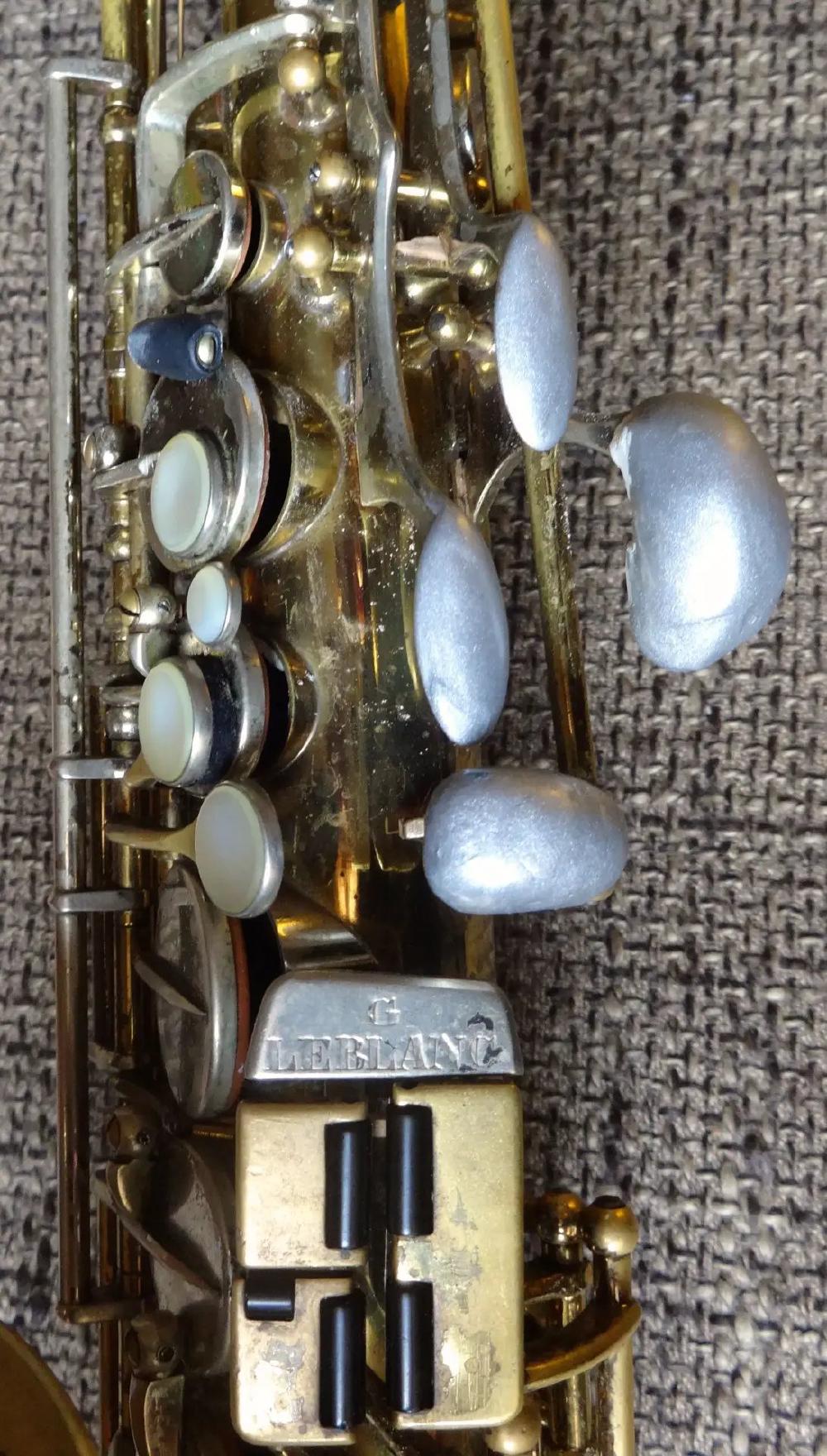
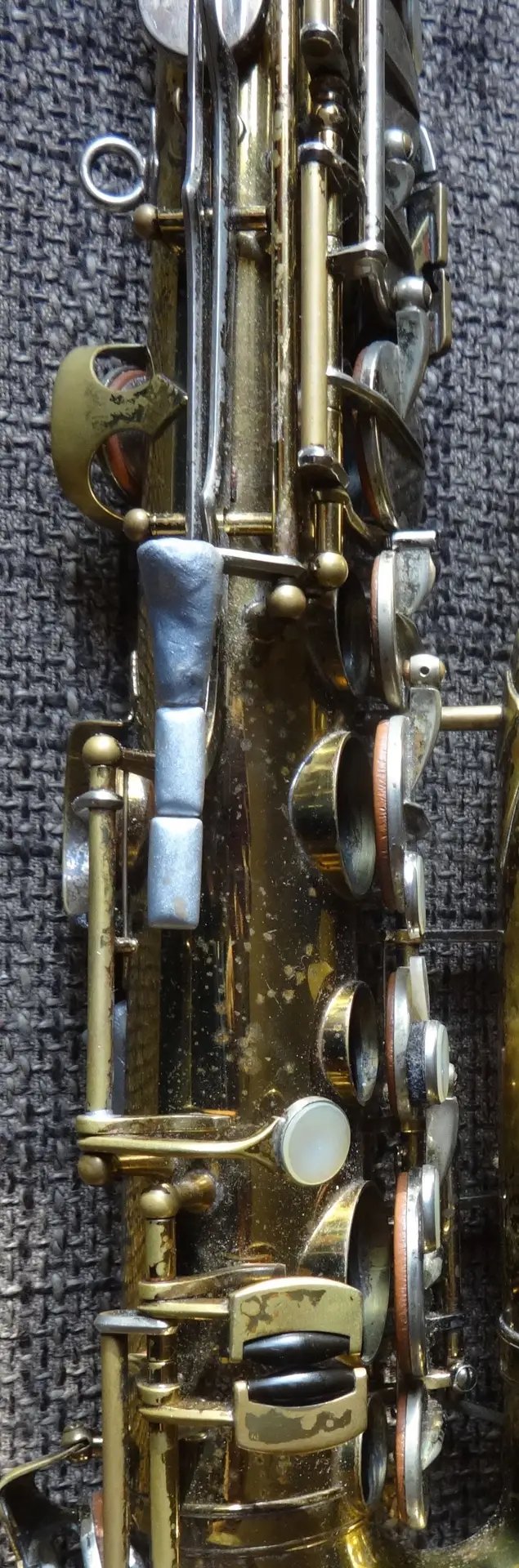
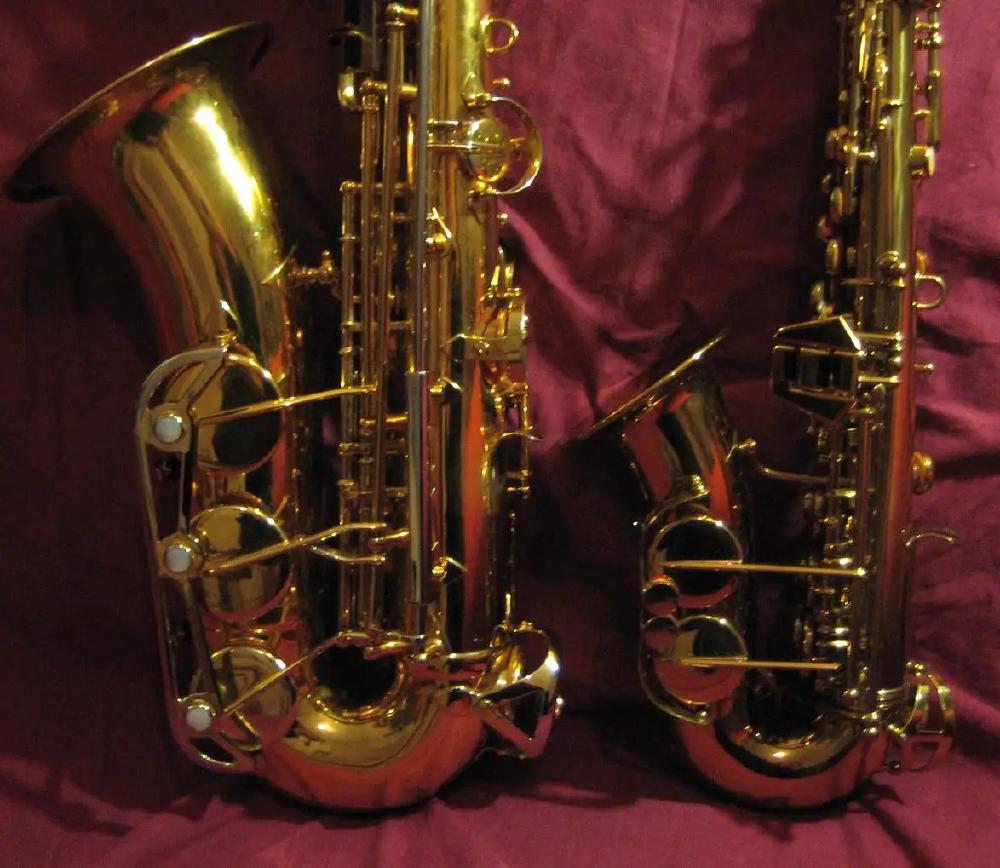
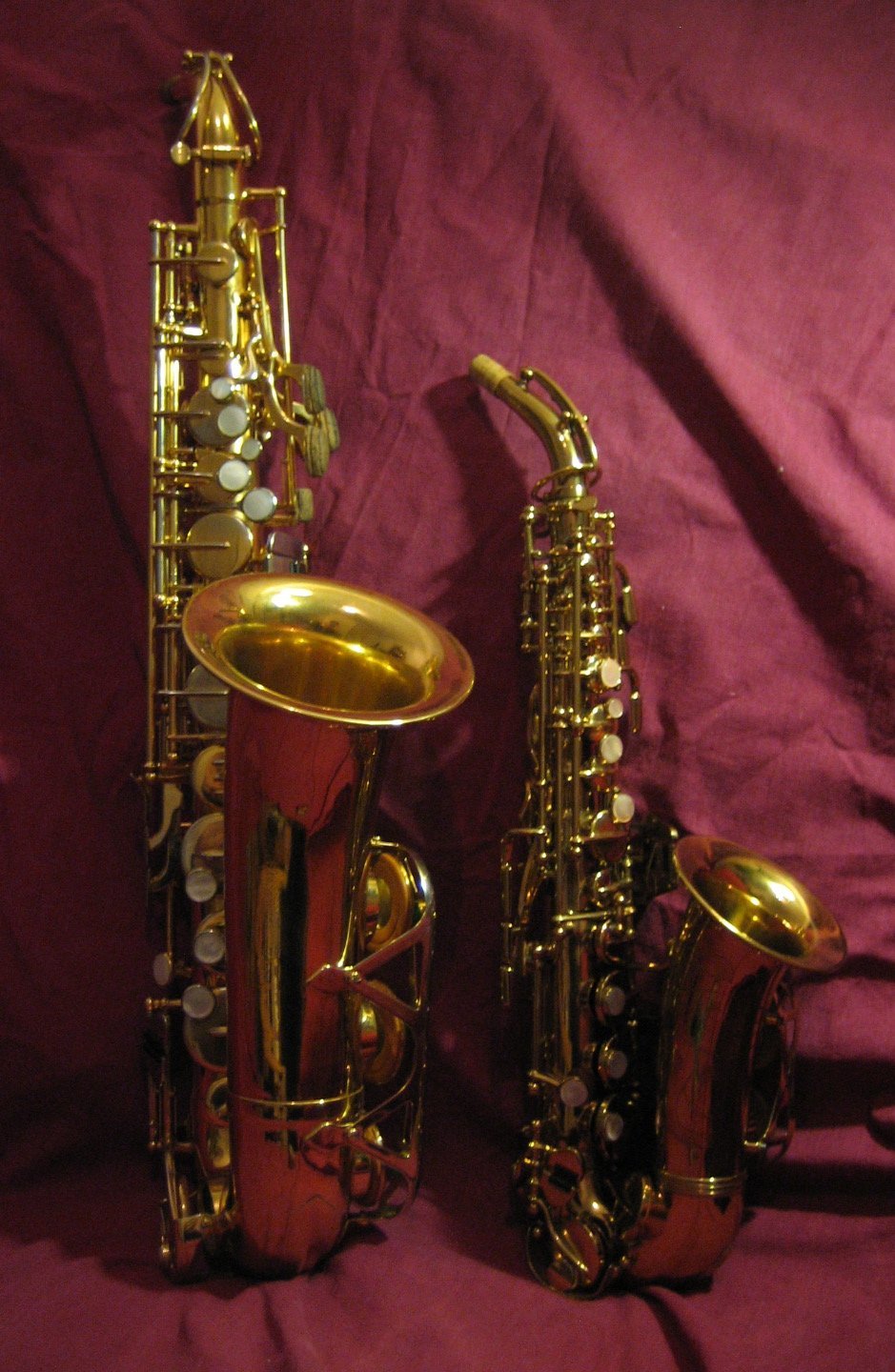
A few more images from Uwe’s collection — additional instruments, documents, and details:
Sources & Credits#
Written and researched by Uwe Steinmetz; reproduced here with permission (© Uwe Steinmetz). The original article was published at uwesteinmetz.net (now spiritualjazz.net); the original discussion lives in Uwe’s Sax on the Web thread.
- Biographical detail: “Léon Leblanc (1900–2000), music as a vocation,” Google Arts & Culture.
- Rationnel patent research and the Adolphe Sax #40842 comparison: Marten Postma (photo: Collection Leo van Oostrom).
- In the collection of the Musée de la Musique / Philharmonie de Paris: Rationnel #46 and the semi-Rationnel.
- Houvenaghel on Maillechort: James A. MacGillivray, “Recent Advances in Woodwind Fingering Systems,” The Galpin Society Journal, Vol. 12 (May 1959), pp. 68–72.
- 1938 Musette advertisement: courtesy Thierry Legros.
- Paul Cohen’s #95 and remarks: via Sax on the Web.
- S.R.B. 4 photos: © Paul Tucker, DC Sax. SaxPics / bassic-sax.info galleries (Pete Hales): S.R.B. 4, 1939 prototype, #1403.
- #1365 (Cecil Leeson) photos: © TheMightyQuinnBrassandWinds.
- Period pricing: saxophone.org.
- VITO Model 35 playing review: Stephen Howard, shwoodwind.co.uk.
- G. Leblanc Corporation company history: fundinguniverse.com.