
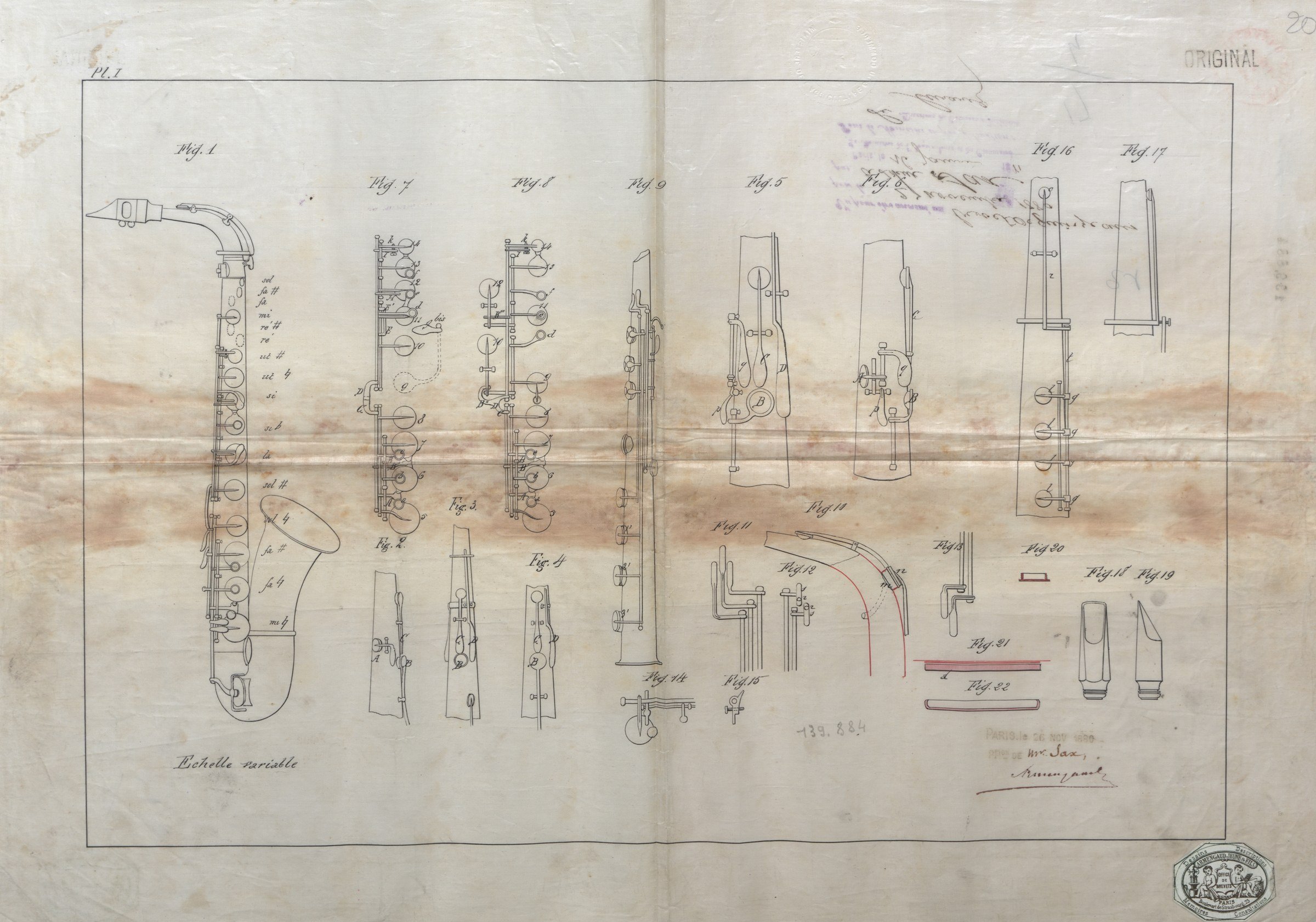
I recently purchased high resolution scans of the complete 23-page file of Adolphe Sax’s final saxophone patent (he holds later patents for other things including electroplating!) from the INPI archive (the French patent office). I had the whole thing transcribed and translated into English by Claude (Fable) — the full translation is here. Genuinely uncertain readings are marked as such.
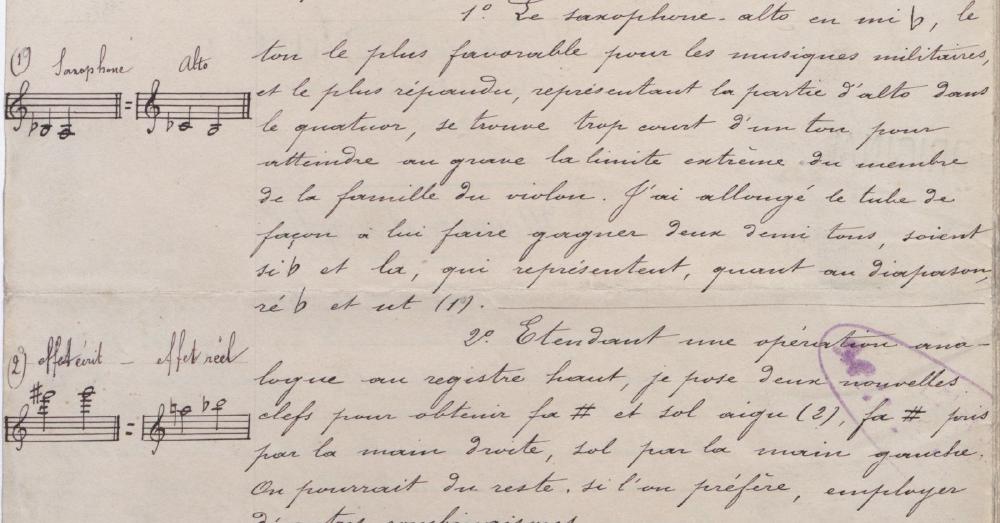
I feel immensely lucky to live in a time where I can get high resolution scans of Sax’s work emailed to me in weeks, have a code assistant translate century-and-a-half-old handwriting for me in minutes- to learn that Sax was so far ahead of his time, we are still working on problems he not only illuminated but sometimes solved 150 years ago.
Patent Contents#
Sax’s third and final saxophone patent is expansive. Among other things, it contains:
- Range extension down to low B♭, A “so that it can double the viola of the orchestra”
- Range extension to high F♯ and high G
- An automatic octave vent — in his words, “not operated by the thumb, but brought into play by the keys of the notes themselves.”
- Rounded key touches and rollers— including little horn rollers on the spatulas — “allowing the finger to roll, so to speak, in sliding with very little friction.”
- A Boehm-style open-by-default keying mechanism that lives alongside and is completely integrated with traditional fingerings
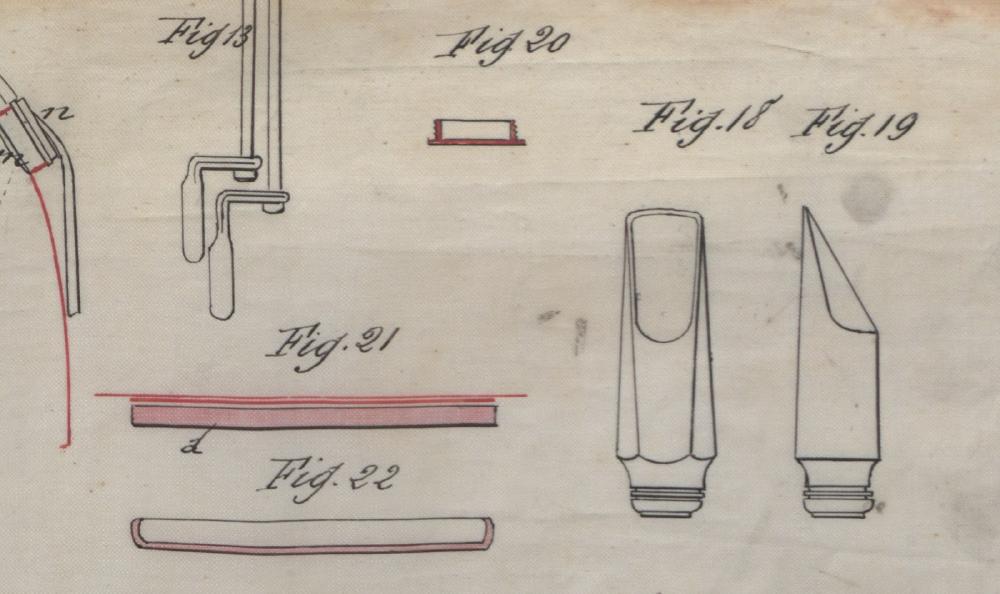
- And then a kazoo-membrane key for a buzzing effect on any note; a clarinet with no bell; a single-reed mouthpiece for the bassoon, metal mouthpieces! (wooden mouthpieces electroplated with copper and then gold, silver, or nickel); and a spring-loaded micro-tuning mechanism meant to let a wind player bend every note of the chromatic scale toward just intonation, on the fly. He defends that last one with a short essay on temperament that reveals both a deep understanding and deep feelings about intonation.
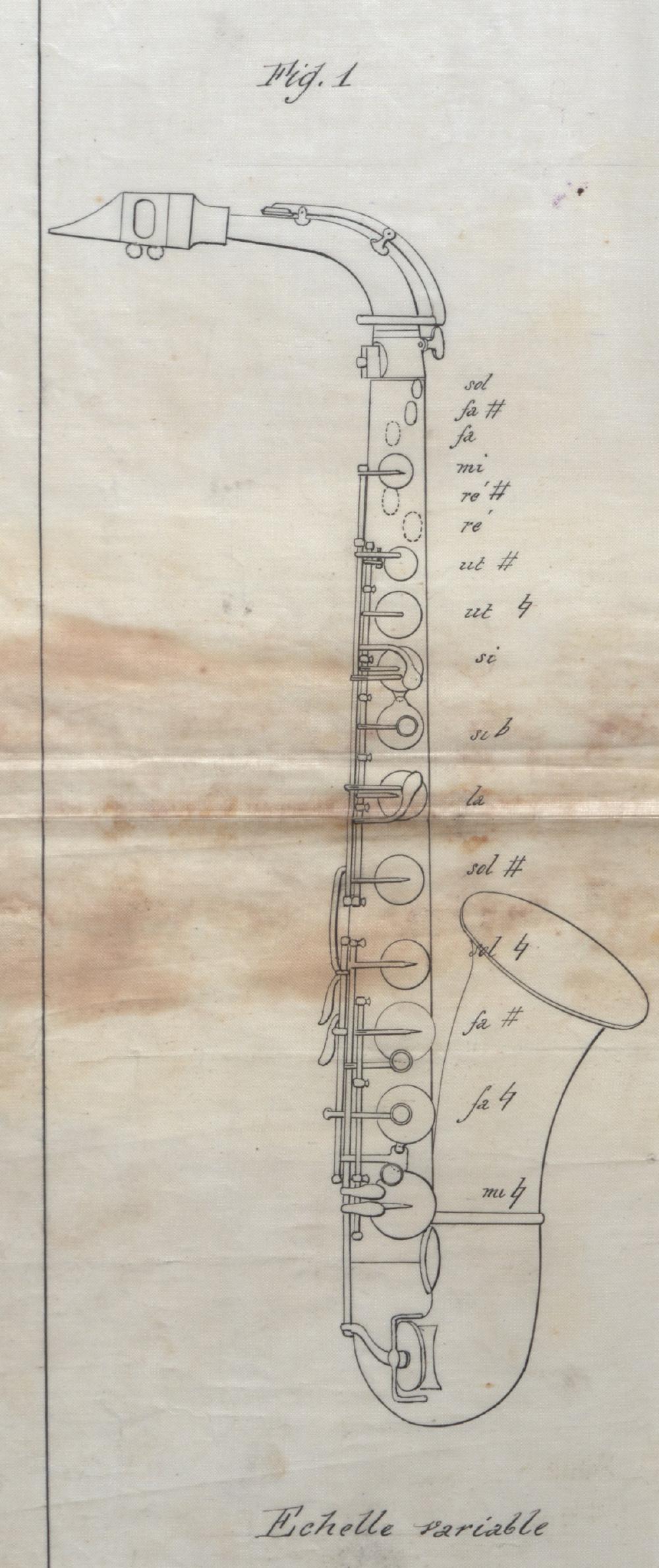
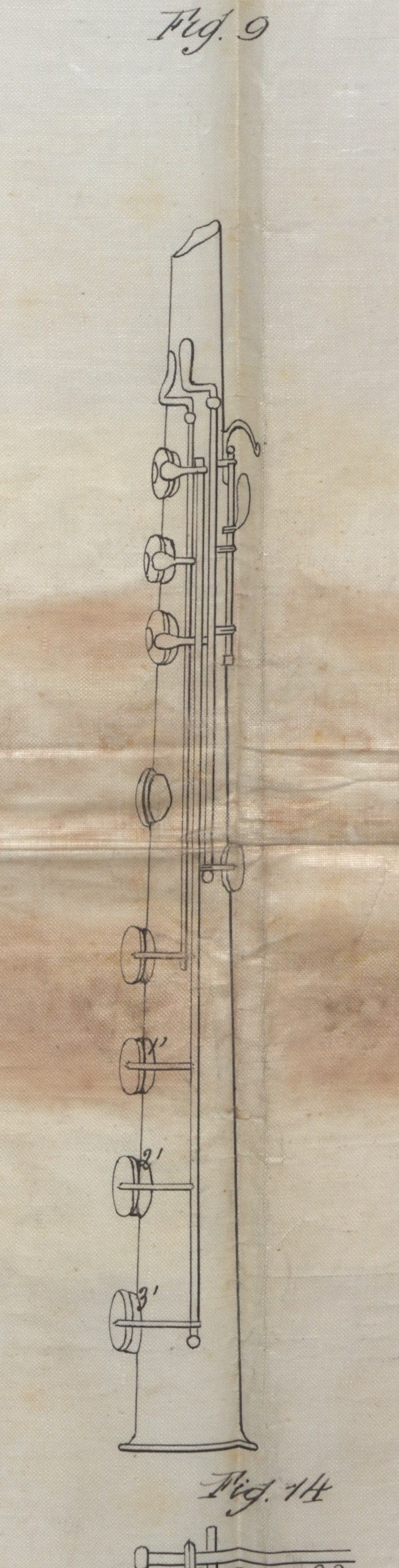
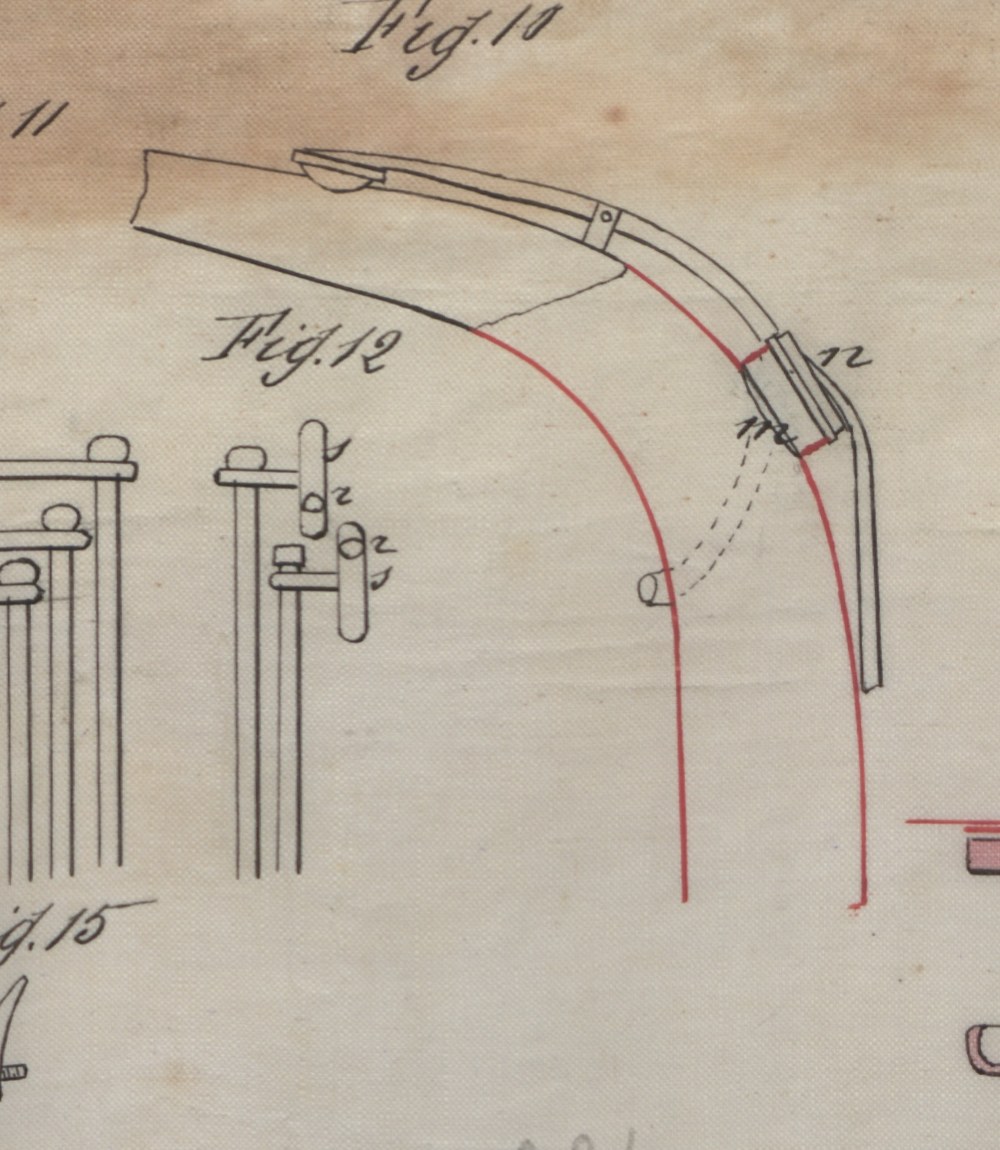
Sax states that all these individual patent items “may be employed together or separately, and are applicable to the entire family of each instrument without exception.” This is a modular patent.
The New Keying System#
(If you haven’t read it yet, Uwe Steinmetz’s Leblanc Saxophone History, here on the site, is the companion/originating piece to this article. In it Uwe links to an article by Marten Postma who discovers that the Leblanc Rationnel is based upon this patent.)
Pages 4 through 6 of the patent manuscript are about what made me originally want to acquire scans of this patent: Sax’s final, upgraded keying system for the saxophone with fingering charts. The main idea is twofold: increasing venting, Boehm-style, by reducing default-closed keys, and introducing a more facile keying system at the same time. So G# is sprung open, low C# is sprung open (although Sax integrated the open G#, he did not build the low C# sprung open on the only surviving instrument to which he applied this new system). You press a right-hand stack key and a linkage lowers whatever the left hand is fingering by a semitone. Open C# is open. Middle C becomes everything open, plus one right-hand finger. G♯ becomes open by default, Boehm style, operated by a key under the left ring finger. But, somehow (and he achieved this in practice, not just on paper) it also works with the default fingerings saxophonists were already used to.
And this is what Marten Postma realized: range to high G, a new keying system based on Boehm principles that lives alongside standard saxophone fingerings: that’s the Leblanc Rationnel. He concluded the layouts are “too much alike to be a coincidence.” (and the patents and photos make this discovery quite clear and inarguable, in my opinion). For comparison, here is the patent that Léon Leblanc filed in France 28 May 1926, granted in the US as Patent 1,840,456 in 1932.
The most amazing thing to me is that Sax built this new system so well that he was able to seamlessly integrate it into the saxophone and not change the ability of the player to play it as a normal saxophone. The new fingering system was optional, and integrated in a way so sublime and brilliant that you could play #40842 without ever realizing it was there. The original fingerings work perfectly; the new system waits underneath them.
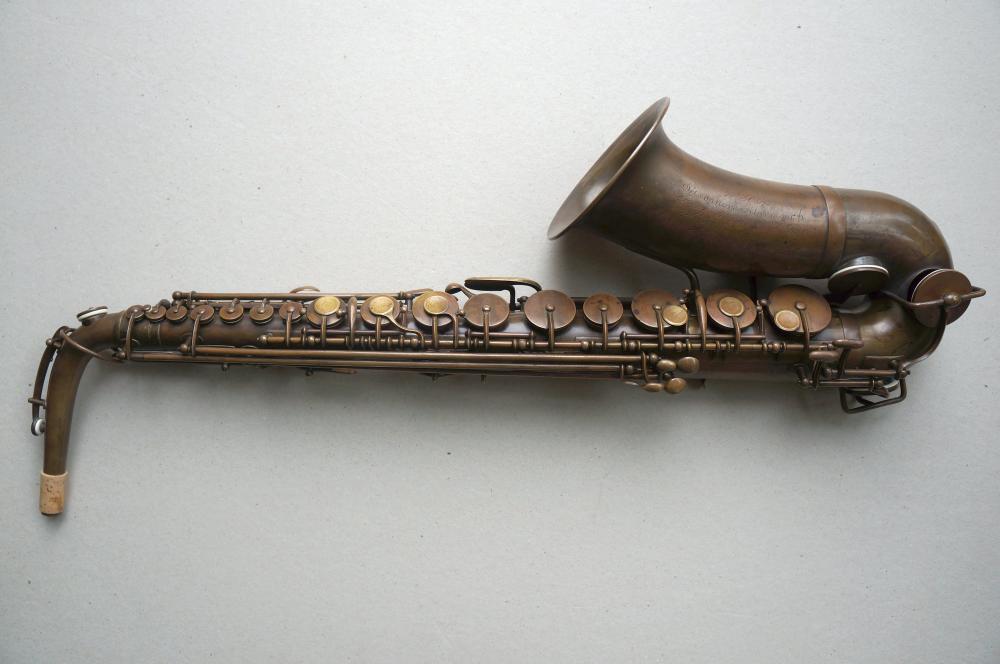
I am often awed by the genius of Sax, but in this case I think he outdid himself. The brilliance to so seamlessly integrate a new keying system that it remains invisible and basically undiscovered to the point of being re-patented half a century later without any mention of the original- is possibly the most Adolphe Sax that he ever did.
Adolphe Sax Casually Mentions He Invented Resonators Earlier#
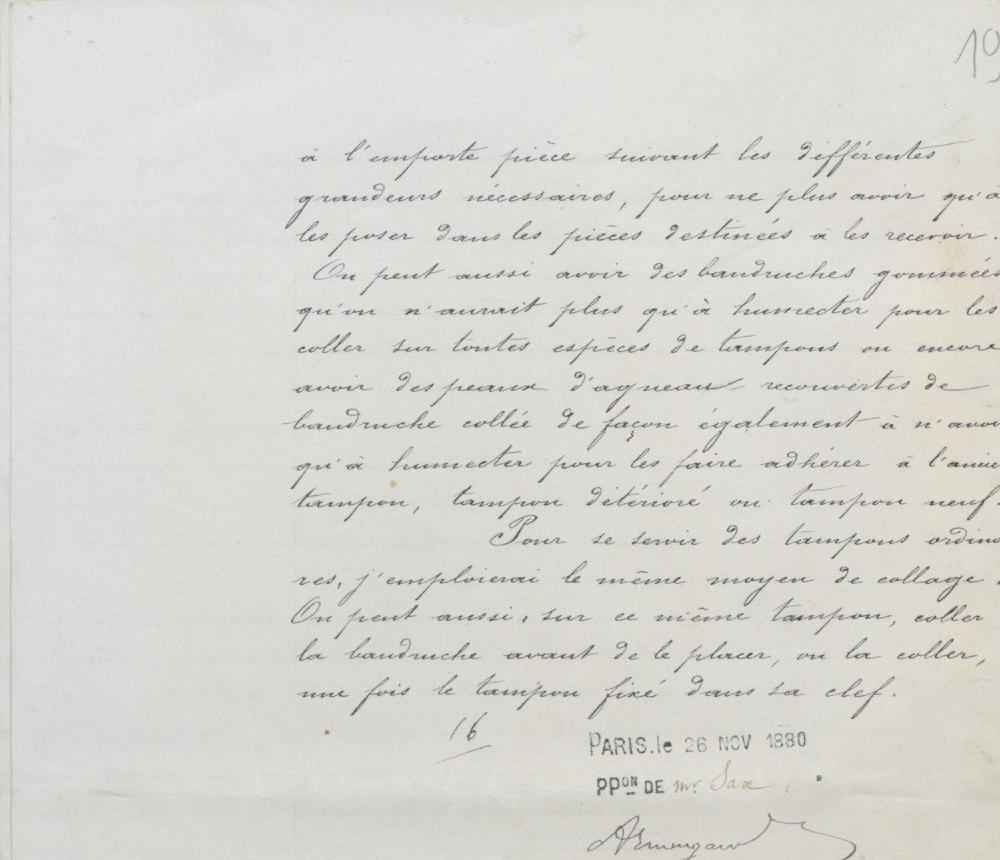
I purchased the scans of this patent because I was interested in the keying system, but got a lovely surprise in the form of an addendum towards the end of the patent. Adolphe Sax casually mentions that he has previously invented the ancestor of resonators, is concerned with airtightness of pad leather due to porosity (I feel compelled to mention that some major padmakers STILL argue that this is fundamentally not an issue. I strongly disagree.), has invented a way to make pads airtight, thinks they should last longer, and thinks they should be user-serviceable. He also mentions “cold padding” in what sounds (along with the stuff about the “resonators” primarily being about keeping the pad skins taut) a lot like the language used in the patents for Buescher Snap-Ons.
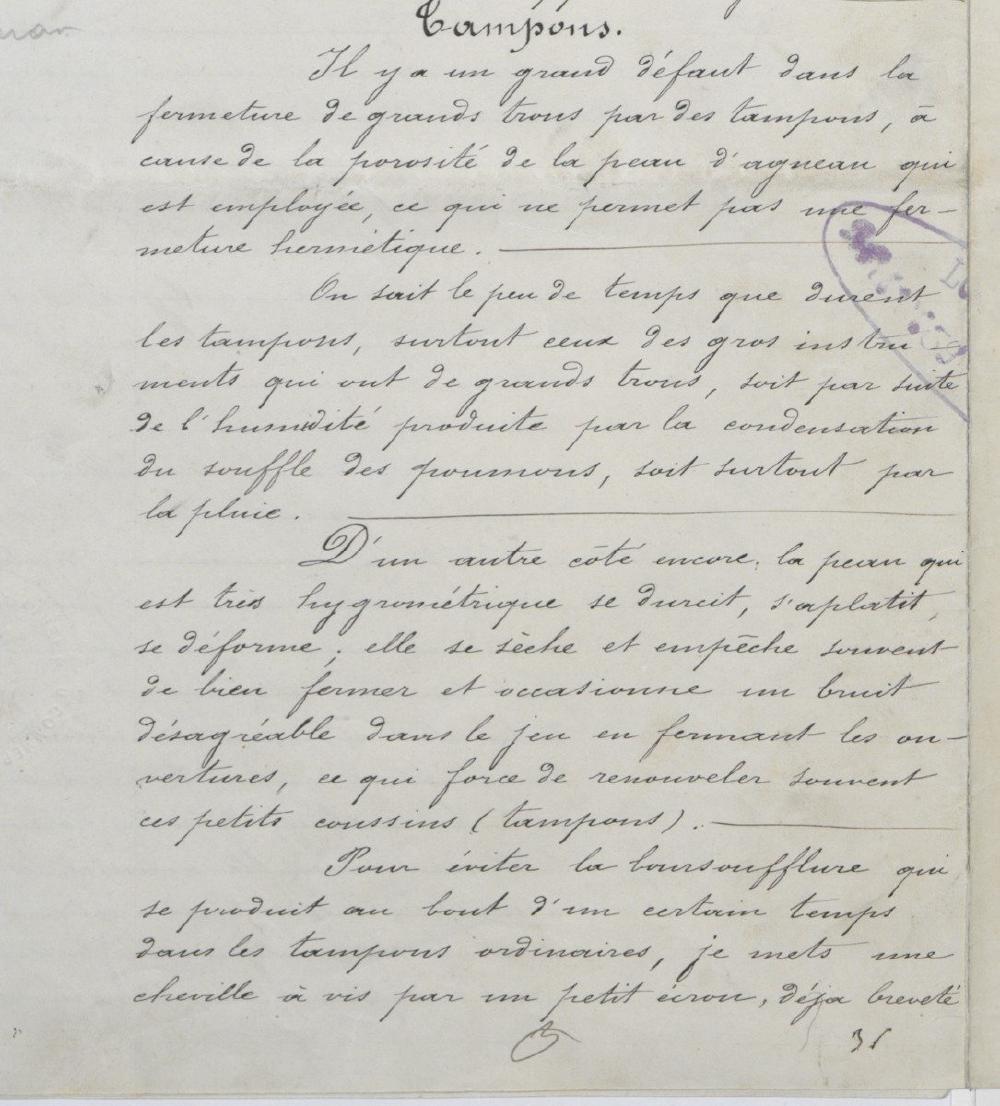
His fixes:
Airtightness: Seal the porous leather under a smoother, airtight membrane— goldbeater’s skin (ancestor of fishskin used on modern clarinet and flute pads) to make it airtight, stuck down with collodion. Collodion is nitrocellulose dissolved in alcohol and ether — the direct ancestor of the nitro lacquer some of us still put on finished pads. I would bet Mr. Sax ended up with an airtight, non-stick pad just like we quest after today.
Saggy or puffy pads: a screwed peg and nut through the center of the pad to stop it from blistering as it takes on moisture — “already patented by me,” he mentions in passing, meaning even this wasn’t new to him in 1880. This sounds like it was threaded to the key cup- I wonder if that is what the central rivet-head looking thing is in the center of all of the tops of the key cups on Sax sax #40842. We solve this issue with resonators or rivets today.
User-replaceable: Make pads a standardized product by new assembly methods: “glue up strips in advance and then cut them out with a punch to the various sizes required.” That is a die-cut, pre-laminated pad production line, on paper, in 1880. (I cut my pad materials with a laser instead of a punch, something I like to imagine Adolphe would find super fun). And then he says, install them cold: “as for postage stamps or labels,” with pre-gummed repair skins you just moisten and apply when a pad rips. I am unsure this particular fix would work great in practice, but he is identifying an issue we still wrestle with today: pads that are installable without specialized tools or knowledge are attempted with regularity, but still as of 2026 have not met with any sustained success.
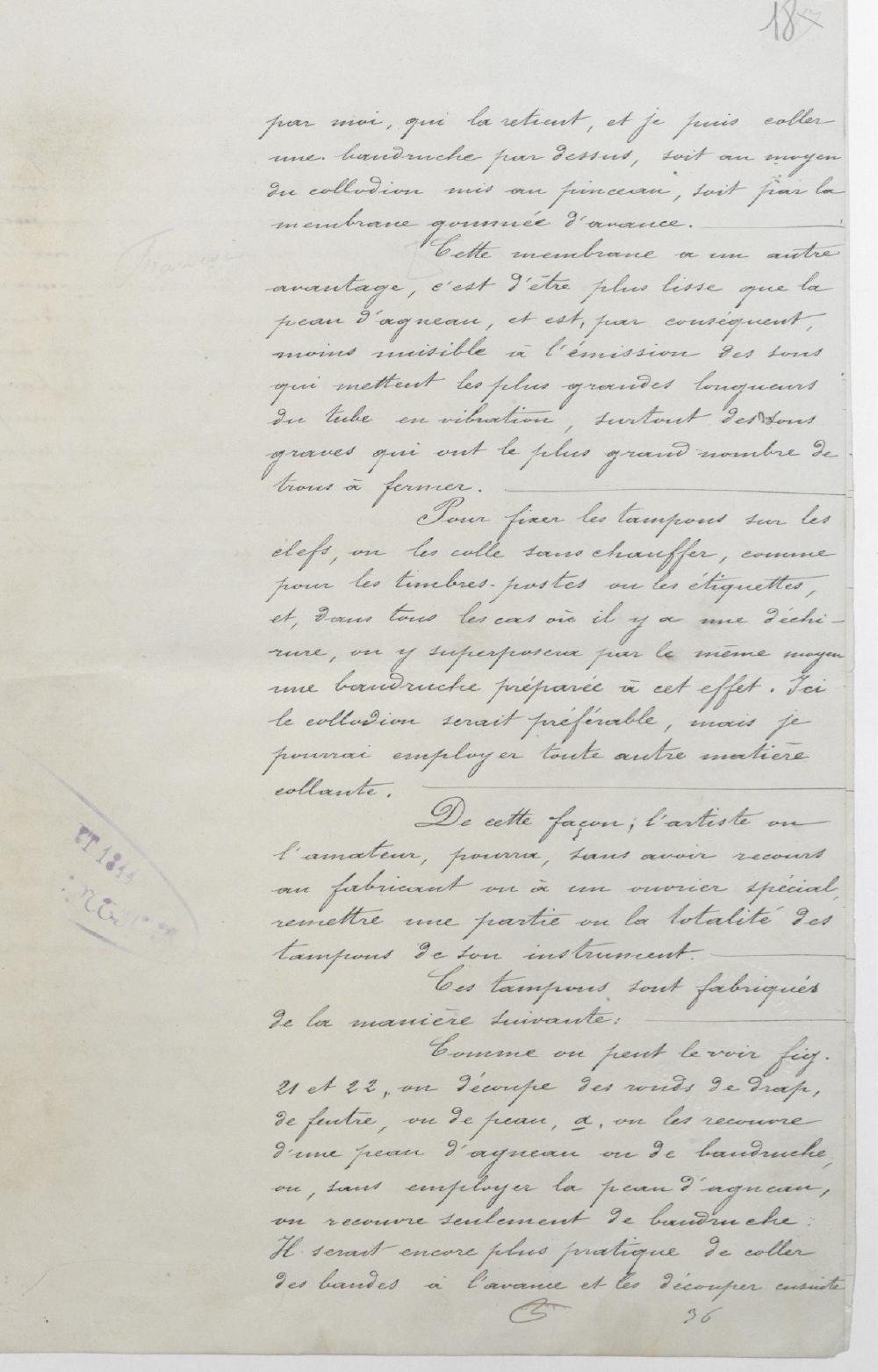
“In this way, the artist or the amateur will be able, without recourse to the manufacturer or to a specialist workman, to replace some or all of the pads of his instrument.”
Indeed, a lot of this sounds like Buescher’s 1920s snap-on pad patent (US 1,401,872 — the number stamped on the snaps), which opens with: “It has been found that most of the Saxophones sent back to the factory for repairs need only repadding. By my invention the player may easily replace the pads of his own instrument.” His 1926 follow-up (US 1,611,993) patents a “centrally positioned bulge-restraining member” to stop the pad bulging “when dampened by the moisture of respiration… which spoils the tone of the instrument.” That is Sax’s screw-peg, reinvented (again) nearly half a century later with no mention of the original — same problem, same fix, same reasoning. Conn’s Res-O-Pad went after the same goal from the rim as well as from the center, with its hidden ring holding the skin taut around the edges with a more modern resonator rivet holding down the center- and it is also designed, like the Snap-On pad, to be installed without needing heat or specialized tools.
There are also many patents and non-patented attempts to solve the airtightness and watertightness of pads.
A Man Ahead of His Time#
Sax’s last patent, written nearly 150 years ago, is timelessly brilliant. His ideas have been proven right by adoption, by… let’s just leave it at “copying & redistribution”, by parallel discovery, and by belated rediscovery. In the case of his near-throwaway lines about pads at the end of the patent text: these are problems I have noticed since I got into the business, had arguments about and ruined vendor relationships over, and finally took into my own hands by learning to make pads myself. And I still use nitrocellulose! And now I know Adolphe got there before me. He got there before all of us.
A year ago I stood at his grave in Montmartre and left roses, because I fix the instruments he imagined and I owe him my life’s work. I didn’t know then that his last patent was still ahead of where I am now. The saxophone is full of surprises.
Documents and sources#
- French Patent No. 139,884 (Adolphe Sax, filed 27 November 1880, granted 16 January 1881). INPI archive, cote FRINPI 1BB139884. Complete English translation on this site; the original scans can be ordered from INPI under that cote.
- US Patent 1,840,456 — Léon Leblanc, the Rationnel key system (filed France 1926, granted US 1932). See also US 3,136,200 (Leblanc key mechanism, 1961/1964) and FR 727,312 (Leblanc/Houvenaghel, 1931, at INPI).
- Buescher pad patents: US 1,401,872 (snap-on pads, 1921) · US 1,611,993 (bulge-restraining member, 1926) · US 1,702,962 (1929) · US 2,234,107 (Comer, 1940).
- Marten Postma — the alto #40842 analysis and the Sax–Leblanc mechanism comparison quoted above are his research; credit for those observations belongs to him.
- Uwe Steinmetz, Leblanc Saxophone History — guest article on this site.